China flagShenzhen, Guangdong, China Onsite Verified by SGS Group [email protected]
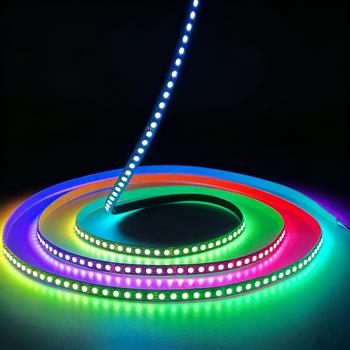
WS2814 RGBW COB LED strip continuous dotless pixel illumination engineered by Shenzhen Fuvin Led Technology Co., Ltd.
B2B Engineering & Sourcing Portal

Architectural & Commercial Guide: WS2814 RGBW COB LED Strip Solutions

Master the next generation of addressable lighting. High-density Chip-on-Board (COB) technology meets 4-channel WS2814 SPI control for continuous, dotless linear lighting without diffuser dark spots.

2016Year Established
10+ YrsVerified Export Record
4.9/5Buyer Rating
99.31%Response Rate
3ozRolled Copper PCB
SGS Group logoSGS Verified Factory CE markCE Certified Declaration of ConformityDoC Compliant RoHS Directives UL Standard Raw Materials
Exclusively Manufactured by Shenzhen Fuvin Led Technology Co., Ltd.
Product Architecture & Engineering

WS2814 RGBW COB LED Strip: The Ultimate Merging of Chip-on-Board & Smart Pixel Protocols

A detailed analysis of how flip-chip encapsulation, 4-channel IC integration, and 24V bus architectures solve long-standing lighting issues in modern architectural environments.

In high-end architectural, commercial, and hospitality lighting design, traditional Surface Mount Device (SMD) addressable LED strips—such as SMD 5050 SK6812 or WS2812B—frequently suffer from severe optical limitations. Even when enclosed in shallow aluminum profiles with opaque frosted covers, individual LED hot spots remain visible, creating harsh visual pixelation. Furthermore, standard RGB strips struggle to render true white light, producing a muddy, low-CRI white synthesized by mixing red, green, and blue diodes.

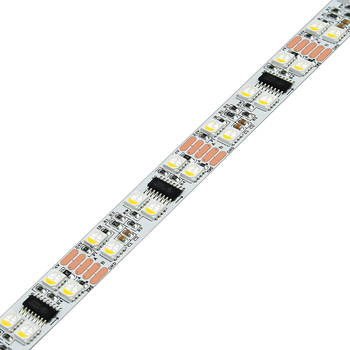
The WS2814 RGBW COB LED strip manufactured by Shenzhen Fuvin Led Technology Co., Ltd. represents a total shift in dynamic linear lighting design. By directly bonding Flip-Chip LED dies onto a high-density double-sided PCB layer and coating them under a continuous, uniform phosphor silicone strip, COB technology completely removes visible diode gaps. When combined with the advanced WS2814 integrated driver IC, lighting designers gain pixel-level addressability over Red, Green, Blue, and a dedicated Real White (2700K to 6500K, CRI > 90) channel—all in a completely dotless continuous ribbon.

Key Engineering Breakthrough: Why WS2814 + COB Outperforms Standard SMD Pixel Tapes

  • 180-Degree Seamless Beam Angle: The continuous silicone encapsulation distributes light evenly across a 180° plane, eliminating hot-spots even without aluminum diffusers.
  • Dedicated 4th Channel (Real White): Unlike RGB strips that consume high power to synthesize low-quality white light, the dedicated White channel in WS2814 delivers energy-efficient, high-CRI general illumination up to 120 lm/W.
  • 24V DC Circuit Design: Operating at DC 24V allows longer continuous single-feed runs (up to 10 meters) with significantly reduced voltage drop and thermal stress compared to 5V/12V legacy strips.
  • WS2814 Protocol Timing: Utilizes an 800 Kbps single-wire NRZ protocol with expanded timing tolerance, ensuring high compatibility with controllers and eliminating signal glitching over extended data lines.

Technical Specifications & Electrical Properties

Detailed Specification Table for WS2814 RGBW COB LED Strip Series
Parameter 24V High-Density Architectural Grade 24V Standard Commercial Grade 12V Compact Cabinet Grade
IC Protocol WS2814 (External 4-channel SPI IC) WS2814 (External 4-channel SPI IC) WS2814 (External 4-channel SPI IC)
LED Encapsulation Flip-Chip COB Continuous Silicone Flip-Chip COB Continuous Silicone Flip-Chip COB Continuous Silicone
LED Density / Meter 784 LEDs / m (Dual Row Matrix) 560 LEDs / m (Single Row High Efficiency) 480 LEDs / m (Single Row Compact)
Pixel Resolution / Meter 14 Pixels / m (56 LEDs per cut segment) 10 Pixels / m (56 LEDs per cut segment) 20 Pixels / m (24 LEDs per cut segment)
Min Cut Length 71.4 mm 100.0 mm 50.0 mm
Operating Voltage DC 24V DC 24V DC 12V
Power Consumption 18.0 W / meter (Max White + RGB) 14.4 W / meter (Max White + RGB) 12.0 W / meter (Max White + RGB)
Color Channels RGB + White (2700K / 3000K / 4000K / 6000K) RGB + White (2700K / 3000K / 4000K / 6000K) RGB + White (2700K / 3000K / 4000K / 6000K)
PCB Copper Thickness 3oz Rolled Double-Sided Copper 3oz Rolled Double-Sided Copper 2oz Rolled Double-Sided Copper
Color Rendering Index (CRI) CRI > 90Ra (White Channel) CRI > 90Ra (White Channel) CRI > 90Ra (White Channel)
Market Intelligence & Sourcing Trends

Future Procurement & Technological Trends in Addressable COB Lighting

How global procurement buyers, system integrators, and lighting designers are updating their specifications for 2025 and beyond.

1. Rapid Migration from Standard RGB to Integrated RGBW 4-Channel Chips

Global procurement data indicates a clear shift away from 3-channel RGB pixel tapes in commercial construction projects. Modern architectural designs demand multi-purpose spaces: during daytime operation, linear fixtures must output clean, flicker-free, high-CRI white light (3000K or 4000K) for functional illumination; during evening events, the same fixture must transition into dynamic pixel mapping mode. The WS2814 IC satisfies both needs seamlessly, making 4-channel RGBW COB strips the default standard for hospitality, high-end residential, and commercial interior specs.

2. Elimination of Surface Diffusion Accessories to Lower Total Installed Cost

With legacy SMD pixel strips, engineering budgets are bloated by the need for deep aluminum extrusions (at least 15mm to 20mm depth) fitted with thick polycarbonate opal diffusers to blur visible diode dots. WS2814 COB technology completely removes this physical limitation. Because the light source itself is continuous, lighting contractors can utilize shallow micro-profiles (5mm to 8mm depth) or mount the flex strip directly into recessed millwork channels, cutting total hardware and labor costs by up to 35%.

3. Transition to 24V Architecture and 3oz Heavy-Copper Substrates

As global installations scale in physical size—such as multi-story atrium outlines and extended perimeter lighting—buyers are refusing legacy 5V and 12V pixel strips due to excessive wiring complexity and frequent power injection points. The B2B purchasing standard has firmly shifted toward DC 24V WS2814 COB strips featuring 3oz double-sided rolled copper PCBs. This architecture allows continuous signal and power distribution up to 10 meters per feed point, reducing power supply units (PSUs), distribution boxes, and wiring bulk across complex projects.

Engineering FAQ & Intent Mining

Crucial Technical Questions Asked by B2B Procurement Engineers

In-depth technical answers addressing signal integrity, thermal dissipation equations, driver compatibility, and power injection rules.

The WS2814 driver IC uses a single-wire NRZ (Non-Return-to-Zero) communication protocol. Data is sent at a nominal bit rate of 800 Kbps (T0H: 0.28µs ±150ns, T0L: 0.94µs ±150ns; T1H: 0.79µs ±150ns, T1L: 0.43µs ±150ns; Reset code > 280µs). Each pixel segment requires 32 bits of serial data arranged in a 4-byte sequence (Red, Green, Blue, White). Because it shares timing similarities with WS2811/SK6812 protocols, most mainstream pixel controllers (such as Madrix, Advatek, Falcon, SanDevices, and ArtNet-to-SPI converters) support WS2814 natively by selecting the WS2814 or SK6812-RGBW IC profile in software.

Power injection is determined by trace resistance ($R_{trace}$) and maximum current draw ($I_{total}$). For a 24V WS2814 COB strip drawing 14.4 W/m, a 5-meter section consumes 72 Watts, drawing $I = 72W / 24V = 3.0$ Amperes. Over 5 meters of 3oz copper PCB, voltage drop remains within acceptable tolerances (< 5%). However, for a 20-meter continuous physical run, total power draw is 288W ($12A$ at 24V). Running 12A through thin PCB copper traces causes localized thermal runaway and severe color shift (pink/yellowing at the far end). Recommendation: Feed main DC 24V power via 14AWG bus wires along the channel and inject power into the strip at 0 meters (start), 10 meters (middle joint), and 20 meters (end). Only the Data line (DAT) and Ground (GND) need to remain continuous across the entire 20-meter data chain.

Continuous COB phosphor encapsulation traps operational heat closer to the Flip-Chip dies compared to open SMD packages. Operating a 18W/m WS2814 COB strip in an airtight plastic enclosure without heat dissipation can elevate junction temperatures past 85°C, causing phosphor deterioration and permanent color drift. To guarantee a 50,000-hour rated lifespan ($L_{70}$), Shenzhen Fuvin Led Technology Co., Ltd. mandates mounting all COB strips onto extruded aluminum profiles with a minimum cross-sectional area of 12mm x 2mm. Thermal conductive tape ($K > 1.5 W/m\cdot K$) attached to the rear of our 3oz copper PCB ensures junction temperatures stay below 60°C during continuous 100% white full-load operation.

The standard WS2814 driver IC features an internal PWM refresh rate of approximately 2.0 kHz to 4.0 kHz across its 4 constant-current output channels. For standard commercial, architectural, and live venue lighting, this frequency completely eliminates visible flicker to the human eye. In high-speed camera or studio broadcast settings (e.g., 4K/8K cameras shooting at high shutter speeds above 1/2000s), our engineering team at Shenzhen Fuvin Led Technology Co., Ltd. can supply specialized ultra-high refresh variants (such as UCS8904 16-bit IC based COB strips) offering up to 16 kHz PWM dimming with true 65,536-level grayscale resolution.

Yes. WS2814 COB LED strips feature designated copper solder pads located at precise cut intervals (e.g., every 71.4mm or 100mm depending on pixel layout). To cut: use sharp stainless steel shears to slice perpendicular through the marked cut line in the silicone phosphor layer. To solder: gently trim 2mm of the top silicone layer over the copper pads using a precision blade, apply rosin-core solder with a temperature-controlled iron set to 350°C for no more than 3 seconds per pad, and seal the joint using heat-shrink tubing or neutral-cure electrical silicone.

Production Control & Quality Assurance

Inside Our 12-Step Manufacturing Facility

Shenzhen Fuvin Led Technology Co., Ltd. maintains rigorous quality control across every production stage. Explore our verified workflow from raw material inspection to vacuum packaging.

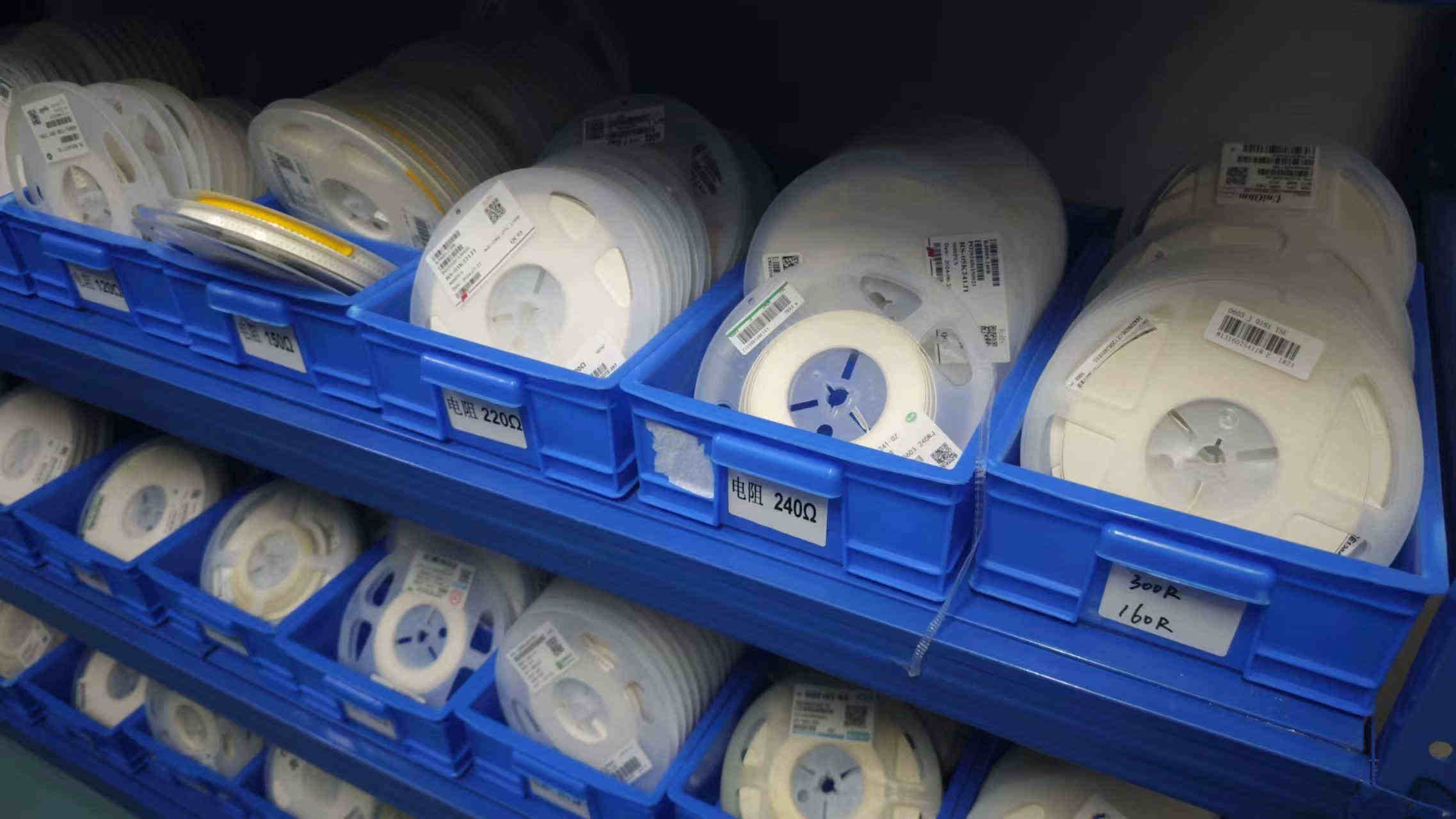
Raw Materials Incoming Inspection at Shenzhen Fuvin Led Technology Co., Ltd.
01 Raw Materials Inspection
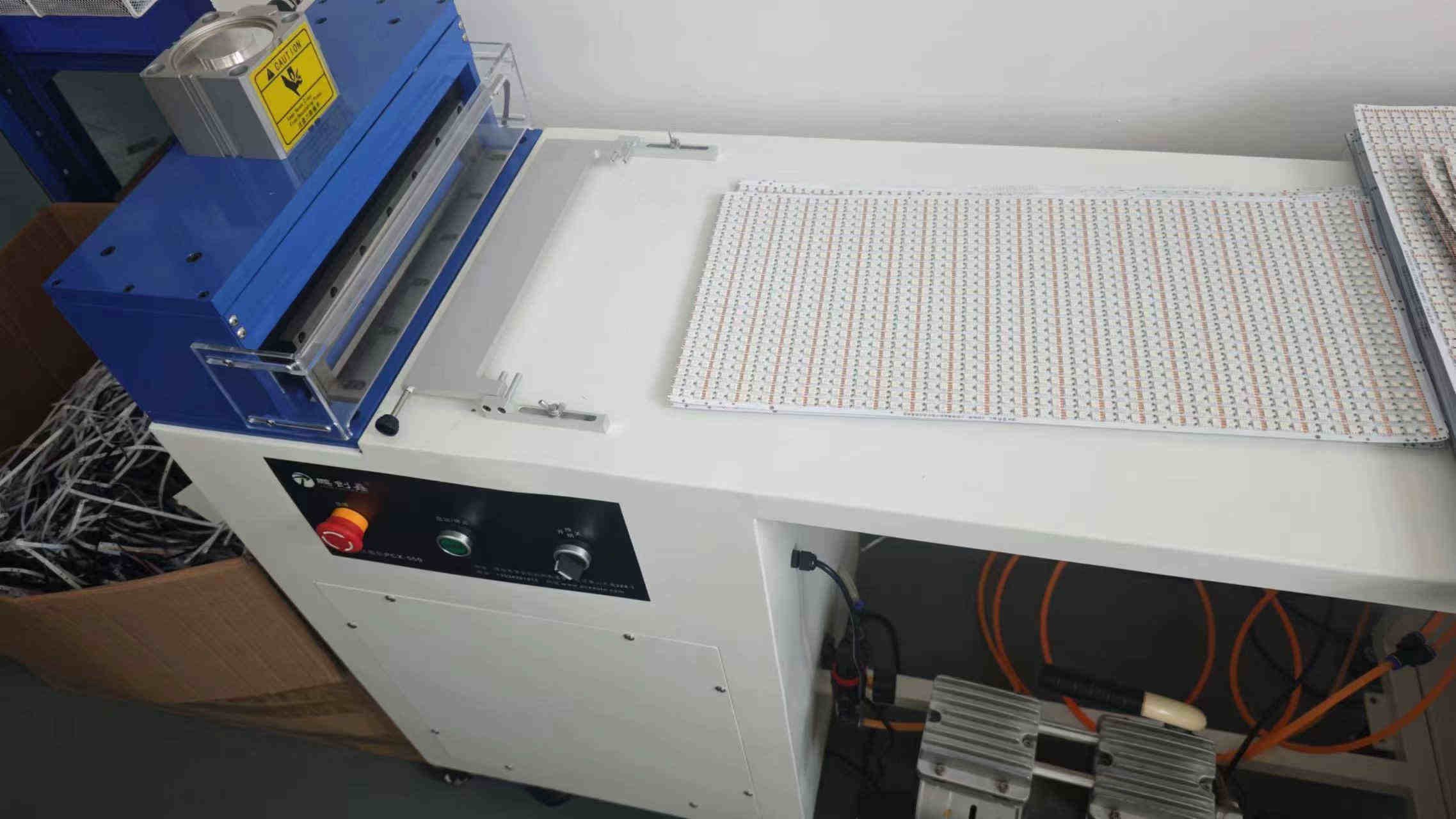
Precision PCB Cutting at Shenzhen Fuvin Led Technology Co., Ltd.
02 PCB & Substrate Cutting
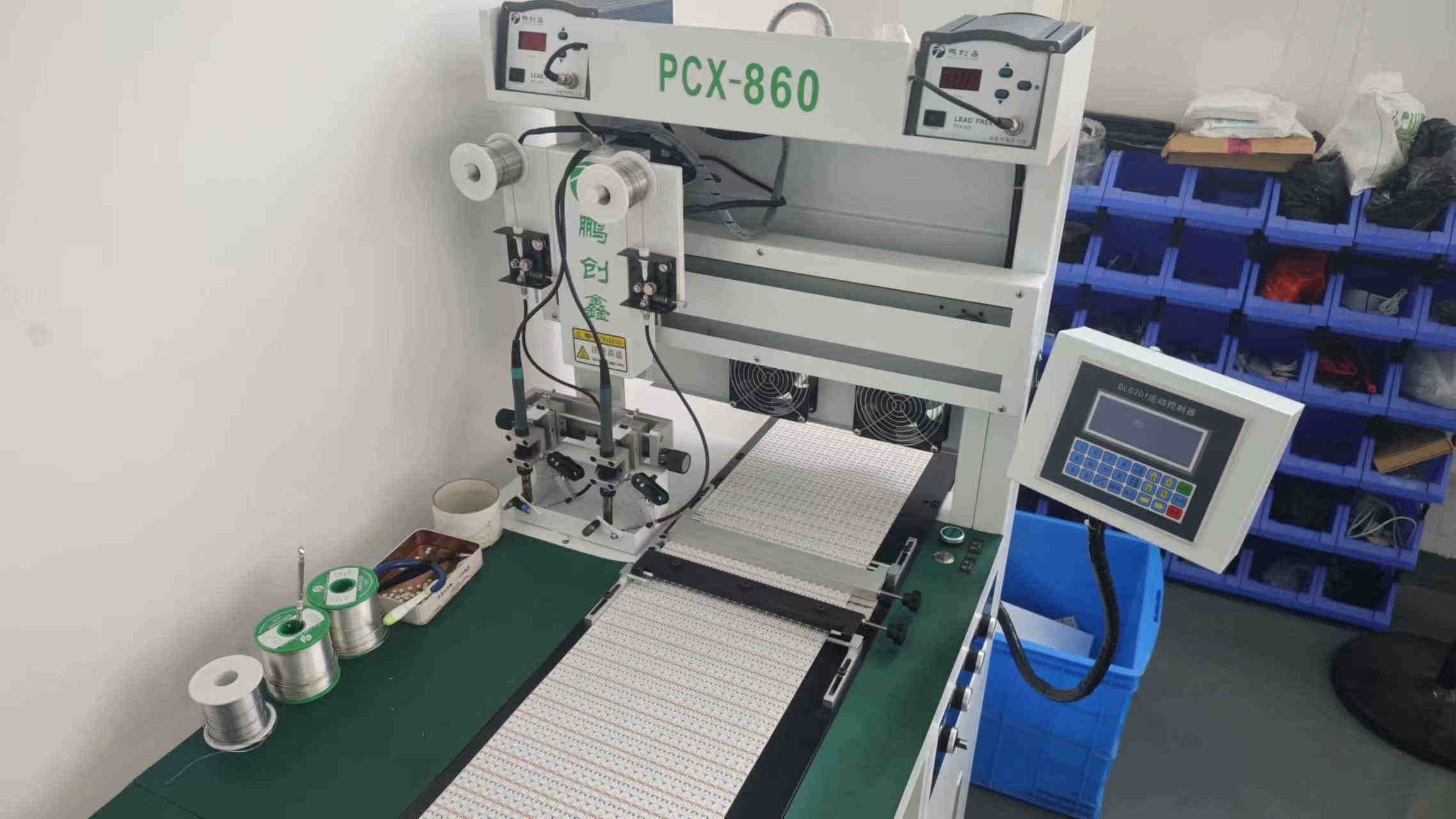
High Speed SMT Welding Machine for LED Strips
03 Automatic SMT Welding
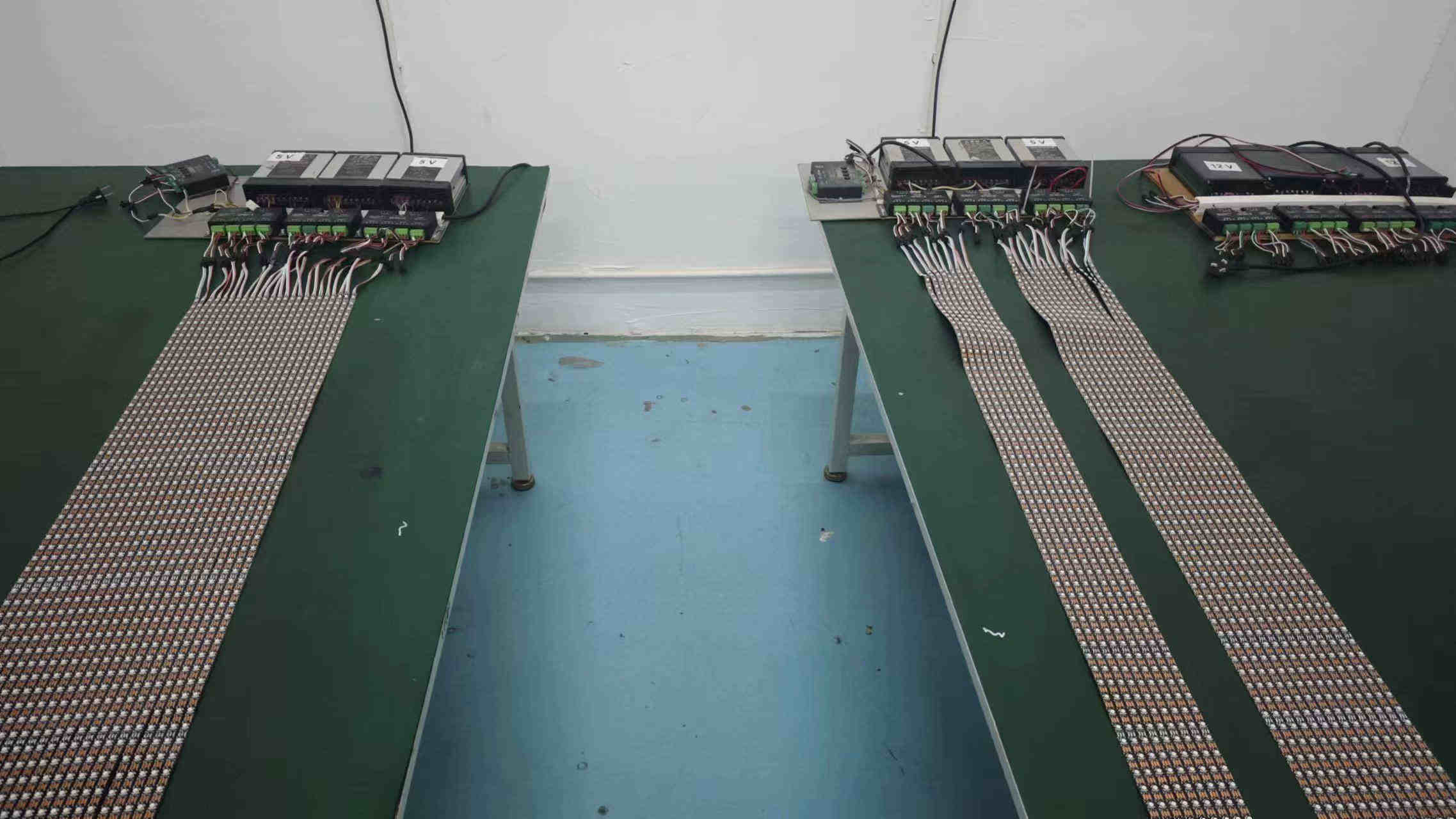
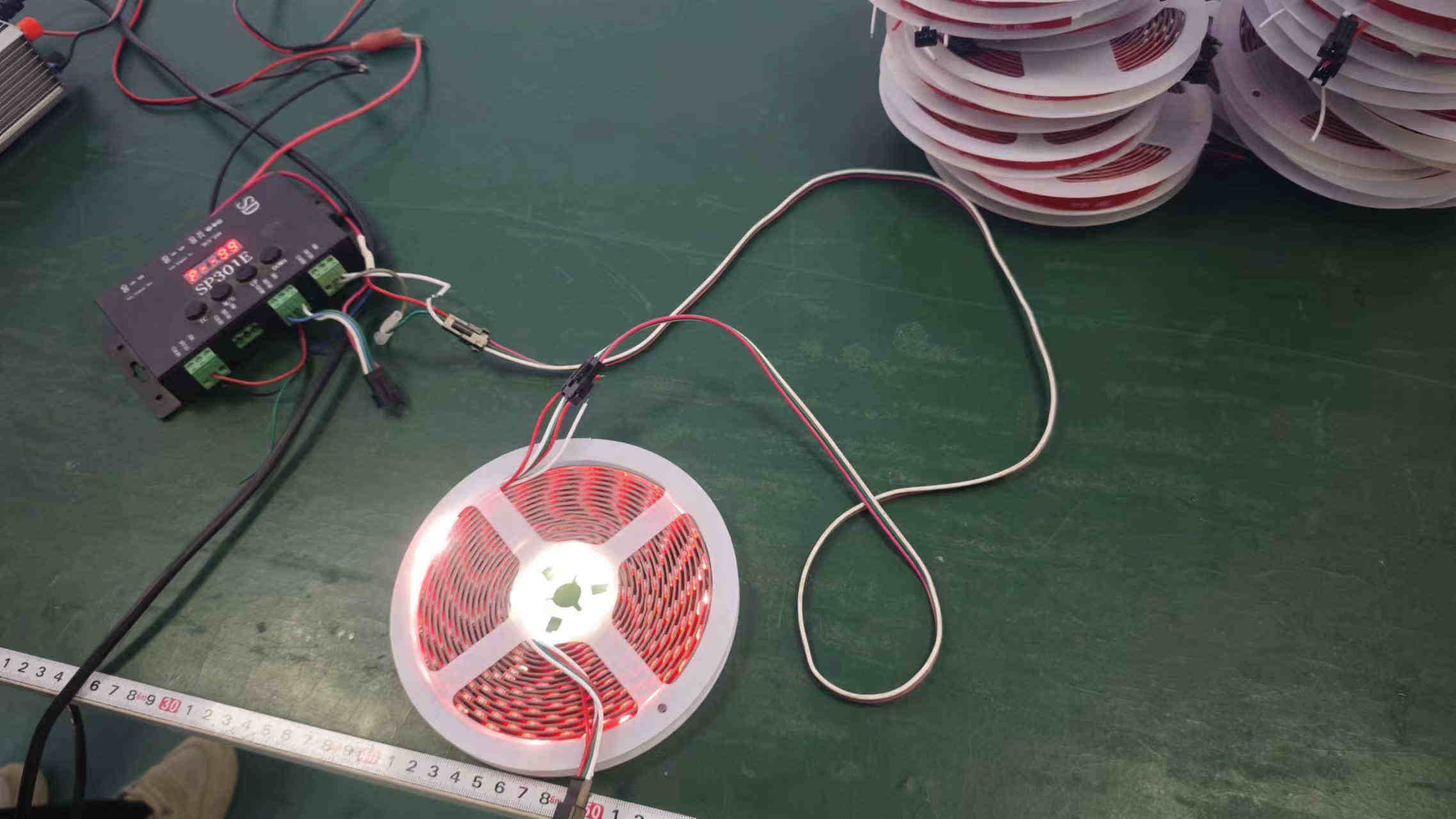
Full Load Powered Aging Test for Addressable LED Tapes
04 Powered Aging Test
Optical and Photometric Testing of WS2814 COB Strips
05 Photometric Function Test
Reel Packaging Workstation at Shenzhen Fuvin Led Technology Co., Ltd.
06 Export Reel Packing
Finished WS2814 RGBW COB LED Strip Products Ready for Shipping
07 Finished Stock Inspection
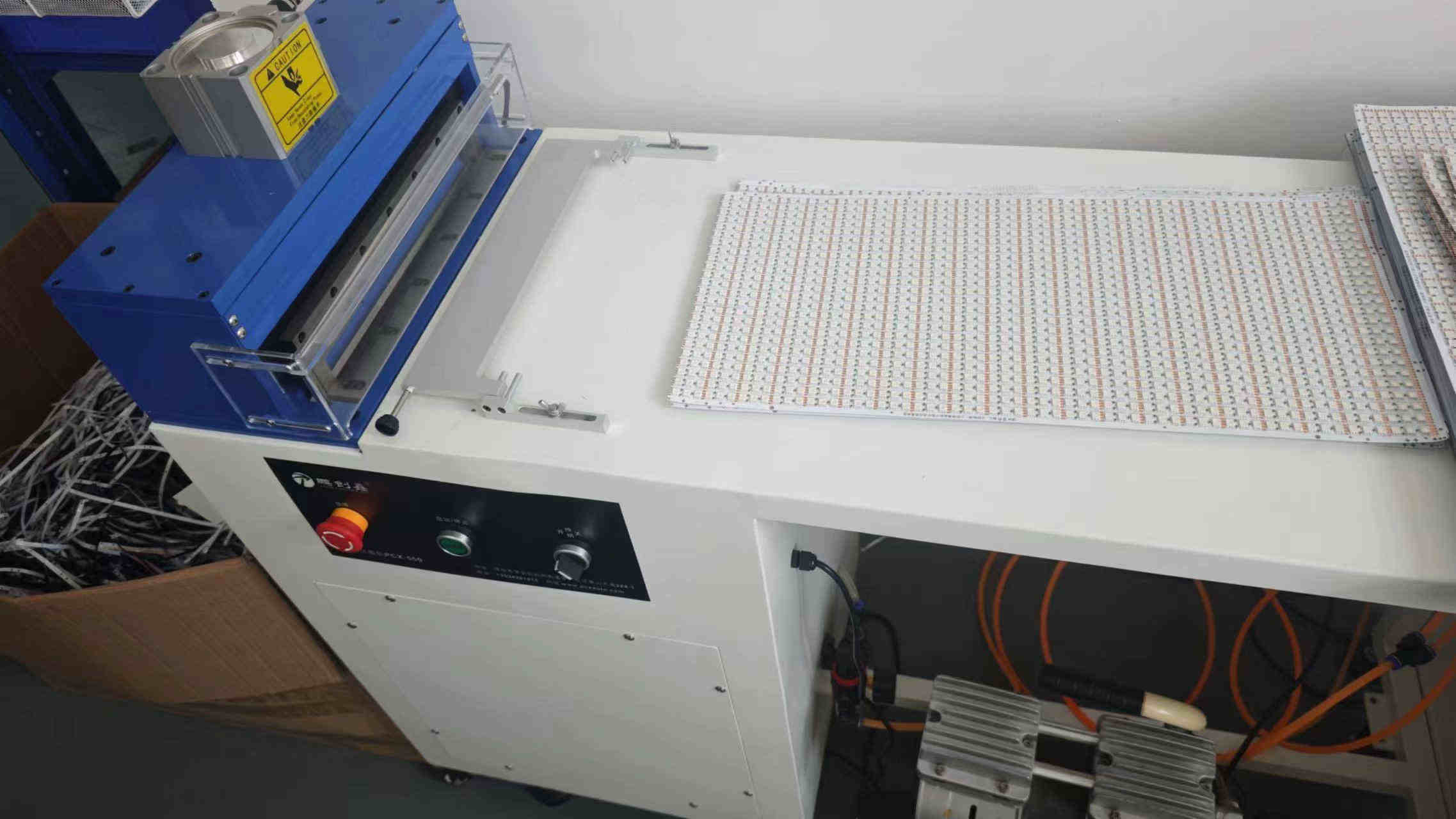
Automatic Strip Cutting Machine in Factory
08 Automatic Reel Cutter
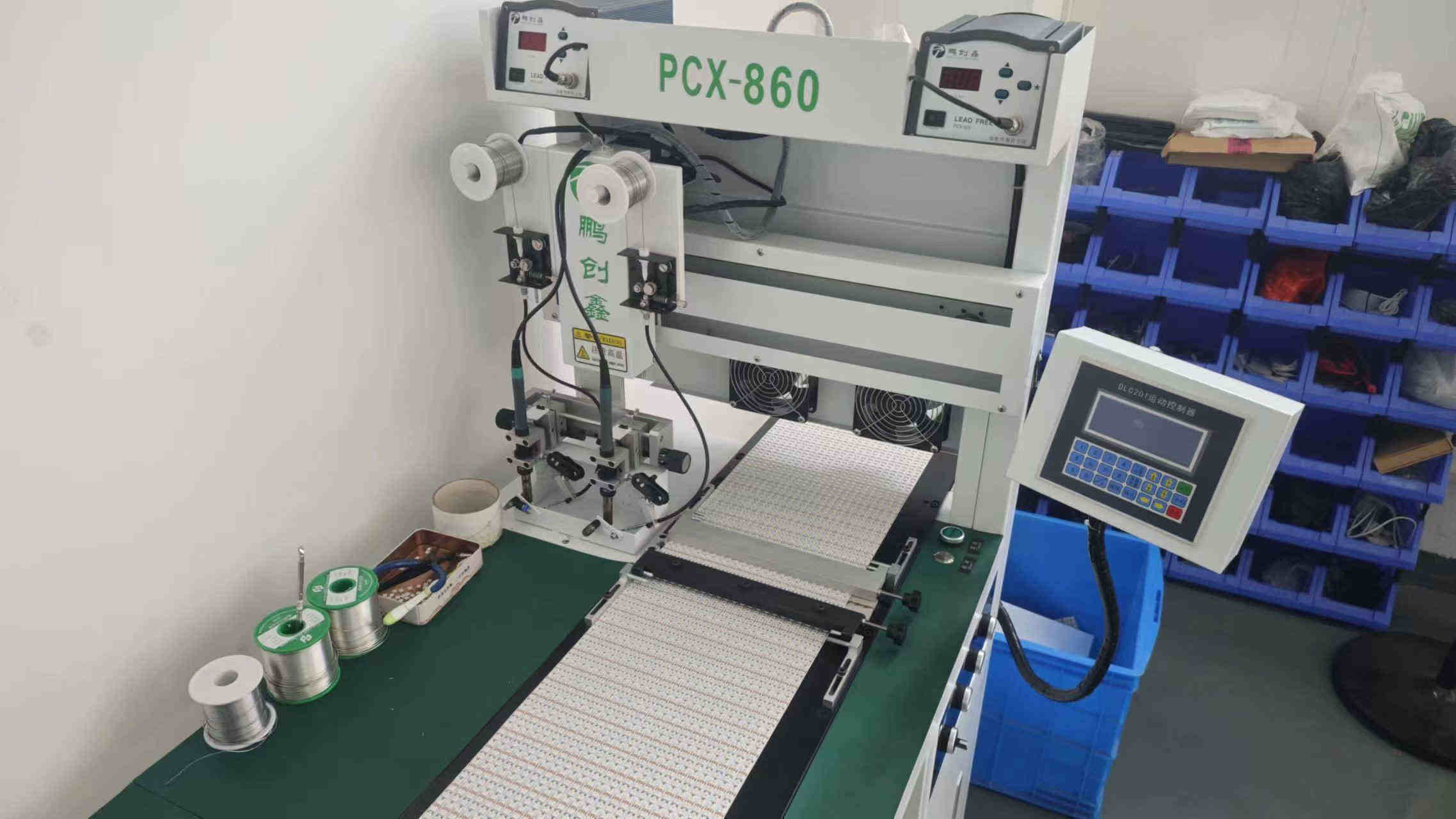
Wire Soldering Machine Station for IP67/IP68 Strips
09 Solder Wire Workstation
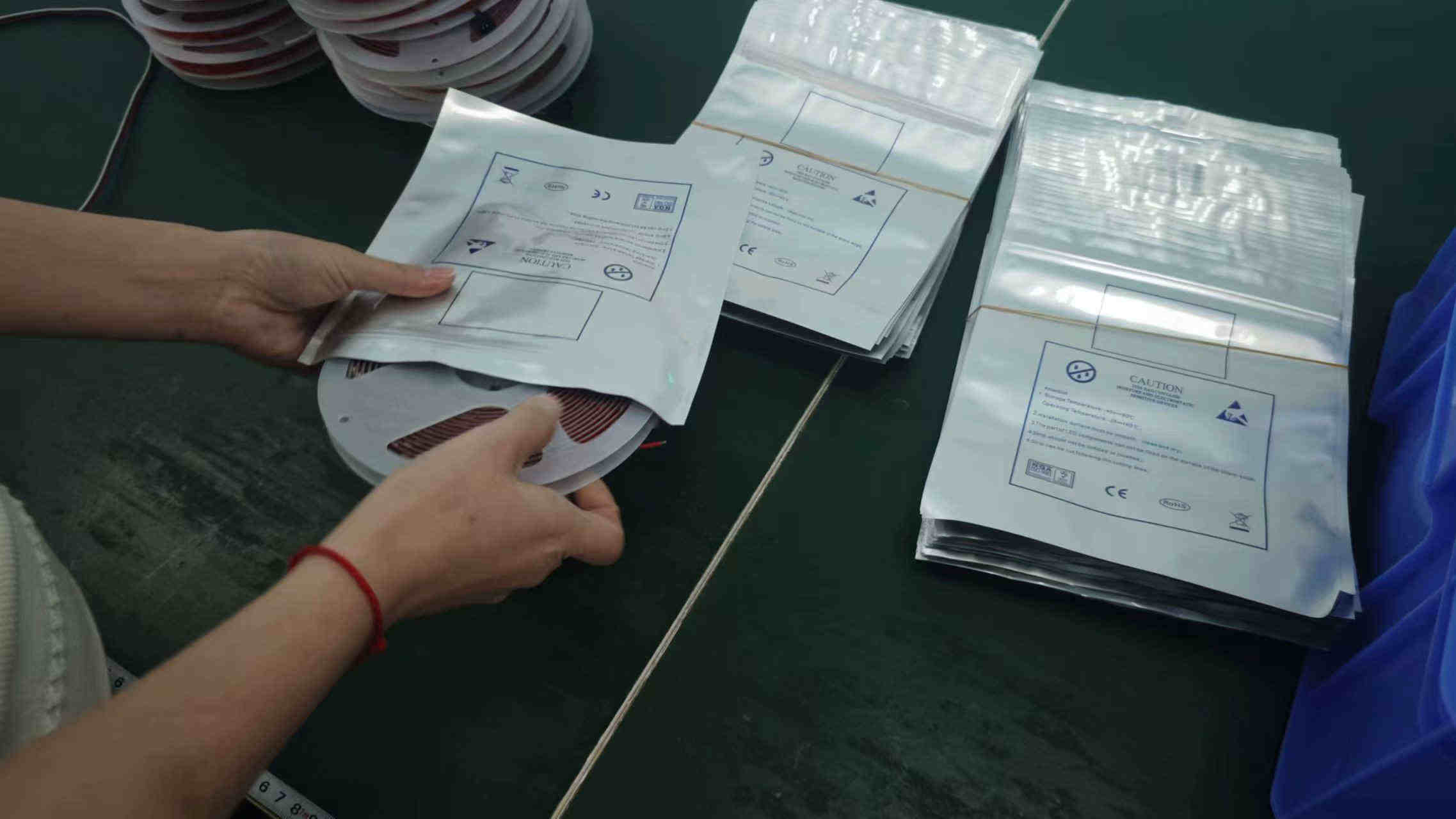
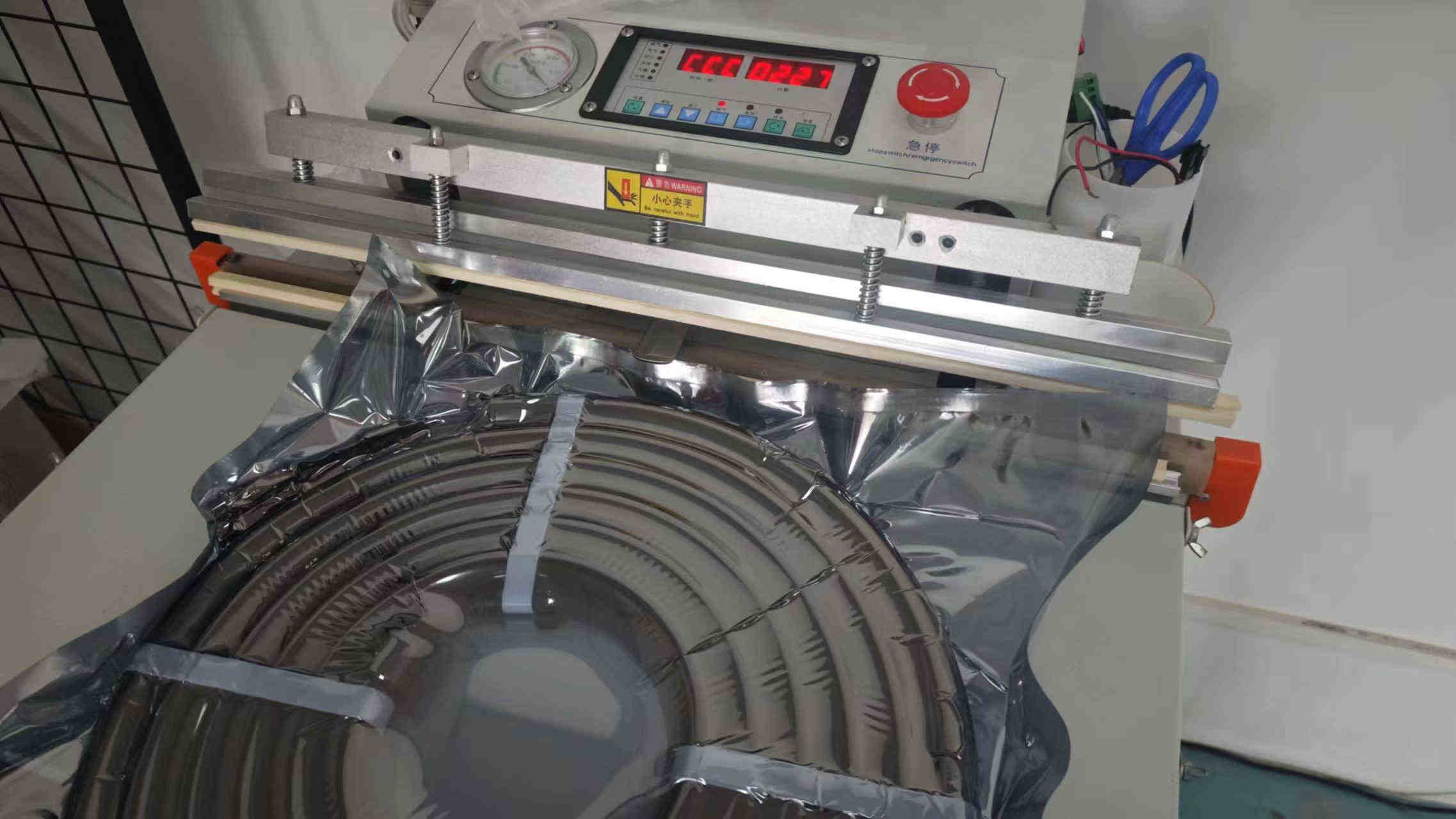
Moisture Proof Vacuumizer Machine for Strip Reel Protection
10 Vacuum Sealing Process
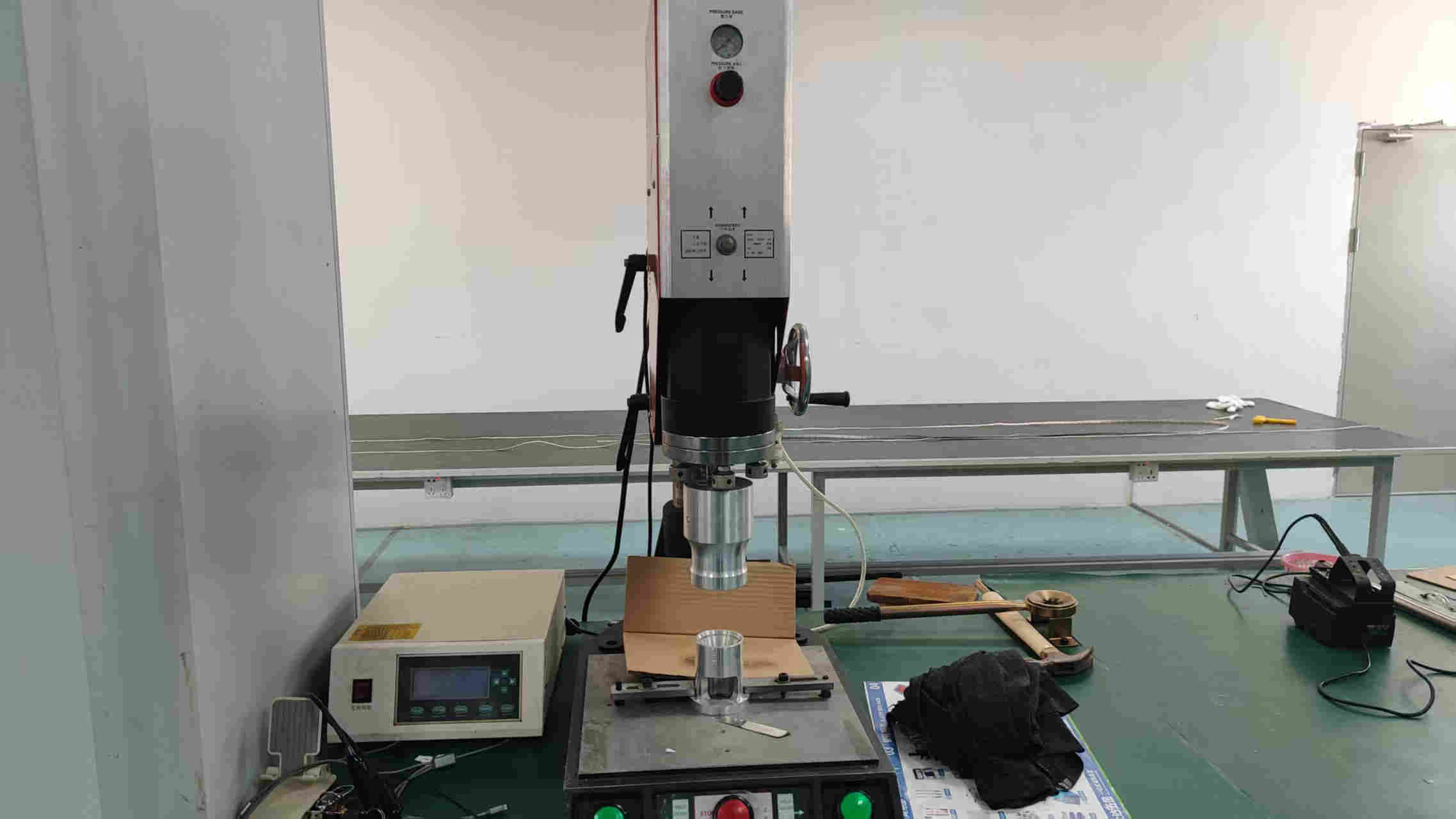
Ultrasonic Welding Machine for Silicone Neon End Caps
11 Ultrasonic End Seal
Multimeter Electrical Resistance Quality Control Inspection
12 Multimeter Electrical QC

Strict Quality Control System (SGS Verified Facility)

Located in Shiyan, Shenzhen, Shenzhen Fuvin Led Technology Co., Ltd. operates an advanced facility dedicated exclusively to smart addressable pixel products. Our manufacturing process follows ISO9001 standards: incoming LED chips undergo strict MacAdam ellipse binning to guarantee color temperature consistency across orders; PCBs are constructed with 3oz double-sided rolled copper to prevent trace burning; and 100% of finished reels undergo a continuous 8-hour powered aging test prior to vacuum sealing.

Request Custom WS2814 RGBW COB Samples & Factory Pricing

Partner directly with Shenzhen Fuvin Led Technology Co., Ltd. for your engineering projects. Submit your project requirements, target cut lengths, and driver controller specs—our engineering team responds within 12 hours with customized technical drawings, photometrics, and factory-direct pricing.

[email protected]