Choosing the best LED Strip Lights in 2026 depends on where they will go and what you expect them to do. A strip behind a television needs different features from one lighting a kitchen counter or a bedroom shelf. Brightness, color accuracy, control options, and power requirements all affect everyday use. Small details matter.
This guide explains how to compare those features without treating a long list of specifications as a guarantee of quality. It considers practical questions: Can the strip be dimmed smoothly? Does the app offer useful controls? Is the adhesive suitable for a clean, dry surface? Can you replace or extend the strip if your layout changes? Check product documentation before buying, since compatibility and included accessories can differ between models.
There is no single best choice for every room. A vivid color mode may look impressive in a product photo but feel tiring after an evening of use. That is easy to overlook. For a fair comparison, look at both technical details and the conditions where the lights will actually be installed. This overview highlights the strengths and trade-offs shoppers should weigh, from simple plug-in options to more configurable systems. It also points out where claims need careful checking, because model names and specifications can change over time. The right choice should fit your space, budget, and routine—not just the latest trend.
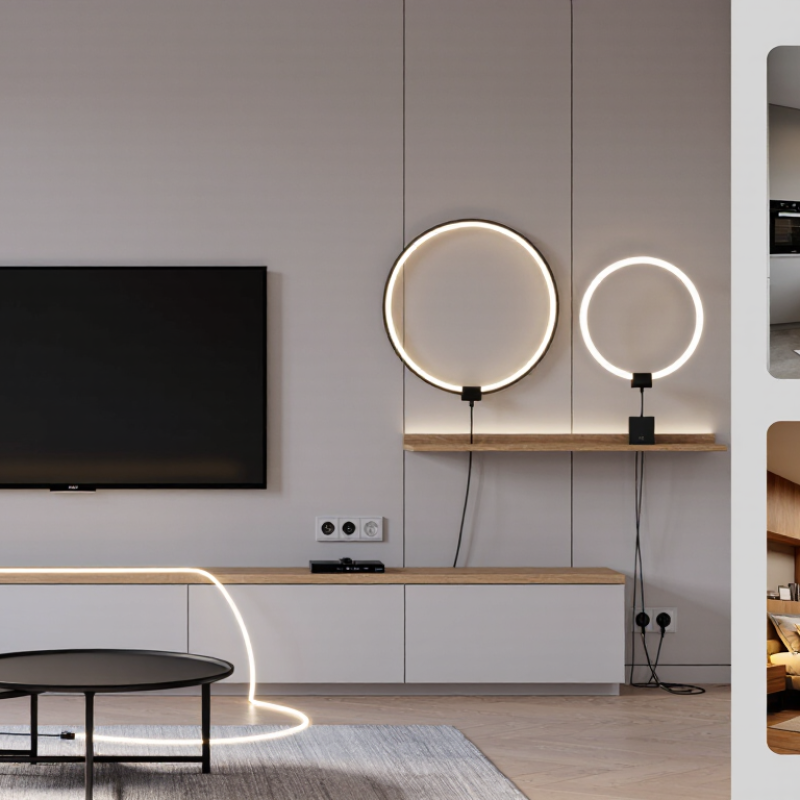
An LED strip is a flexible circuit board with small light-emitting diodes spaced along its surface. When electricity flows through each diode, it produces light with little heat compared with many older lighting types. Tiny components, steady work.
Most strips need a power supply that matches their voltage and total electrical load. A controller can dim the lights, change colors, or run simple effects. RGB strips mix red, green, and blue light; they can make many colors, but their whites may look cool or uneven. Dedicated white LEDs often give a more natural tone. The label alone does not tell the whole story.
Brightness depends on factors such as diode density, power, and how well heat can escape. In a kitchen, closely spaced LEDs behind a diffuser usually create a smoother line than widely spaced ones mounted bare. Cut marks show where trimming is safe; cutting elsewhere can damage a section. Adhesive may also loosen on dusty or warm surfaces, so clean the area before installation. Even careful planning can miss a dim spot at a corner. Check the strip in place before hiding its wiring.
LEDs produce light when an electric current passes through semiconductor diodes. Many white LED strips combine a blue LED with a phosphor coating to create white light. Color temperature describes its appearance: lower values look warmer, while higher values look cooler. The chart shows representative white-light options, not product ratings; available settings vary by strip.
When comparing LED strip lights, start with brightness and color quality, not the packaging’s biggest number. Lumens per meter indicate light output, while color temperature describes whether the glow looks warm or cool. For kitchens, a high color-rendering index can make food and countertop colors look more natural. Check these figures against the room’s purpose. A cozy bedroom and a workbench need different light.
Look at LED spacing and strip length, too. Closely spaced LEDs usually create a more even line, especially inside a shallow diffuser. Bare strips can show dotted reflections on glossy cabinets. Measure the route before buying, and note where power enters. Longer runs may lose brightness toward the far end, depending on the strip and its power setup. Check the manufacturer’s guidance. Do not guess.
The controller should support the features you will actually use, such as dimming, scheduled operation, or adjustable white tones. Confirm that the power supply matches the strip’s voltage and total load; an undersized supply can cause unreliable performance. For bathrooms or covered outdoor areas, check the stated ingress-protection rating and installation limits. Adhesive quality matters on painted walls, but surface preparation matters more. I have seen strips peel from dusty surfaces within days. That is easy to overlook. Read the return policy, too, because color and brightness can feel different once installed.
LED strip lights differ by diode layout, color control, brightness, and protection from moisture. Single-color strips suit shelves, closets, and task lighting, where steady white light matters. Tunable-white strips shift from warm evening tones to cooler work light. RGB strips create saturated colors, but colored output may not reveal food or fabric accurately. For a smooth line of light, high-density or COB strips reduce visible dots. That matters under cabinets. A little.
For bathrooms or covered outdoor areas, check the strip’s IP rating and installation instructions; not every “water-resistant” strip can handle splashes. Also compare lumens per meter, not just watts. The U.S. Department of Energy’s Energy Saver guidance says LEDs use at least 75% less energy and can last up to 25 times longer than incandescent lighting. These figures describe LEDs broadly, not every strip’s real-world performance. Drivers, heat, dimmers, and poor installation can change results. I’ve seen neat-looking kits disappoint when the adhesive loosens.
Tips: Measure the run, add a little length for corners, and choose a compatible power supply. Test the strip before mounting it. Check that the dimmer supports its control type.
There is no single best strip for every project. Compare the strip type with the intended use, power supply, control method, and installation environment. Voltage, brightness, cut spacing, and maximum run length vary by product; check the product specifications before installation.
| LED Strip Type | Typical Light Output | Best Suited For | Typical Voltage | Control Options | Key Advantages | Things to Check |
|---|---|---|---|---|---|---|
| Single-color white | One fixed white tone, commonly warm, neutral, or cool white | Task and accent lighting Under cabinets, shelves, work areas, and coves |
12 V or 24 V DC | On/off switch, dimmer, or compatible lighting controller | Simple wiring and consistent color; often a practical choice when color effects are not needed | Choose a suitable color temperature and brightness. Confirm the strip and dimmer are compatible. |
| Tunable white | Adjustable white tone, typically ranging from warm to cool white | Rooms used throughout the day Living spaces, bedrooms, and home offices |
12 V or 24 V DC | Compatible tunable-white controller, wall control, or smart control system | Allows users to change the appearance of white light without switching to colored effects | Requires a compatible controller and power supply; check the supported color-temperature range. |
| RGB | Red, green, and blue color mixing; white may be produced by combining RGB channels | Decorative color effects Entertainment areas, gaming setups, and display accents |
12 V or 24 V DC | RGB controller, remote, or compatible smart controller | Offers a broad range of color effects and scenes | RGB-mixed white may differ from dedicated white LEDs. Confirm controller compatibility and wiring. |
| RGBW | RGB colors plus a separate white LED channel | Color and usable white light Multifunction rooms and mixed accent lighting |
12 V or 24 V DC | RGBW controller or compatible smart lighting system | The dedicated white channel can provide more natural white light than RGB mixing alone | Needs an RGBW-compatible controller and power supply; check whether the white channel is warm, neutral, or cool. |
| Addressable RGB or RGBW | Individually or segment-controlled color effects, depending on the strip design | Animated effects Signs, displays, and installations that need chasing or pixel patterns |
Commonly 5 V, 12 V, or 24 V DC, depending on the design | Compatible addressable controller and data signal | Can create moving patterns and different colors along one strip | Controller, data protocol, power injection, and wiring must match the strip. Follow the specified maximum run and connection guidance. |
| COB (chip-on-board) strip | Continuous-looking line of light with closely spaced LED chips | Smooth, dot-free appearance Visible channels, shelves, and shallow-profile installations |
Commonly 12 V or 24 V DC | On/off control, compatible dimmer, or controller for the selected color type | Dense light output can reduce the appearance of individual bright points | Check heat management, cut marks, connector compatibility, and whether the strip is single-color or tunable. |
| Outdoor-rated strip | Varies by strip type; may be white, tunable white, RGB, or RGBW | Weather-exposed locations Covered outdoor areas and suitable exterior accents |
Commonly 12 V or 24 V DC | Depends on the strip type; use compatible outdoor-suitable components where required | Protective construction can help resist dust or water when installed within its rated conditions | Check the IP rating and whether it applies to the strip, connectors, and power supply. Seal cut ends and connections as directed; an IP rating does not mean every installation can be submerged. |
Evaluating LED strip lights starts with the room, not the product photo. Measure the run, note outlet locations, and decide whether the strip will provide task lighting or a soft accent. A kitchen counter needs more useful brightness than a display shelf. Small difference, big effect.
Compare brightness in lumens per meter, not watts alone; watts describe energy use, not perceived output. Check color temperature for the mood you want: warmer white feels softer, while cooler white can suit detailed work. For color accuracy, look for a stated CRI rating, especially near food, fabric, or artwork. Want adjustable colors? Confirm the controller supports the effects and dimming you actually need. More modes are not always better.
Check the strip’s voltage, power supply capacity, and recommended maximum run length before buying. On long installations, brightness can fade near the far end, so follow the maker’s guidance or test a short section first. Match the IP rating to likely exposure, such as occasional splashes near a sink. Also inspect cut marks and adhesive quality; dusty paint can defeat even strong tape. It is easy to overlook heat, too. Install the strip on a suitable surface, then check whether it stays evenly bright after running for a while.
The best LED strip light is the one that suits its location, not simply the one with the brightest output. Measure the full route, including corners and gaps behind furniture. Measure twice. A strip under kitchen cabinets needs even, useful task lighting; a low-brightness strip behind a television works better for soft background glow. Check the stated length and power requirements before buying, since cutting marks and connectors vary between models.
Match the light color to the room’s purpose. Warm white can feel comfortable in bedrooms, while neutral white often makes counters and work areas easier to see. For flexible color, RGB strips offer more options, but color effects may be less useful for everyday tasks. I’d also check whether dimming and app controls need a separate controller. Smart features sound convenient, though an extra setup step can become a nuisance.
The surface matters. Dusty paint, textured walls, and sharp bends can weaken adhesion, so clean and dry the area before installation. Use a diffuser channel when you want a smoother, less dotted appearance. For bathrooms or covered outdoor spaces, check the strip’s water-resistance rating and follow its installation guidance; a rating alone does not make every location suitable. One detail is easy to miss: confirm that the power supply can support the chosen strip length. I still find that planning the cable route first saves frustration later.
It is a flexible circuit board with small LEDs spaced along its surface. Each diode produces light when electricity flows through it.
Most strips need a power supply matched to their voltage and total load. A controller can dim lights, change colors, or run simple effects.
RGB strips mix red, green, and blue light to create many colors. Their whites can look cool or uneven; dedicated white LEDs often appear more natural.
Choose closely spaced LEDs and place them behind a diffuser. Bare strips can create dotted reflections on glossy cabinets. Small detail, noticeable difference.
Measure the route and check where power enters. Clean dusty surfaces, and cut only at marked points. I might still miss a dim corner, so test the strip before hiding its wiring.
Lumens per meter indicate light output, while color temperature describes a warm or cool appearance. A high color-rendering index can help food and countertop colors look more natural.
It can, depending on the strip and its power setup. Check the installation guidance instead of guessing. Measure first.
Check the stated ingress-protection rating and installation limits. A rating alone may not answer every question about a specific location.
Adhesive can loosen on dusty or warm surfaces. Clean and prepare the surface carefully; even then, adhesion can be easy to misjudge.
Choosing the best LED Strip Lights in 2026 starts with understanding how they work: closely spaced LEDs mounted on a flexible strip produce light that can be shaped to fit many spaces. Their low-profile design and range of lighting effects make them useful for both practical illumination and decorative accents. When comparing options, consider brightness, color quality, color-changing capabilities, power requirements, control methods, durability, and whether the strip can be cut or extended.
Different types suit different purposes, from subtle indoor accent lighting to brighter task lighting or strips designed for damp locations. To evaluate a strip, look beyond its feature list and consider how consistently it lights, how easily it installs, and whether its controls fit your routine. Measure the area, check mounting and power access, and match the strip’s length, light output, and protection level to the space. The right choice balances performance, convenience, and intended use.