Explore our top-performing LED ribbon lights, digital addressable pixel tapes, neon diffusers, and control solutions built to European quality standards.
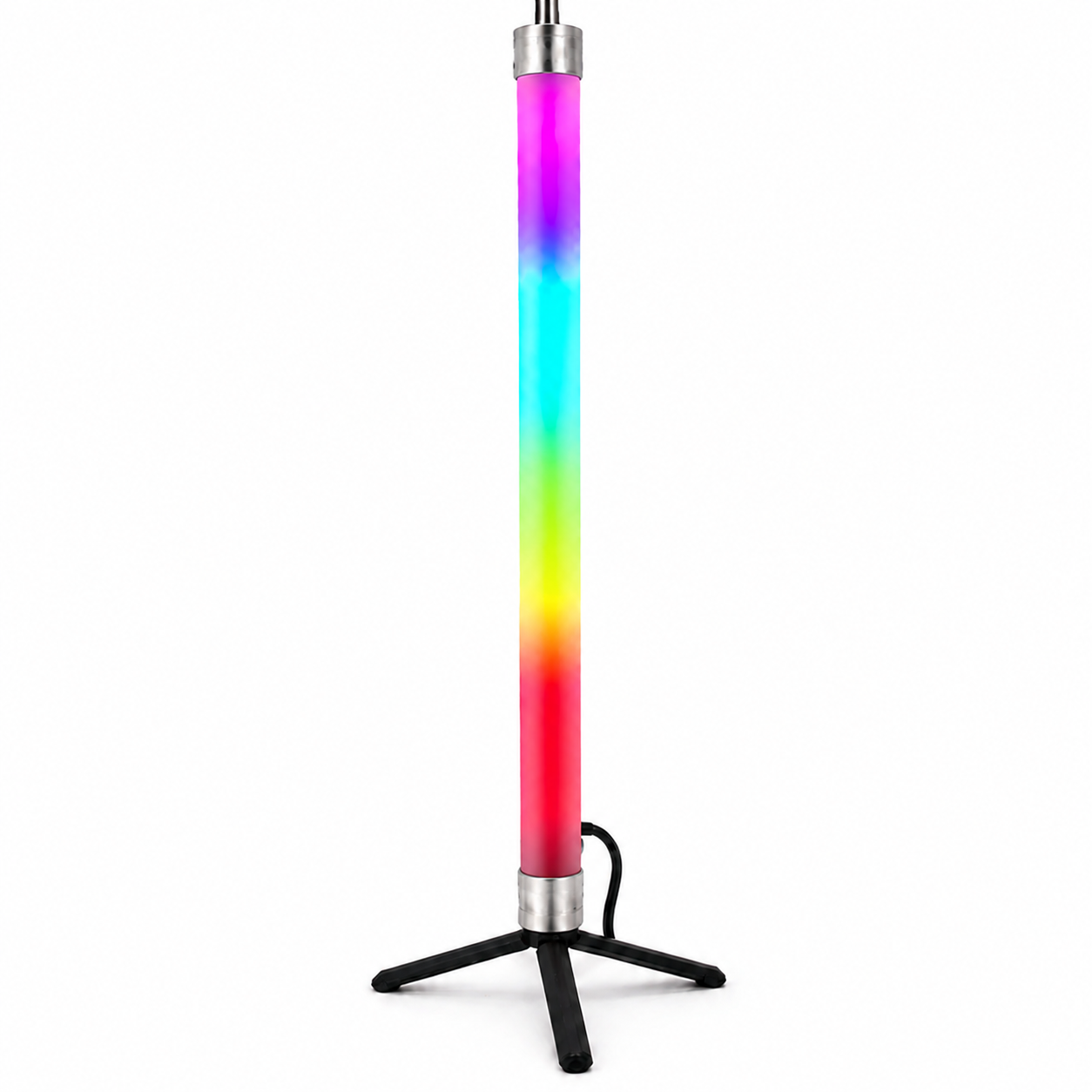
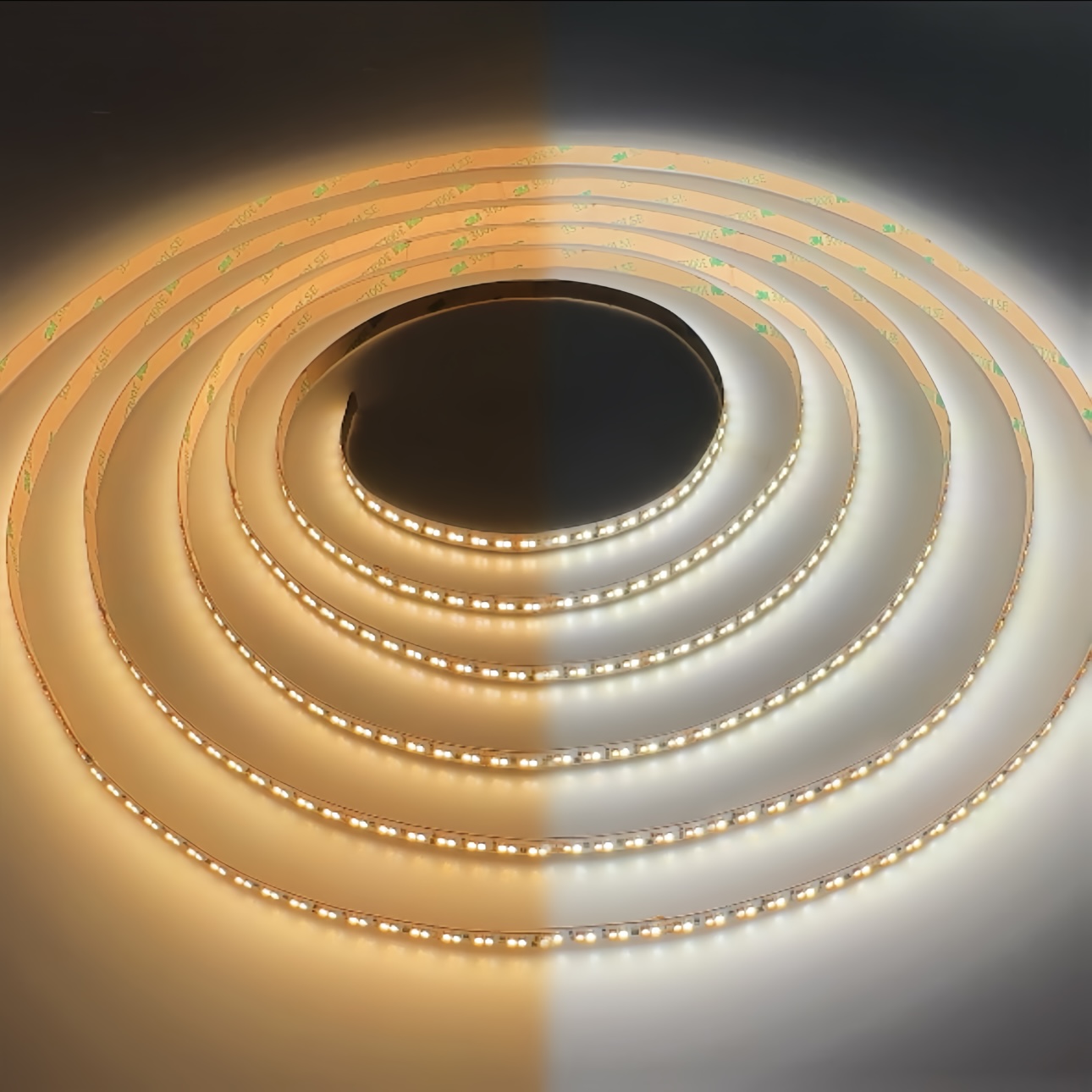

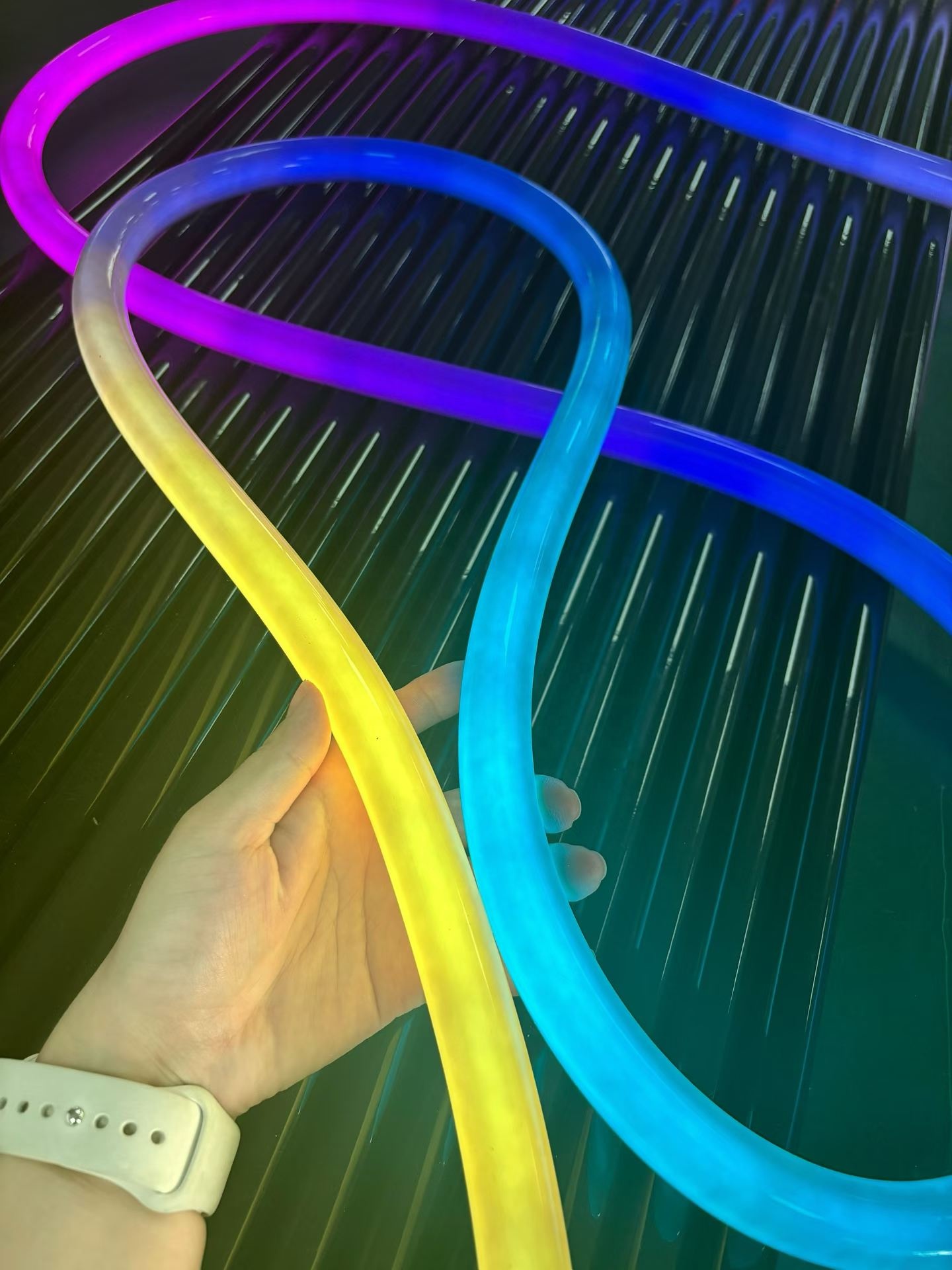
Understanding the engineering metrics behind certified flexible linear luminaires and supply chain verification.
As an established OEM/ODM enterprise rooted in Shiyan, Shenzhen (Shenzhen Fuvin Led Technology Co., Ltd.), our facility operates under a rigorous quality management ecosystem verified by SGS Group. In commercial lighting procurement, CE certification (specifically EMC Directive 2014/30/EU and LVD 2014/35/EU) serves as the baseline compliance threshold. However, industrial-grade LED ribbon light manufacturing requires overcoming critical physical bottlenecks: thermal dissipation management across multi-layer flexible copper printed circuit boards (FPC), color consistency across production batches, and voltage drop mitigation over extended linear runs.
A comparative engineering breakdown for wholesale buyers, electrical engineers, and lighting designers.
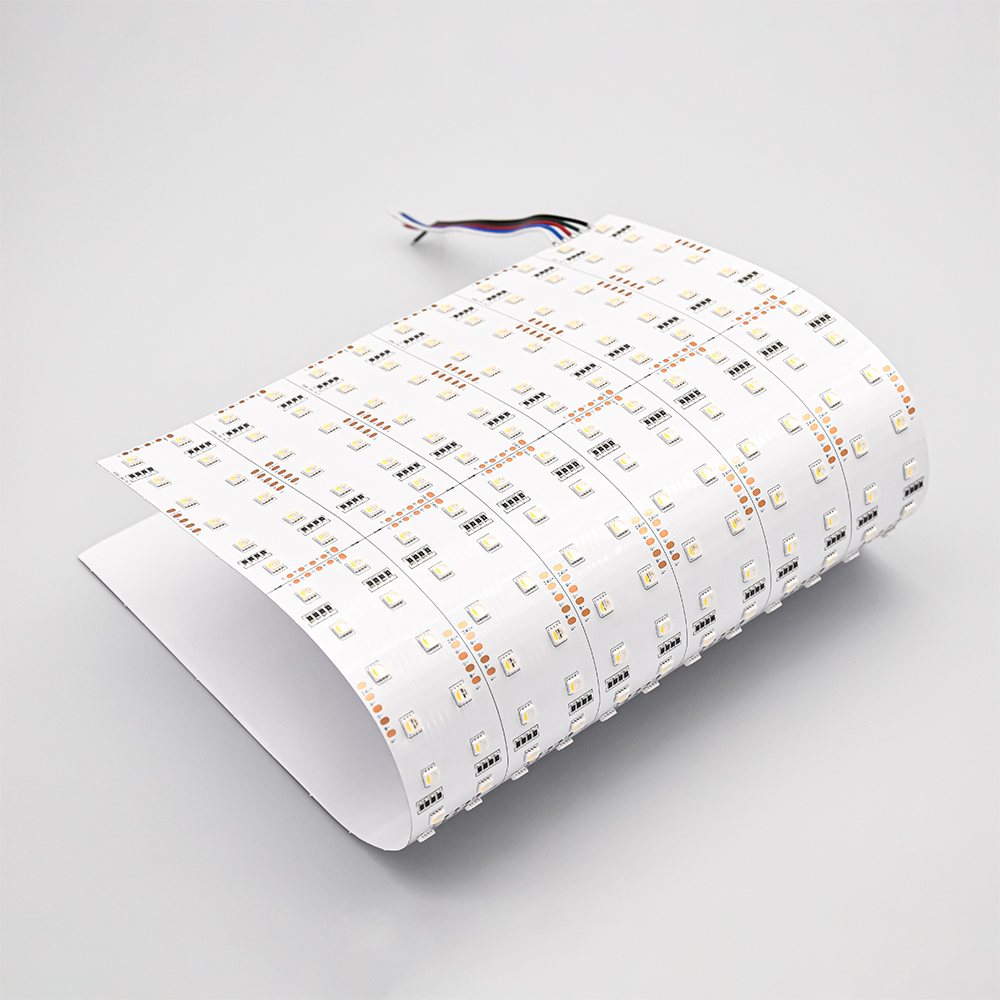
When sourcing LED ribbon lights in bulk, price variance often obscures fundamental differences in PCB thermal resistance ($R_{th}$), integrated circuit (IC) driver quality, and binning precision. Standard decorative LED tapes frequently utilize 1oz electrolytic copper PCBs with 8-bit pulse-width modulation (PWM) drivers, leading to noticeable color shift, thermal degradation, and visible flicker on camera. Conversely, our CE-certified architectural LED ribbon lights incorporate high-density 3oz to 4oz rolled-annealed copper circuits paired with advanced micro-drivers (such as UCS8904, UCS7604, or TM512AC).
| Performance Specification | Commercial Grade (Standard OEM) | Fuvin CE-Certified Architectural Grade | Engineering Impact / Advantage |
|---|---|---|---|
| PCB Copper Weight & Type | 1oz - 2oz Electrolytic Copper | 3oz - 4oz Rolled-Annealed Copper | Minimizes line resistance, reduces heat by 22%, eliminates voltage drop over longer runs. |
| Color Tolerance (Binning) | 5-Step MacAdam (SDCM < 5) | 3-Step MacAdam (SDCM < 3) / Single Bin | Guarantees exact color matching across replacement reels and multi-year project phases. |
| Driver Protocol & Dimming | 8-bit PWM (256 steps) | 16-bit True Grayscale (65,536 steps) | Ultra-smooth low-end dimming without stepped transitions or low-frequency flicker. |
| Camera Refresh Rate | < 1,000 Hz (Visible Strobe) | > 3,840 Hz (Flicker-Free Broadcast) | Crucial for TV studios, virtual production stages, and high-speed shutter camera environments. |
| Encapsulation Technology | PVC / Standard Gel (Yellowing Prone) | Food-Grade Liquid Silicone (UV/Salt Proof) | Prevents cracking, yellowing, and optical loss in outdoor IP67/IP68 installations. |
| Thermal Interface & LM-80 | Basic Thermal Tape | 3M 300LSE / 9495LE + Golden Wire LEDs | Ensures lumen maintenance exceeding 80% after 36,000 operational hours at elevated temps. |
Selecting the optimal protocol for dynamic facade mapping, entertainment stages, and architectural linear lighting.
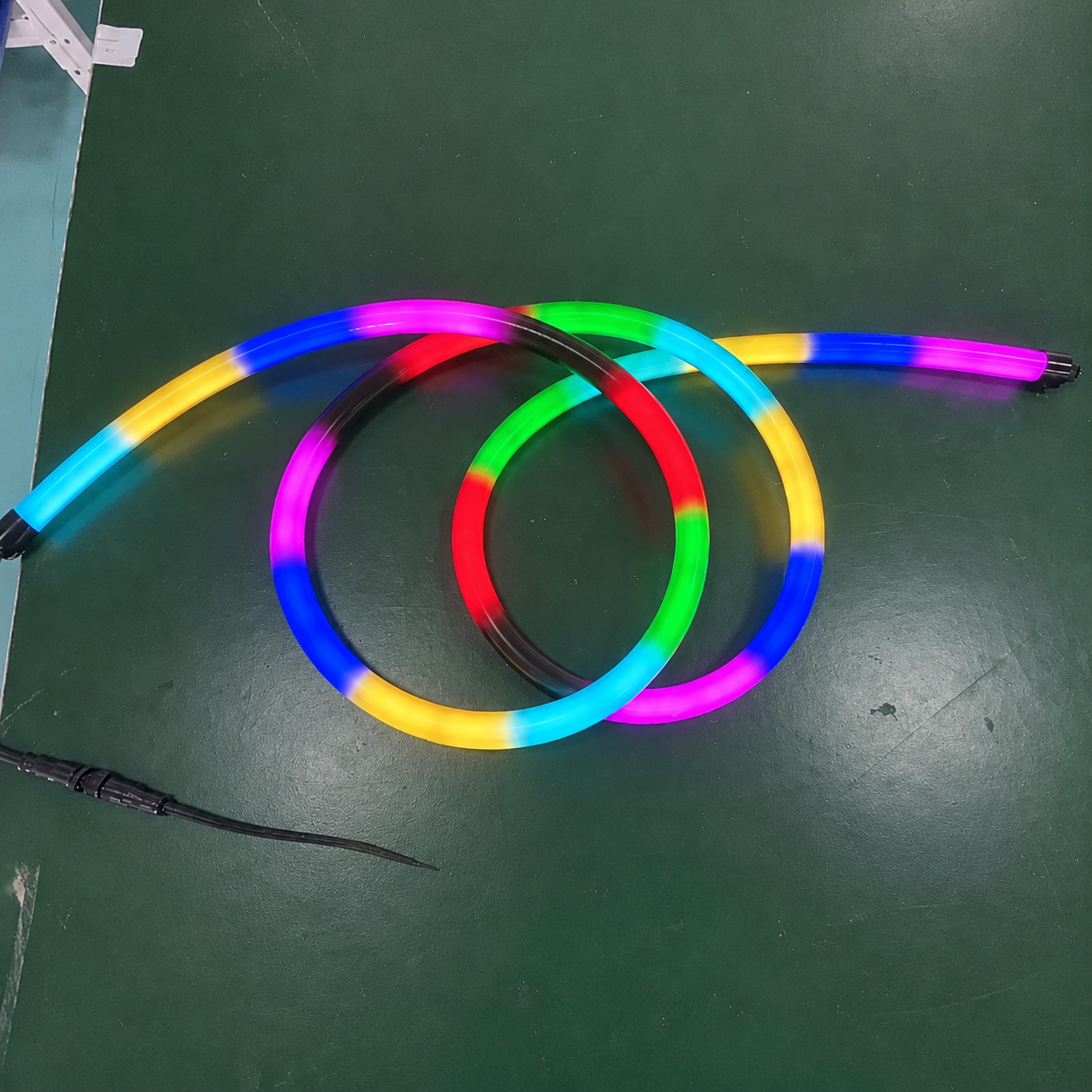
Utilizing protocol ICs such as UCS2904, UCS8904, and SK6812, Serial Peripheral Interface (SPI) ribbon lights allow individual LED control over single or dual data lines. Our 16-bit UCS8904 series provides 65,536 steps of color depth per channel (RGBW), enabling seamless transitions for architectural coves, volumetric 3D displays, and high-end video mapping setups where smooth dimming curves are non-negotiable.
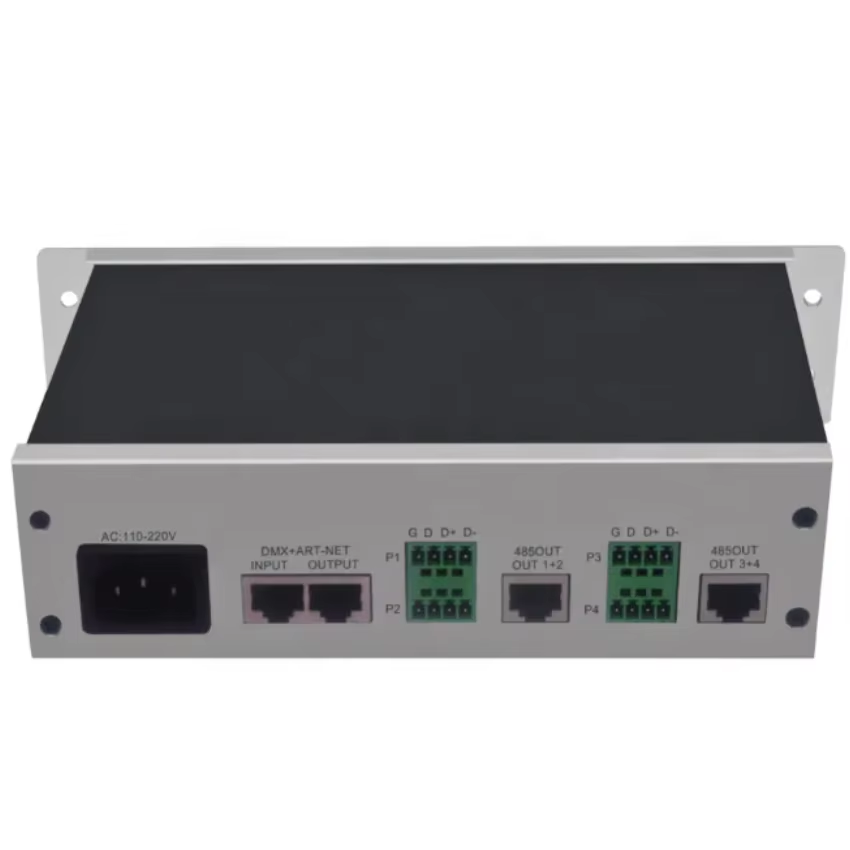
For long-distance signals across media facades and commercial venues, differential RS-485 DMX512 ICs (UCS512, TM512AC) eliminate data corruption caused by electromagnetic interference. Featuring integrated RDM (Remote Device Management), engineers can auto-address entire ribbon lighting runs using our handheld touch-screen DMX address writer without physically touching individual fixtures.
Addressing the aesthetic issue of visible LED "hotspots," Chip-on-Board (COB) linear ribbon lights integrate hundreds of micro-chips beneath a continuous phosphor silicone matrix. Using WS2814 RGBW or Tunable White CCT COB configurations, designers achieve a flawless, dot-free line of light even when installed in ultra-shallow aluminum profiles without frosted diffusers.
Market evolution, energy efficiency directives, and key purchasing metrics driving B2B procurement.
The global LED strip and linear lighting market is undergoing a significant transformation driven by strict European Union Eco-design directives (EU 2019/2020 & EU 2019/2015), increased demand for human-centric lighting (HCL), and the rapid expansion of digital pixel-mapped architectural facades. For wholesalers and electrical importers, adapting procurement strategies to these multi-year trends is vital for sustaining competitive margins.
Energy costs are driving municipal and corporate buyers toward high-lumen-per-watt (lm/W) linear systems. Traditional LED ribbons generated 80-100 lm/W. Next-generation CE-certified ribbons leverage flip-chip SMD2835 and high-efficiency phosphors to achieve 160 lm/W to 190 lm/W, drastically lowering total cost of ownership (TCO) while complying with EU Class D/C energy labeling.
Standard 12V and 24V LED tapes require power injection every 5 to 10 meters due to copper trace line loss. The industry is rapidly adopting 48V Constant Current driver architectures, permitting single-feed runs up to 30 meters without lumen degradation or color shift, reducing installation labor and power supply count by over 50%.
Importers are moving away from traditional PVC and PU encapsulation due to yellowing, micro-cracking under UV exposure, and toxic halogen emission during fire events. Modern procurement prioritizes gas-phase integrated silicone extrusion, offering IP67/IP68 ingress protection, IK10 impact resistance, and stable operation across extreme temperatures (-40°C to +80°C).
A transparent look into our 12-step manufacturing process and rigorous quality control protocols.
Quality in LED ribbon light manufacturing is not achieved by chance—it is built into every step of the assembly line. At Shenzhen Fuvin Led Technology Co., Ltd., our production facility combines automated high-speed SMT placement with dedicated testing stations to guarantee zero-defect shipments.
Technical answers addressing procurement, electrical engineering, compliance, and custom OEM inquiries.
A genuine CE mark for LED ribbon lights requires compliance with two primary directives: EMC (Electromagnetic Compatibility Directive 2014/30/EU) and LVD (Low Voltage Directive 2014/35/EU), referencing standard EN 60598-2-21 (particular requirements for rope lights and flexible linear luminaires). Tests include photobiological eye safety (EN 62471), electromagnetic emission/immunity, insulation resistance, thermal endurance under fault conditions, and mechanical flex stress testing over 10,000 bending cycles.
The MacAdam Ellipse measures human color perception variance on the CIE 1931 chromaticity diagram. A 3-Step MacAdam (SDCM < 3) rating guarantees that the color variation between LEDs across different production batches is virtually imperceptible to the human eye. This is essential for indirect wall grazing and cove lighting where two adjacent ribbons must present an identical white tone (e.g., exactly 3000K ± 75K).
An 8-bit IC (such as UCS2904 or WS2811) allocates 256 dimming levels per color channel (R, G, B, W), yielding 16.7 million color combinations. However, at low brightness levels (0.1% to 10%), 8-bit dimming displays visible step jumps. A 16-bit IC (such as UCS8904 or UCS7604) provides 65,536 dimming steps per channel, enabling ultra-smooth, organic dimming fades without stuttering—a mandatory feature for theater stages, TV broadcasting studios, and high-end architectural accents.
Voltage drop occurs when trace resistance decreases supply voltage along the ribbon length, causing distant LEDs to dim or shift color toward red. We overcome this by engineering ribbons with heavy 3oz/4oz rolled copper PCBs, integrating dual-side power bus traces, utilizing 24V or 48V power topologies instead of 12V, or incorporating internal constant-current driver ICs that maintain uniform current across every LED group regardless of input voltage fluctuation.
Yes. As a verified custom manufacturer, we provide tailored OEM/ODM services for distributors and project integrators. Options include custom PCB colors (white, black, copper), customer logo printing, custom cut intervals (down to single-LED cuts), specialized silicone neon profiles, pre-soldered IP68 waterproof quick-connectors, and private-label packaging with barcode serialization.
Silicone extrusion features superior chemical stability, high light transmittance (>90%), zero yellowing over time, and high flame-retardant ratings. Unlike PVC, which turns brittle and cracks under solar UV radiation or sub-zero temperatures, silicone maintains full flexibility between -40°C and +80°C and resists degradation in saline marine environments or chlorine-treated pool areas.
Partner with an SGS-verified factory for CE certified LED ribbon lights, digital pixel tapes, and custom linear lighting. Get comprehensive datasheets, photometric IES files, and direct factory pricing.
 Shenzhen, Guangdong, China