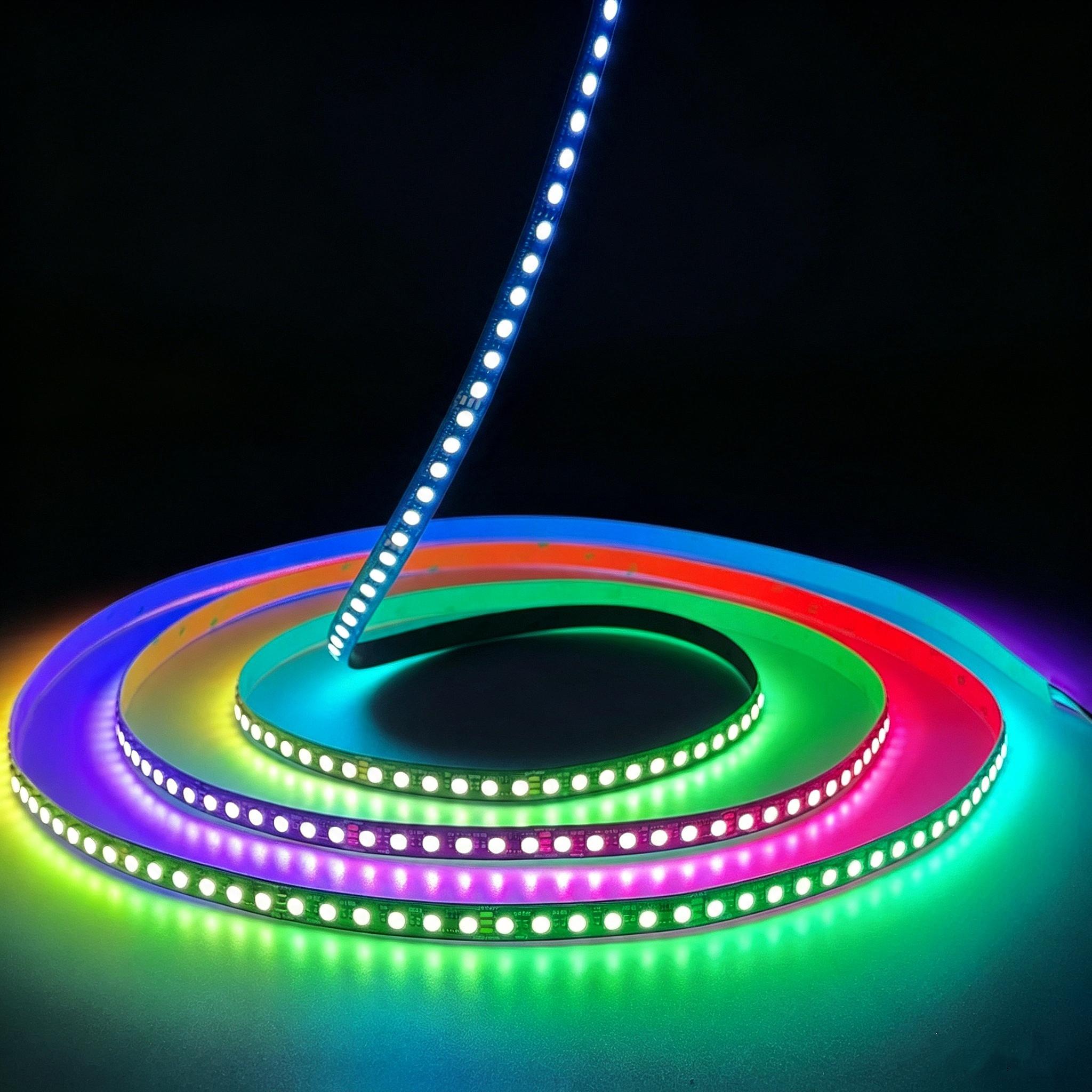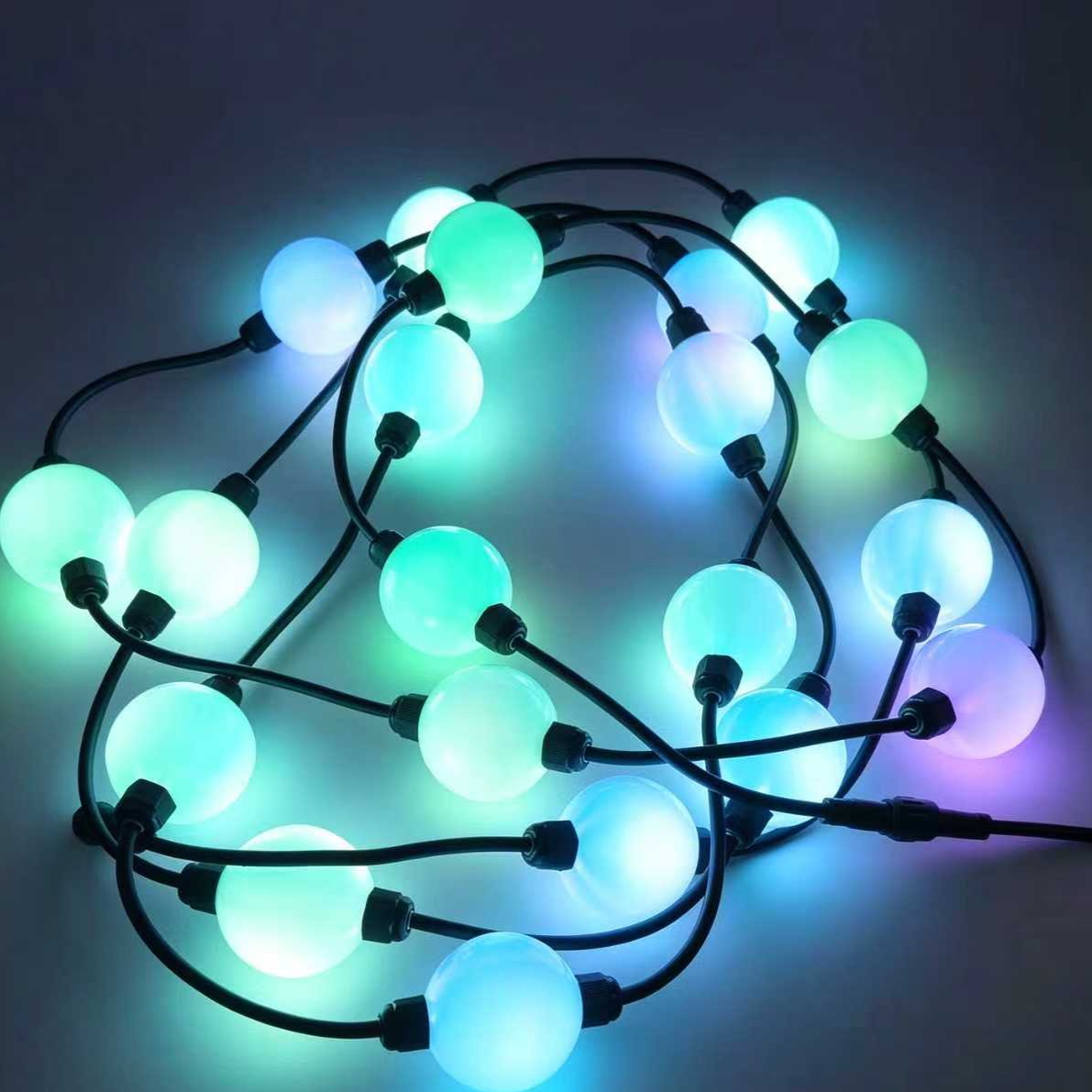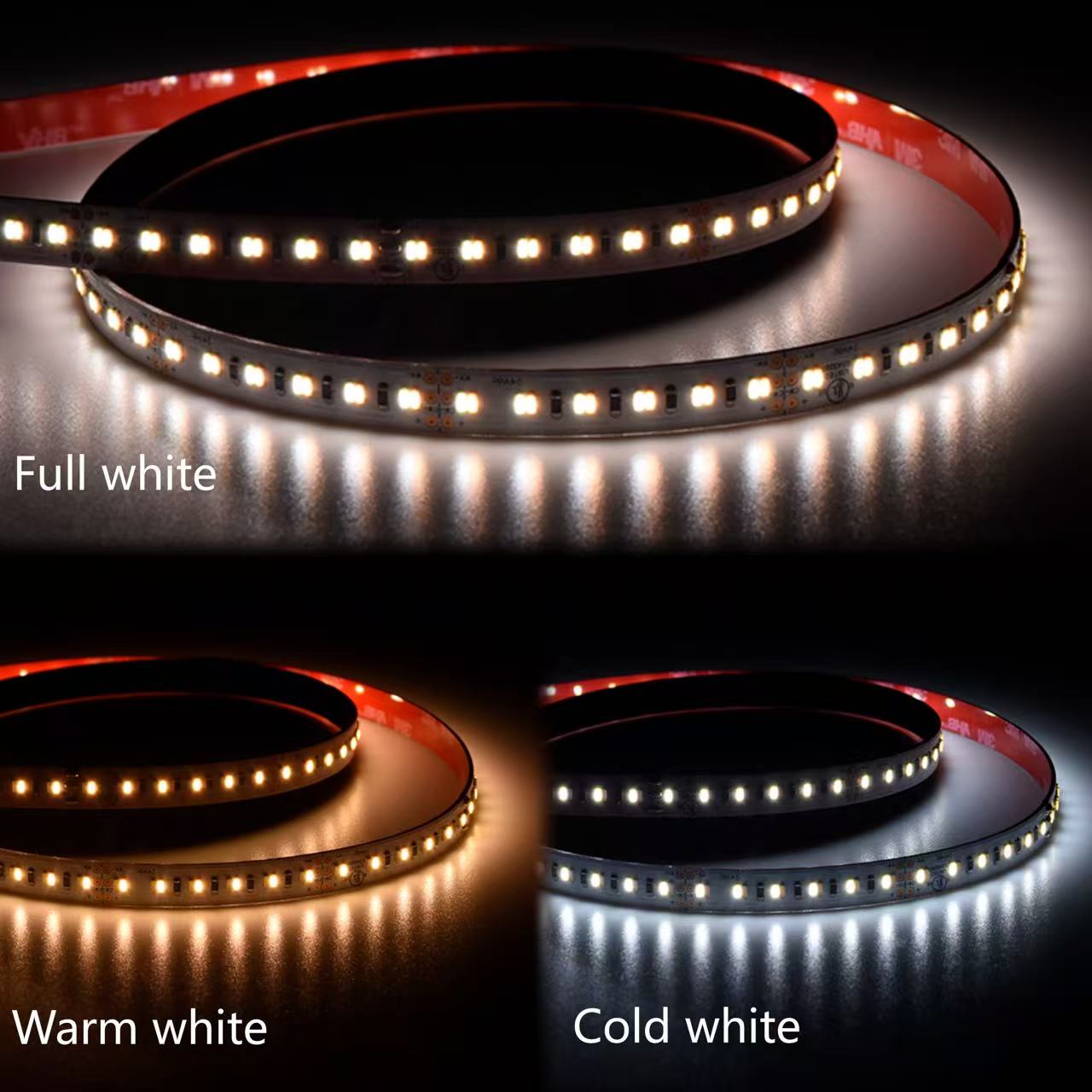
In the rapidly advancing landscape of architectural illumination, entertainment rigging, and commercial facade lighting, addressable LED pixel light systems have transformed from simple decorative ribbons into high-precision, software-controlled lighting arrays. As a leading manufacturer based in Shenzhen, China—Shenzhen Fuvin Led Technology Co., Ltd. delivers customized pixel solutions engineered to meet rigorous international technical standards.
When sourcing from China LED pixel light suppliers, understanding the distinction between driver IC protocols is paramount for project success. Traditional 8-bit integrated circuits (such as WS2811, SK6812, and standard UCS2904) yield 256 grayscale levels per RGB/RGBW channel, totaling 16.7 million colors. While sufficient for general perimeter tracing and festive applications, 8-bit ICs exhibit visible stepping during low-brightness dimming fades (under 5% output).
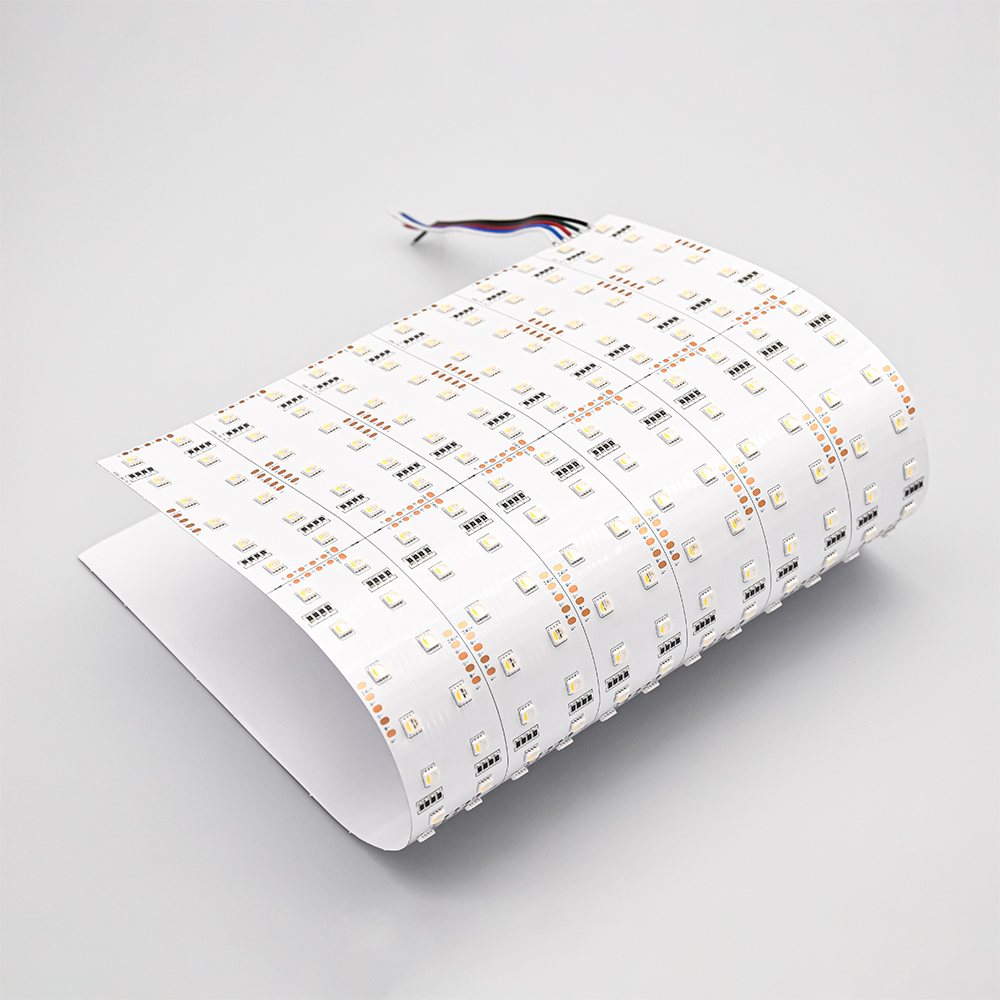
For broadcast studios, opera stages, and high-end architectural accents, next-generation 16-bit pixel ICs (such as UCS8904 and UCS7604) provide 65,536 grayscale levels per channel. This hyper-fine resolution allows perfectly linear dimming curves down to 0.01% without step artifacts or camera flicker, operating seamlessly across high-speed PWM frequencies (>3,840Hz).
| Protocol / IC Model | Color Channels | Grayscale Depth | Operating Voltage | Signal Transmission | Recommended Applications |
|---|---|---|---|---|---|
| UCS8904 / UCS8904B | RGBW (4 Ch) | 16-Bit (65,536 steps) | DC12V / DC24V | SPI Serial Data | Stage theatrical lighting, broadcast sets, luxury interior coves |
| UCS2904 / SK6812 | RGBW (4 Ch) | 8-Bit (256 steps) | DC5V / DC12V / DC24V | SPI Serial Data | Commercial retail signage, amusement rides, decorative arches |
| WS2814 (COB Tech) | RGBW (4 Ch) | 8-Bit (256 steps) | DC24V | SPI Data + Continuous Phosphor | Dot-free direct-view linear lighting, museum displays |
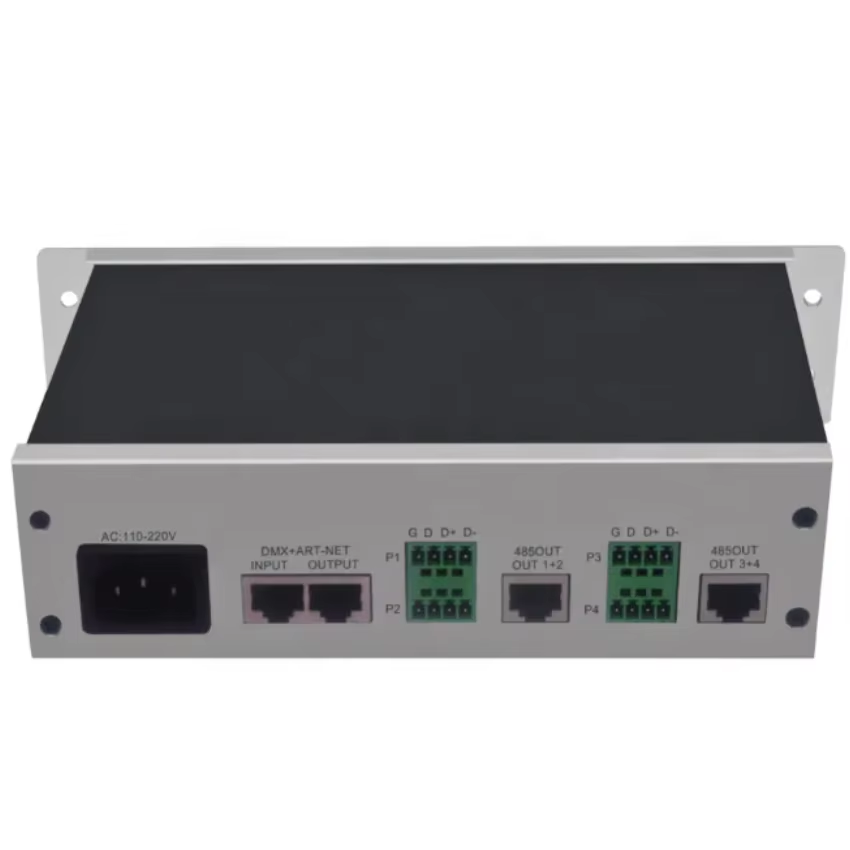
| DMX512 (UCS512 / TM512AC) | RGB / RGBW | 8-Bit / 16-Bit | DC12V / DC24V | RS-485 Differential Parallel | Exterior media facades, bridge lighting, long-distance infrastructure |
A critical consideration during user intent evaluation and procurement planning is selecting between Single-Wire/Two-Wire TTL SPI (Serial Peripheral Interface) and RS-485 based DMX512 communication protocols:
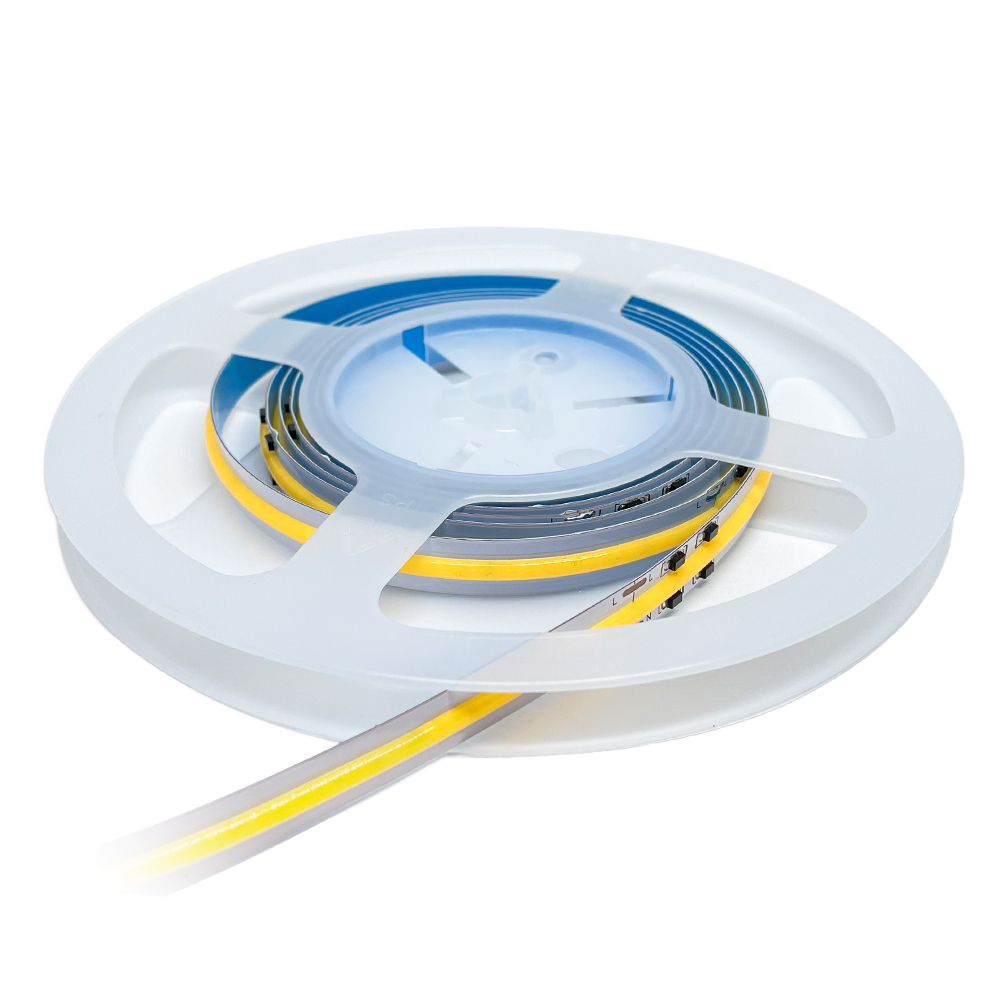
Traditional SMD pixel strips (e.g., SMD5050 or SMD3535) expose visible hot-spots when mounted without deep aluminum diffusers. The introduction of WS2814 COB (Chip-on-Board) Pixel Technology packs 720 to 784 micro-chips per meter beneath a continuous silicone phosphor matrix. This creates a completely dotless, homogeneous ribbon of addressable light, significantly lowering installation depth requirements in custom furniture and architectural slots.
B2B installers are rapidly moving away from DC5V pixel arrays toward DC24V stepped-down architectures. High-voltage 24V addressable strips cut operating current by 75%, allowing continuous runs up to 10–15 meters with minimal power injection, drastically reducing power supply cabling costs.
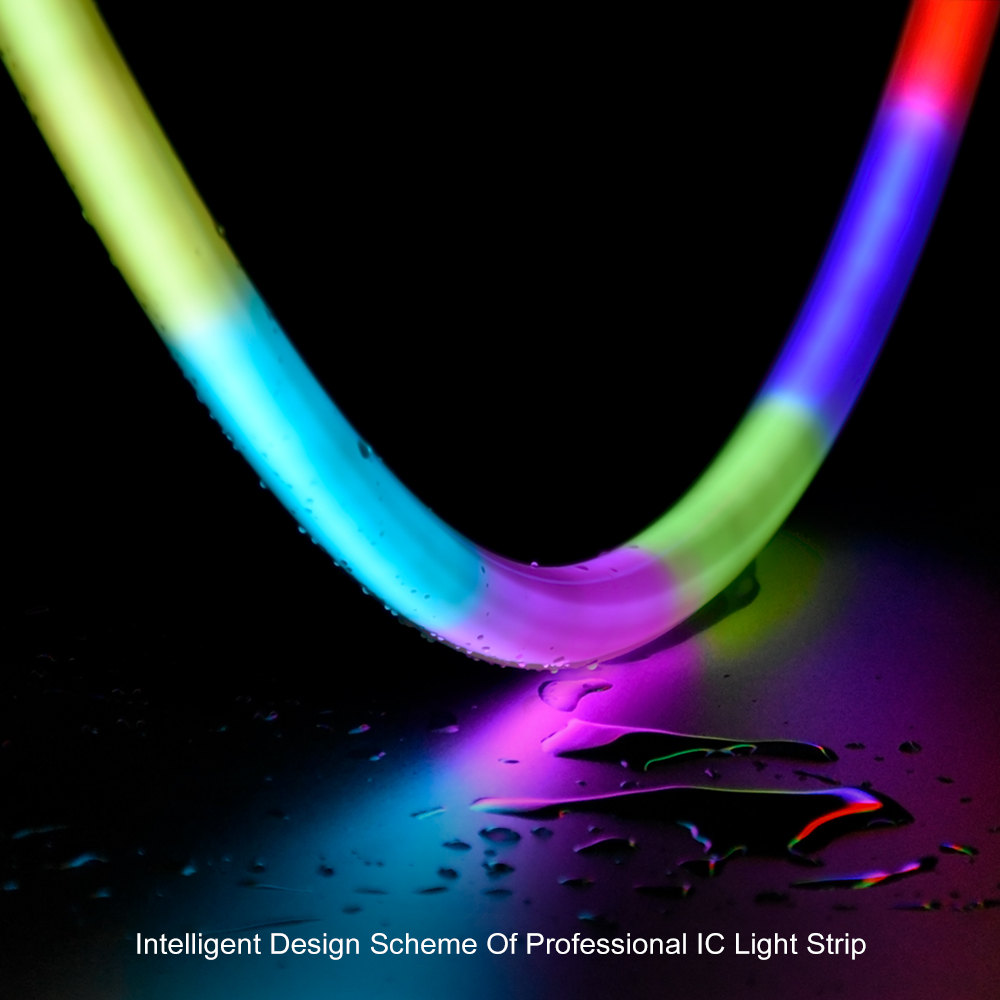
PVC materials are being replaced by high-grade UV-resistant, anti-yellowing liquid silicone extrusion. Products like our D22 360° Round Pixel Neon Flex enable omnidirectional emission, IP67/IP68 submersion durability, and operational resilience across severe temperature fluctuations (-40°C to +60°C).
Future-proof facade installations require bidirectional communication. Remote Device Management (RDM) integrated within DMX512 pixel ICs enables centralized control hubs to monitor real-time operating temperatures, voltage drops, and pixel health across tens of thousands of nodes without manual ladder inspections.
Choosing a reliable China LED pixel lights supplier requires evaluating manufacturing infrastructure, supply chain traceability, and stringent quality control. Located in Shiyan, Shenzhen, Fuvin LED operates as an SGS-onsite verified custom manufacturer serving tier-one lighting designers, stage rental firms, and architectural integrators across North America, Western Europe, Oceania, and the Middle East.
Every meter of LED pixel strip, linear bar, and point light leaving our factory follows a disciplined, traceable manufacturing route:
100% spectroscopic binning testing for LEDs, double-sided 3oz electrolytic copper FPC verification, and IC brand authenticity checks.
High-speed Yamaha surface-mount placement ensuring micro-solder joint consistency and accurate IC orientation.
All pixel ribbons are continuously powered on for a minimum 12 to 24 hours under dynamic color-cycling stress tests to eliminate early component failures.
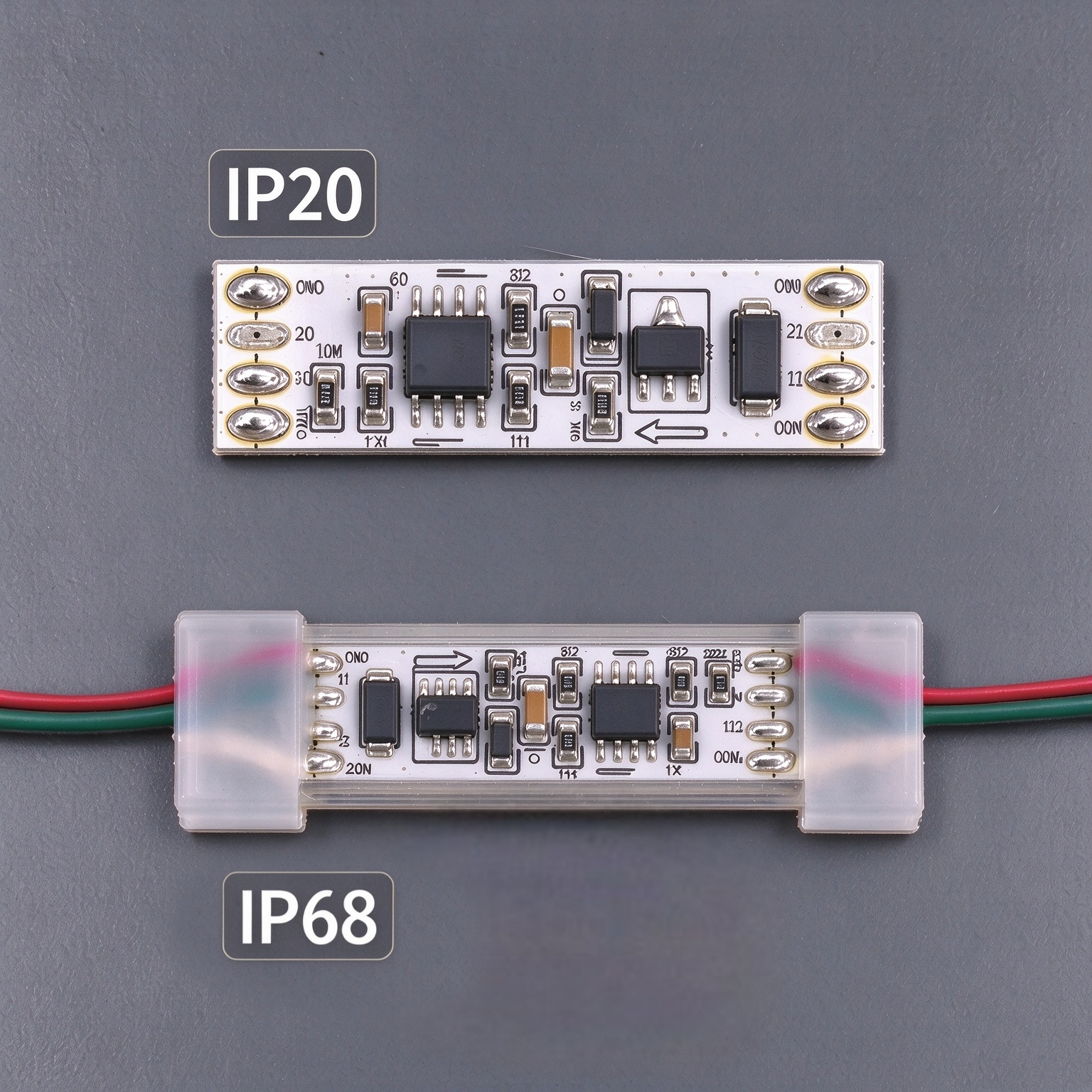
Automated silicone injection co-extrusion yielding IP65, IP67, or solid-filled IP68 ratings certified for underwater usage.
Rigorous oscilloscope waveform analysis validating SPI data timing, voltage drops, and high-frequency PWM stability.
Anti-static, vacuum-sealed reel packaging equipped with desiccant packs to guarantee shelf life during maritime transit.
Both ICs drive 4-channel RGBW pixel arrays via SPI data signals. However, the UCS2904 operates at 8-bit color depth (256 grayscale levels per channel), making it ideal for cost-effective architectural accents and decorative displays. The UCS8904 features true 16-bit grayscale processing (65,536 dimming levels per channel), delivering flicker-free, ultra-smooth low-end fades required for theatrical stages, film production sets, and high-end commercial spaces.
Choose SPI pixel strips for shorter distance runs (< 10m from controller) where budget efficiency and high pixel density are primary goals. Choose DMX512 pixel strips for large-scale exterior facades, building perimeters, or long cable spans; DMX512 uses differential RS-485 signaling resistant to interference, features individual IC address writing capabilities, and ensures continuous downstream operation even if a pixel chip fails.
As an SGS-verified custom manufacturer, we accommodate tailored engineering specifications including customized PCB copper weights (2oz/3oz), personalized LED LED binning tolerances (3-step MacAdam ellipses), custom IC protocols, specific IP ratings (IP20 to IP68), custom cable tail lengths, private logo labeling, and tailored reel packaging.
We supply comprehensive documentation including SGS Onsite Verification audit reports, CE EMC/LVD certificates, Declarations of Conformity (DoC), RoHS material safety reports, and UL/cUL listing numbers for North American project approvals upon request.
Voltage drop is minimized by choosing 24V addressable pixel strips instead of 5V/12V options, utilizing thicker FPC copper tracks (3oz FPC), and incorporating parallel power injection leads every 5 to 10 meters depending on total wattage load. Our engineering staff provides free wiring schematic reviews for every inquiry.
Contact our Shenzhen engineering team today to receive comprehensive technical datasheets, sample kits, custom CAD wiring schematics, and factory-direct B2B quotations for your upcoming lighting project.
 Shenzhen, Guangdong, China