 Shenzhen, Guangdong, China


China RGBW LED Strip Sourcing: Comprehensive Technical White Paper
As solid-state lighting (SSL) transitions from basic accent illumination into high-definition architectural element design, media facades, and camera-ready stage sets, the demand for high-performance RGBW LED strips has spiked dramatically. Traditional 3-channel RGB (Red, Green, Blue) lighting system architecture creates "composite white" by blending chromatic spectra, which often yields uneven spectral distribution, poor Color Rendering Index (CRI), and visible color casting (yellowish or magenta tinges). Modern architectural and commercial projects demand an integrated, dedicated white diode channel—resulting in the 4-channel RGBW (Red, Green, Blue, Neutral/Warm/Cool White) standard.
Shenzhen, China—specifically the industrial cluster in Shiyan Street—serves as the global apex for precision LED strip manufacturing, SMT assembly, chip-on-board (COB) packaging, and micro-IC design. Selecting the right manufacturer among thousands of Chinese factories requires a granular technical understanding of PCB thermal copper weight, chromaticity binning standards, IC signal protocols (SPI vs. DMX512), dimming bit-depth, and polymer extrusion durability.
Technological Development Trends in RGBW LED Strips
The manufacturing ecosystem for RGBW LED tapes is undergoing a series of structural technological shifts. Understanding these engineering trends provides procurement directors and lighting designers with significant technical leverage when establishing long-term supplier partnerships.
1. Transition from 8-Bit to True 16-Bit Grayscale IC Architecture
Traditional addressable RGBW tapes utilize 8-bit pulse-width modulation (PWM) ICs (such as the standard SK6812 or WS2814), providing 256 dimming steps per channel ($256^4 = 4.29 \text{ billion colors}$). While sufficient for basic decorative effects, 8-bit drivers demonstrate visible "step-jitter" and stepping artifacts during low-end dimming (below 5% brightness). This creates severe visual flickering on high-speed broadcast cameras, film sets, and high-end theatre stages.
The latest generation of addressable strips—led by advanced IC protocols such as UCS8904 and UCS7604—utilizes 16-bit PWM grayscale engines. This offers 65,536 distinct brightness levels per channel. The result is ultra-smooth, logarithmic fading curves down to 0.01% luminosity, rendering camera flicker obsolete with refresh rates exceeding 30kHz.
2. Integrated 4-in-1 / 5-in-1 SMT Packaging vs. COB (Chip-on-Board) Technology
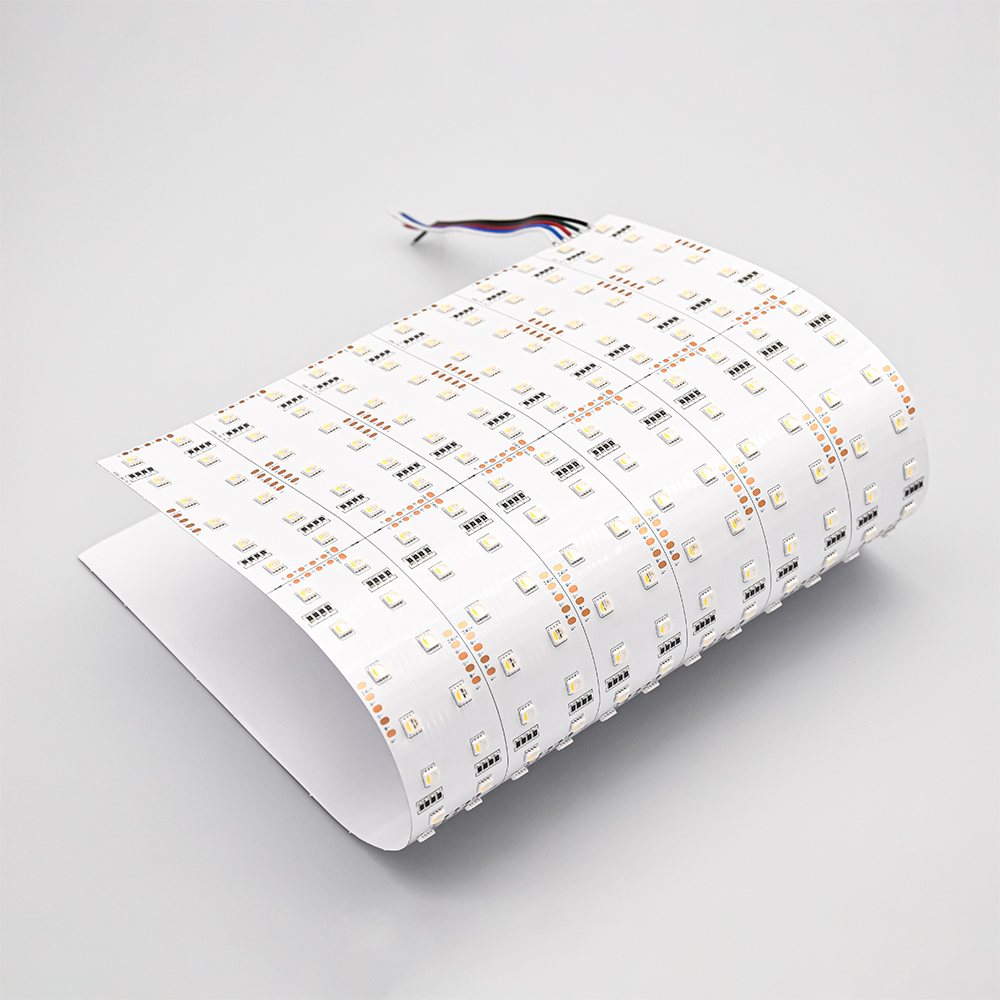
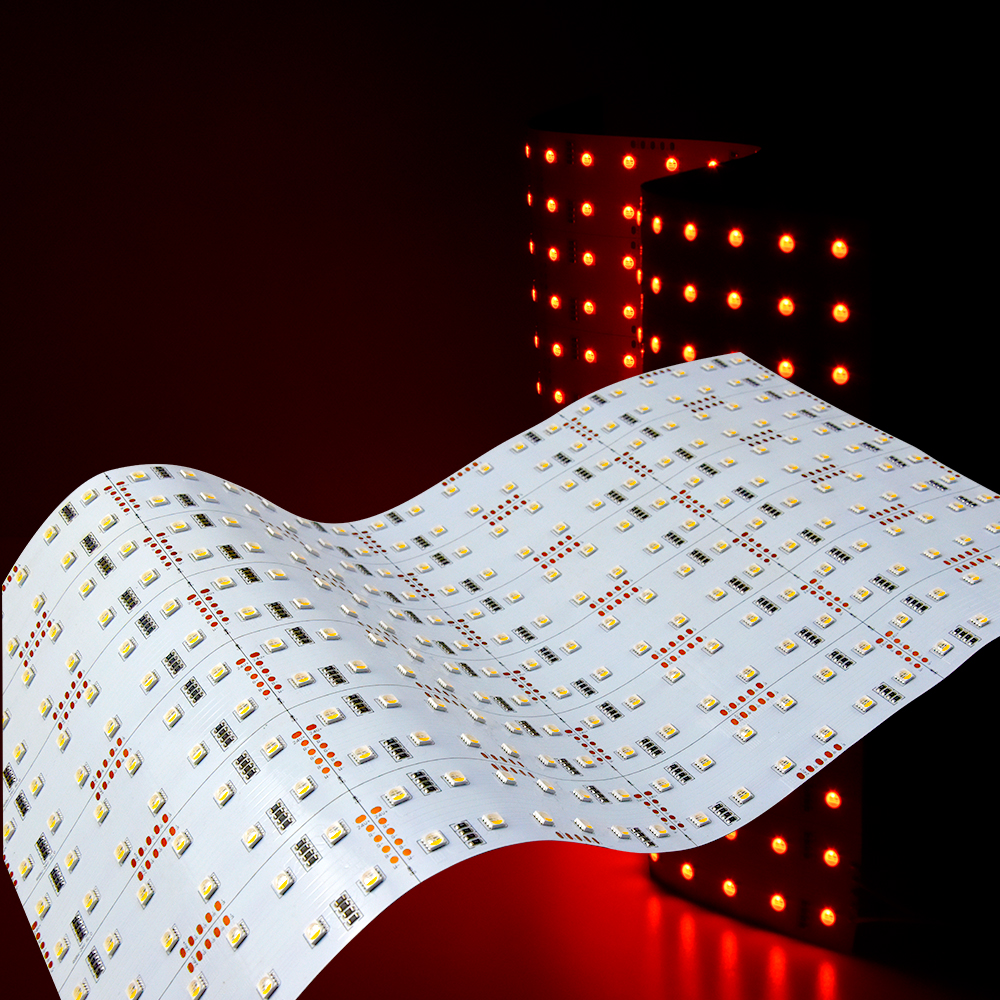
Historically, manufacturers achieved RGBW output by alternating discrete RGB and White SMT chips along the printed circuit board. This led to chromatic separation, uneven shadow casting, and wide light diffusion requirements. The introduction of 4-in-1 5050 SMT diodes integrated all four micro-die under a single phosphor-coated lens, eliminating color fringing.
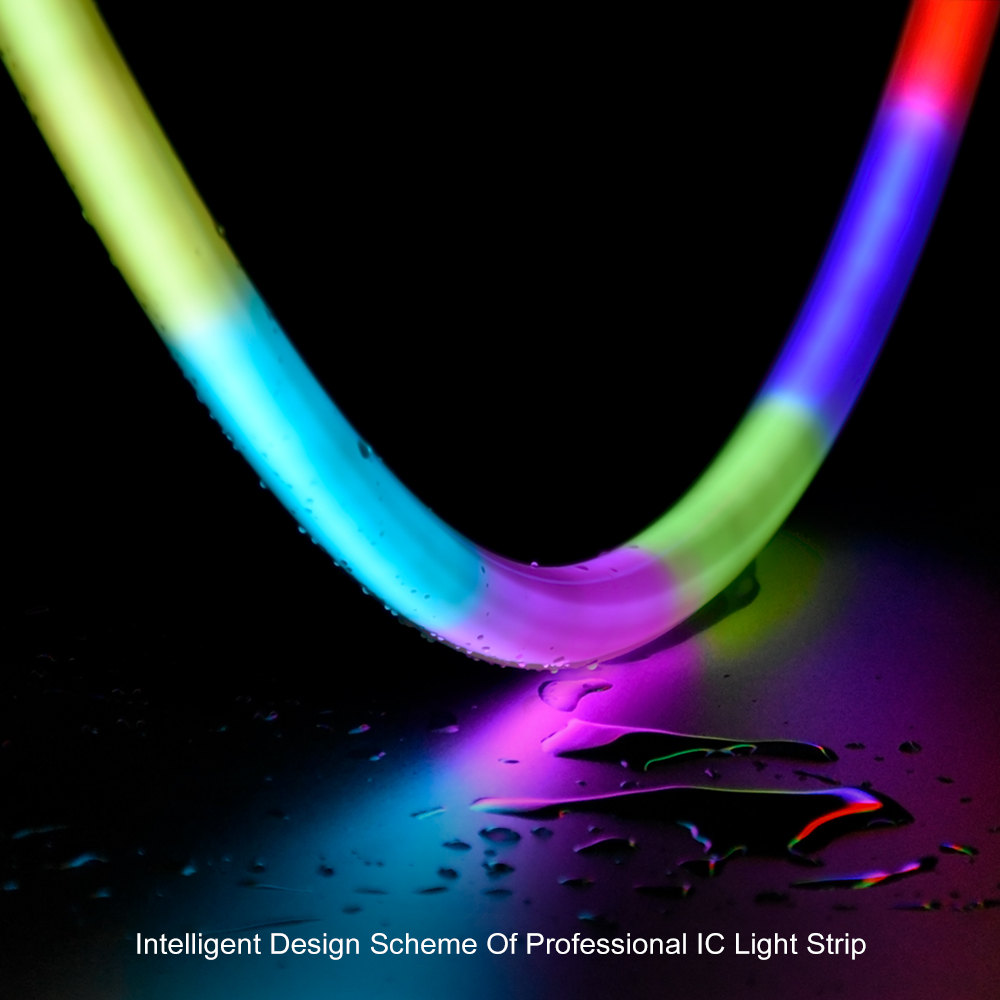
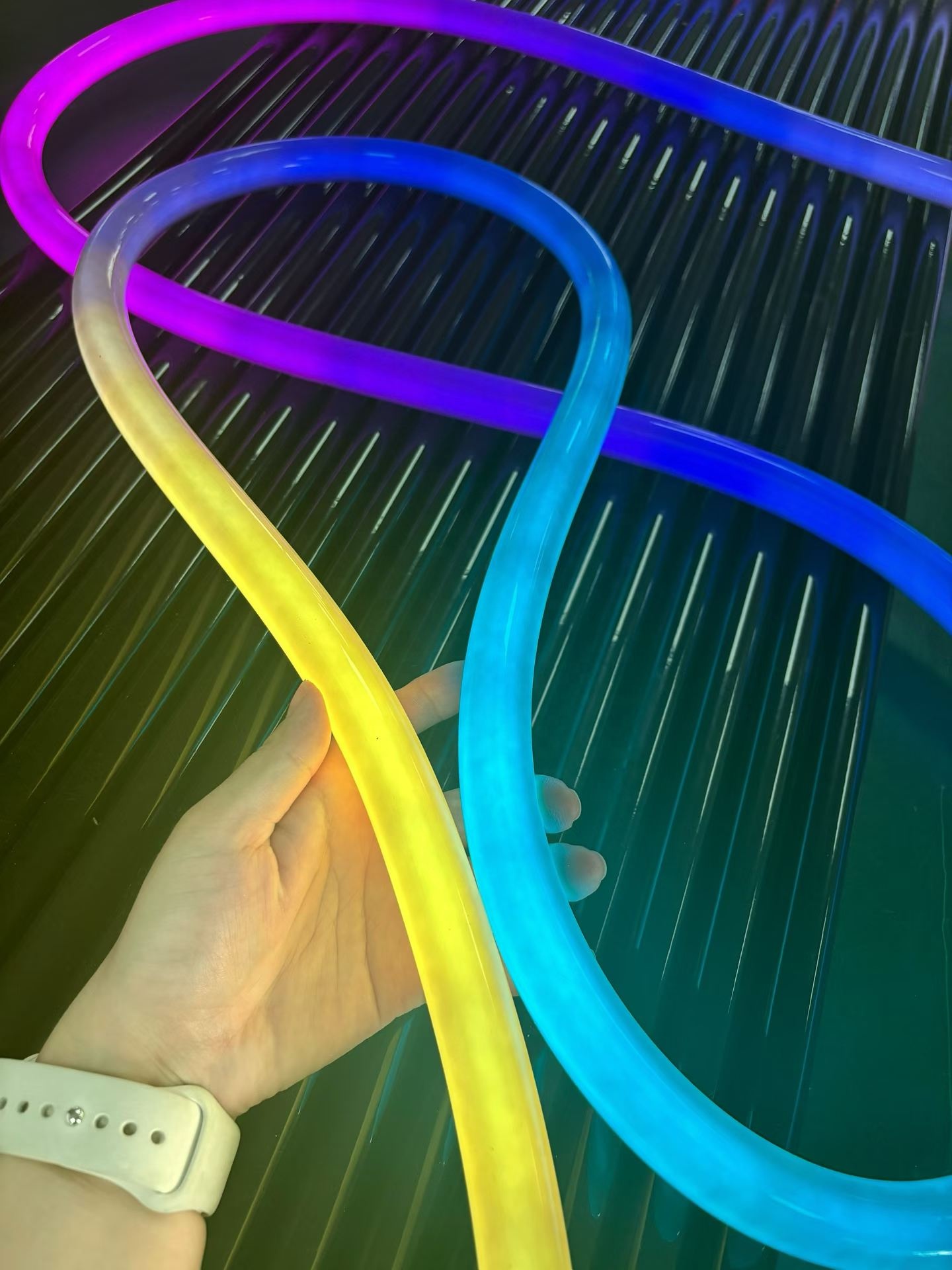
Today, technological advancement has pushed further into RGBW COB (Chip-on-Board) LED flex strips. COB technology flips micro-LED chips directly onto a flexible copper substrate beneath a continuous linear silicone gel channel. This yields a 100% dotless, uniform line of light with viewing angles up to 180°, significantly paring down fixture depth requirements in thin architectural coves and extrusions.
Protocol Feature Matrix: SPI vs. DMX512 Addressable Architectures
| Protocol / IC Type | Color Channels | Grayscale Depth | Signal Type | Max PWM Refresh | Primary Target Application |
|---|---|---|---|---|---|
| UCS2904 | RGBW (4 Ch) | 8-Bit (256 Steps) | Single-Wire SPI | ~1.2 kHz | Commercial coves, retail displays & signage |
| UCS8904 | RGBW / CCT | 16-Bit (65,536 Steps) | Clock + Data SPI | > 15 kHz | Broadcast studios, stage sets, luxury venues |
| SK6812 RGBW | RGBW (4 Ch) | 8-Bit (256 Steps) | NRZ Single-Wire | ~800 Hz | Custom DIY electronics, accent lighting |
| WS2814 (COB) | RGBW (COB) | 8-Bit (256 Steps) | SPI Data Line | ~2.0 kHz | Dot-free architectural linear runs |
| DMX512 (UCS512) | RGBW (4 Ch) | 8-Bit / 16-Bit | Differential RS-485 | Hardware Dependent | Bridges, building facades, long distance cables |
Future B2B Procurement & Sourcing Trends (2025–2030)
Procurement directors sourcing LED strips from Chinese manufacturers must navigate evolving industry compliance guidelines, supply chain optimizations, and sustainability mandates. The key trends shaping global B2B procurement over the next five years include:
A. Adoption of Liquid Silicone Rubber (LSR) Extrusion over PVC Packaging
Traditional outdoor waterproof LED tapes utilized PVC or standard polyurethane (PU) sleeving. Under prolonged UV exposure, outdoor temperature swings (-20°C to +50°C), and chemical exposure, PVC degrades, yellows, turns brittle, and cracks within 12 to 18 months. Modern high-tier Chinese factories have migrated to **100% Food-Grade Liquid Silicone Rubber (LSR) co-extrusion**. Silicone offering anti-yellowing optical clarity, IP67/IP68 submersible integrity, high thermal resistance (up to 200°C), and complete flexibility in extreme cold (-40°C).
B. High-Voltage (24V, 36V, 48V) Constant-Current Driver Topologies
Low-voltage 5V and 12V LED tapes suffer from severe **voltage drop** over extended runs, causing noticeable dimming and color shift (shift toward red) at the far end of a 5-meter strip unless frequent power injection points are wired. Future procurement trends heavily favor 24V and 48V constant-current IC configurations. By elevating the operating system voltage, operating current is dramatically lowered ($P=V \times I$), permitting continuous single-feed linear runs of 10m, 15m, or 20m without mid-strip power injection.
C. High Color Consistency (SDCM < 3) & Custom CCT Binning
For high-end hotel chains, commercial office towers, and architectural facades, color consistency between different production batches is critical. Reputable Tier-1 Chinese factories now enforce strict 3-step MacAdam Ellipse (SDCM < 3) binning protocols for the white LED die inside the RGBW chip. Whether specifying 2700K Warm White, 3000K Soft White, 4000K Natural White, or 6500K Daylight, enterprise buyers can mandate exact chromaticity coordinates ($x, y$) stored in factory spectrum analyzers for seamless re-ordering across multi-year project phases.
Evaluating Manufacturer Competency: E-E-A-T Quality Framework
Not all factories in China offer equal engineering rigors. When conducting supplier audits in Shenzhen or evaluating OEM proposals, procurement managers should verify the following physical manufacturing capabilities:
- Double-Sided 3oz/4oz Rolled Copper Flexible PCBs: Low-cost factories utilize 1oz electro-deposited copper PCBs, which easily overheat, delaminate, and drop voltage. Top-tier manufacturers employ 3oz or 4oz pure rolled-annealed copper layers, ensuring optimal heat dissipation away from the LED micro-junctions and structural resilience under continuous bending.
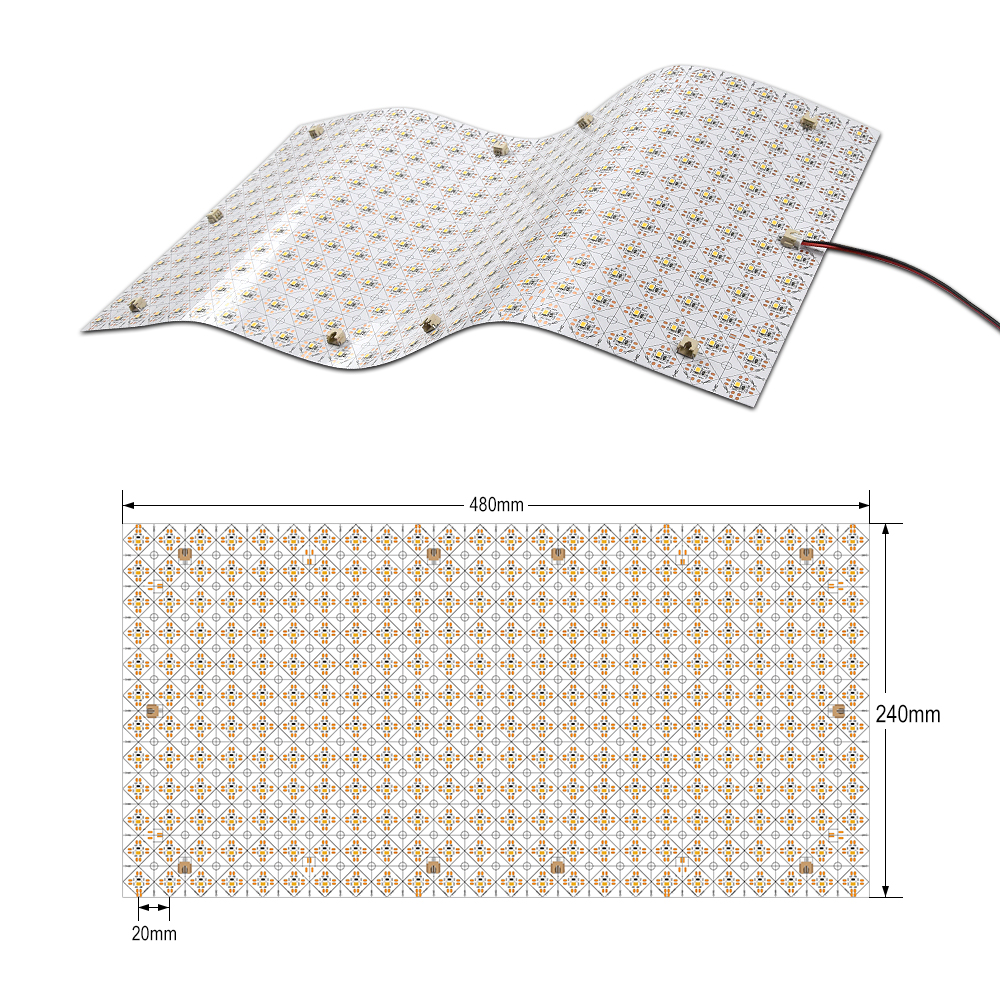
- High-Speed SMT Solder Precision & AOI Inspection: High-density RGBW strips (e.g., 120 LEDs/m or 288 LEDs/m backlight panels) require sub-millimeter SMT placing accuracy. Automated Optical Inspection (AOI) machines must inspect 100% of solder joints for micro-bridging, cold soldering, or missing IC chips before polymer encapsulation.
- Onsite SGS / TÜV Audited Facilities: Ensure the factory possesses physical plant verification reports issued by independent testing houses like SGS Group. Validated metrics include production capacity, employee welfare, ISO9001 quality management systems, CE LVD/EMC compliance, RoHS environmental adherence, and UL/cUL certification files.