Engineered for high-end stage production, architectural facade integration, commercial entertainment, and precision linear illumination.
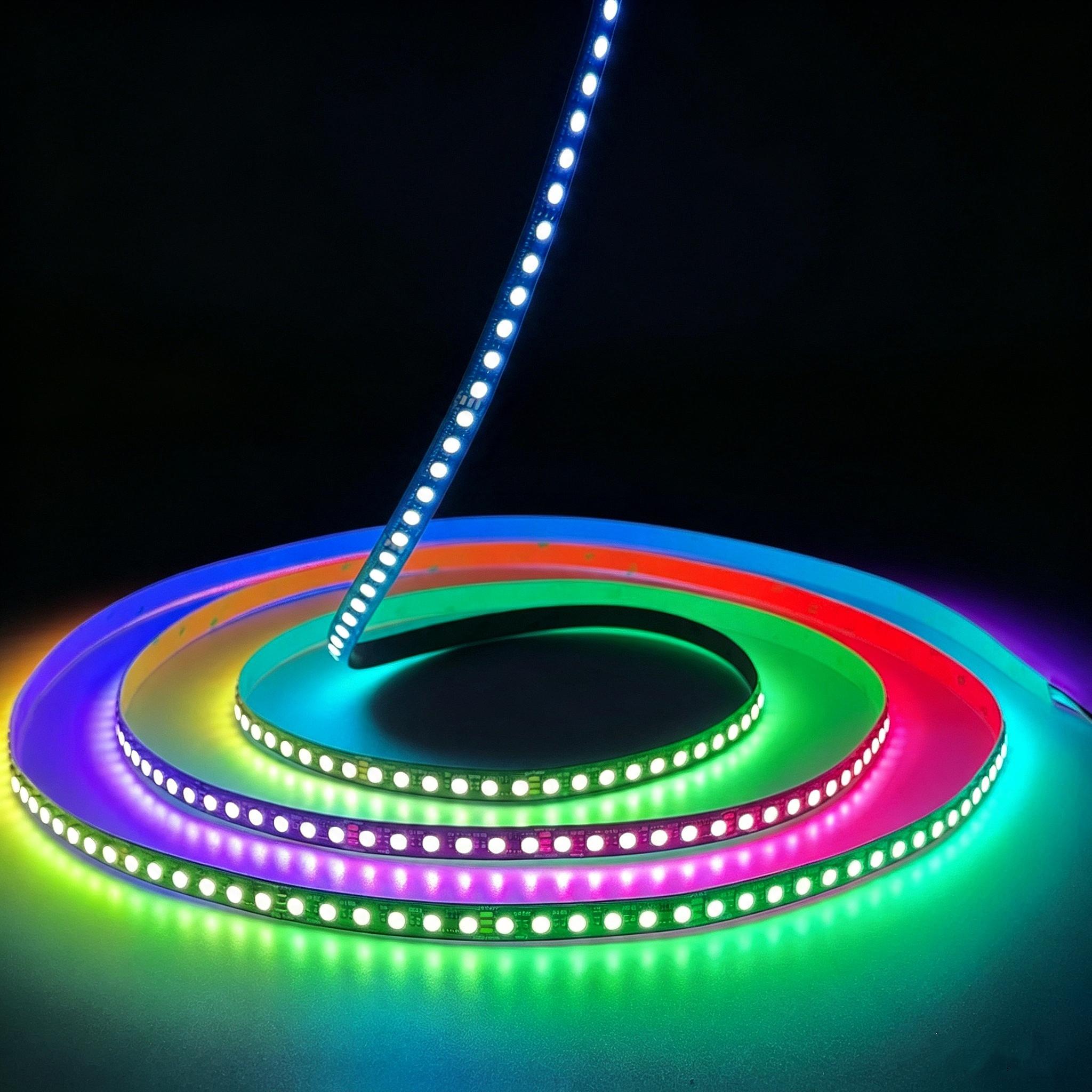
True 16-bit dimming with 65,536 grayscale steps. Zero flickering on broadcast cameras, tailored for theater and studio productions.
View Product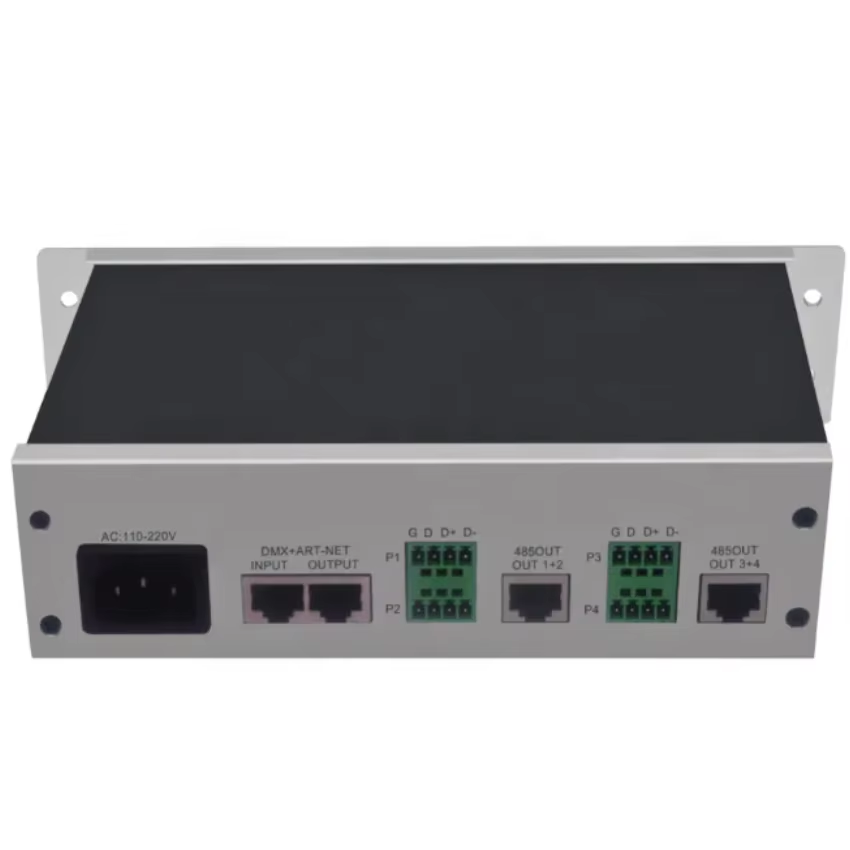
High-performance multi-protocol ArtNet SPI controller supporting WS2812B, APA102, WS2811, and SM16703 for pixel-mapped light shows.
View Product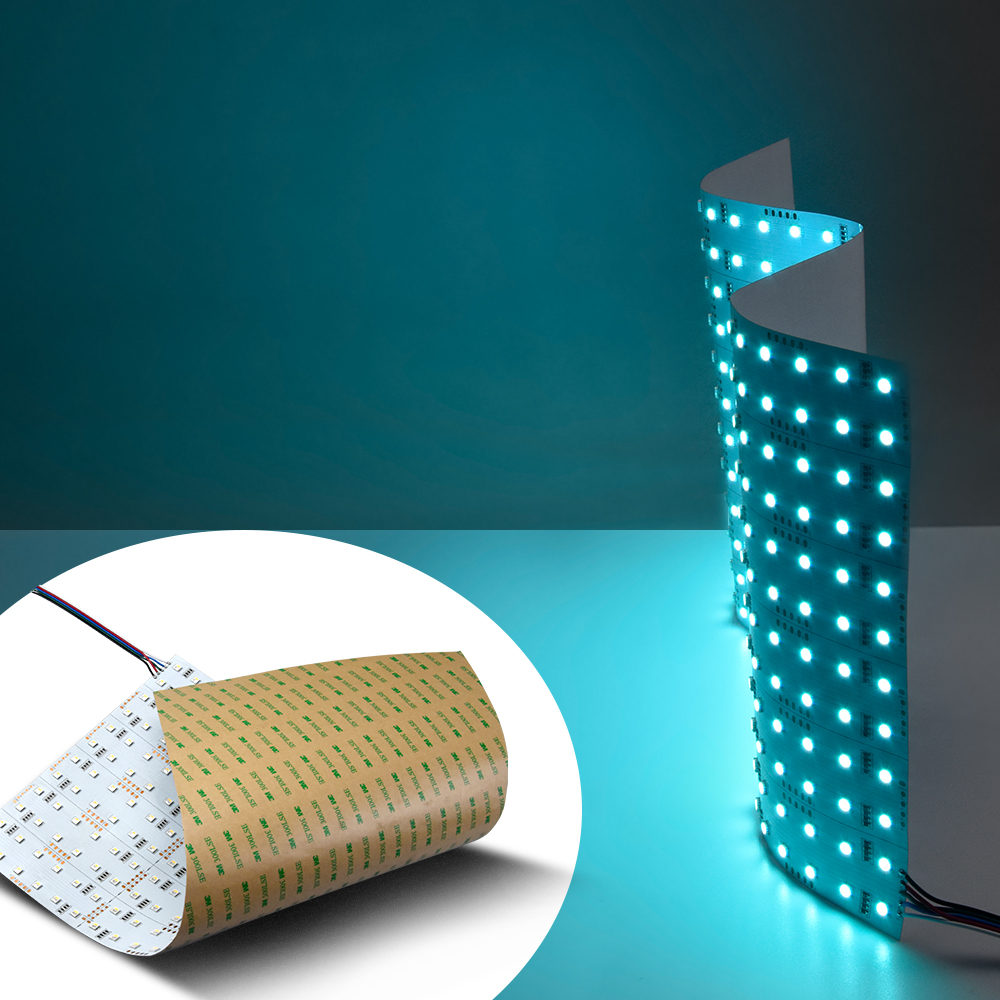
Cuttable and bendable light sheet designed for lightboxes, curved backlighting, and modular architectural installations.
View Product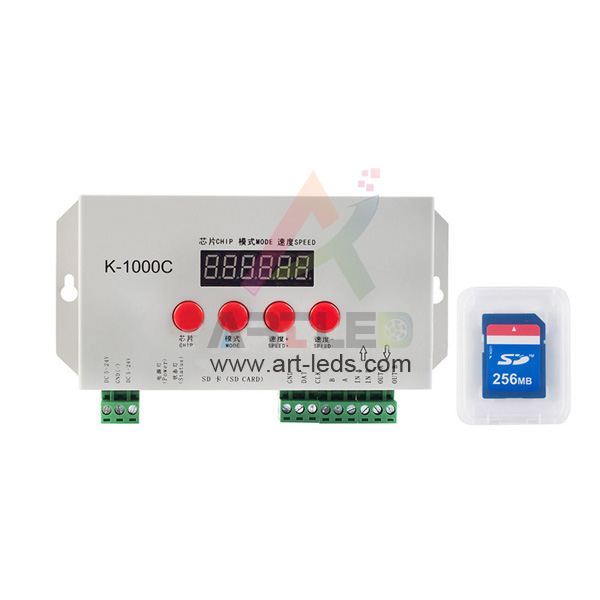
Industry-standard standalone pixel controller compatible with WS2811, WS2813, UCS1903, and SM16703 IC protocols.
View Product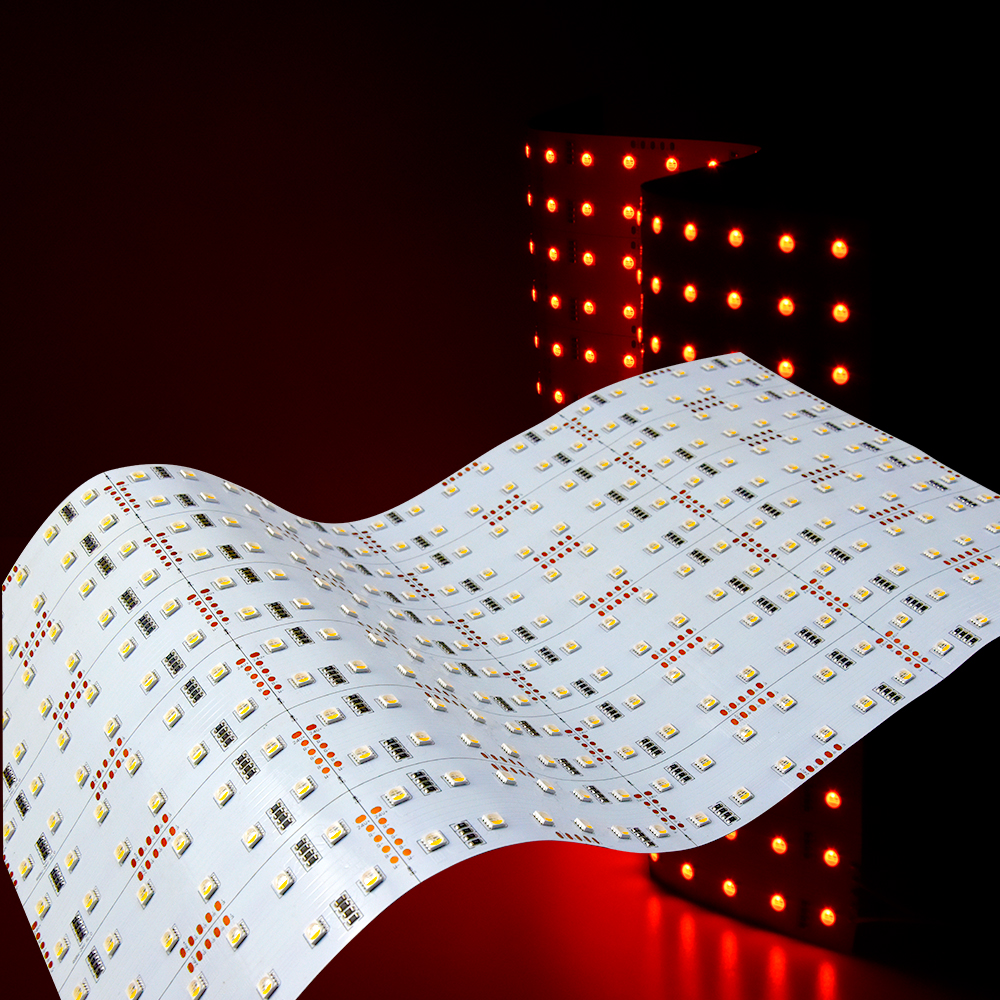
High-density uniform backlight sheet with ultra-low thermal resistance and seamless matrix tiling capabilities.
View Product
Side-emitting flexible silicone neon profile for thin slot integration, custom signage, and dynamic furniture contours.
View Product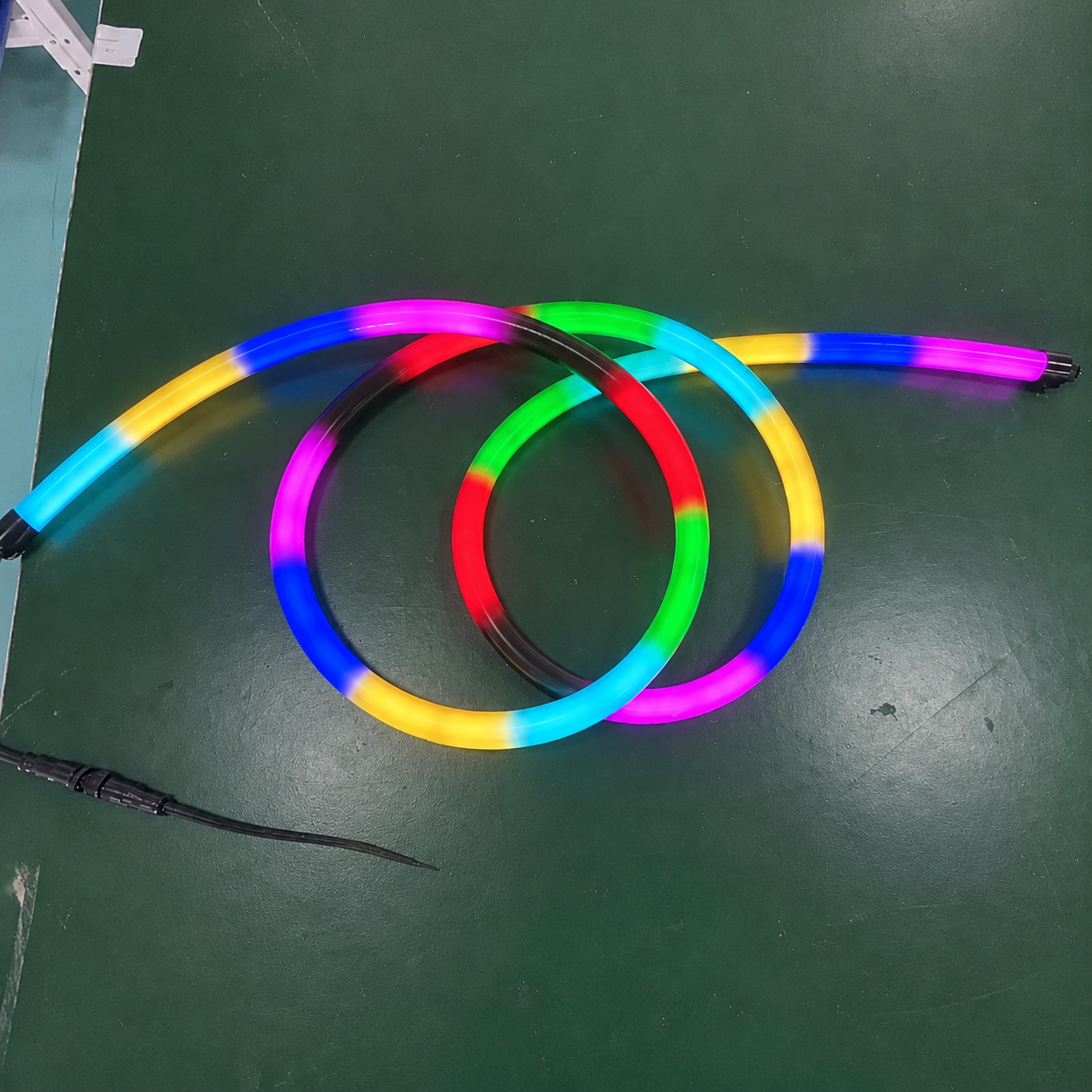
Full-angle 360-degree cylindrical pixel neon light, IP67 waterproof rated for outdoor 3D spatial lighting structures.
View Product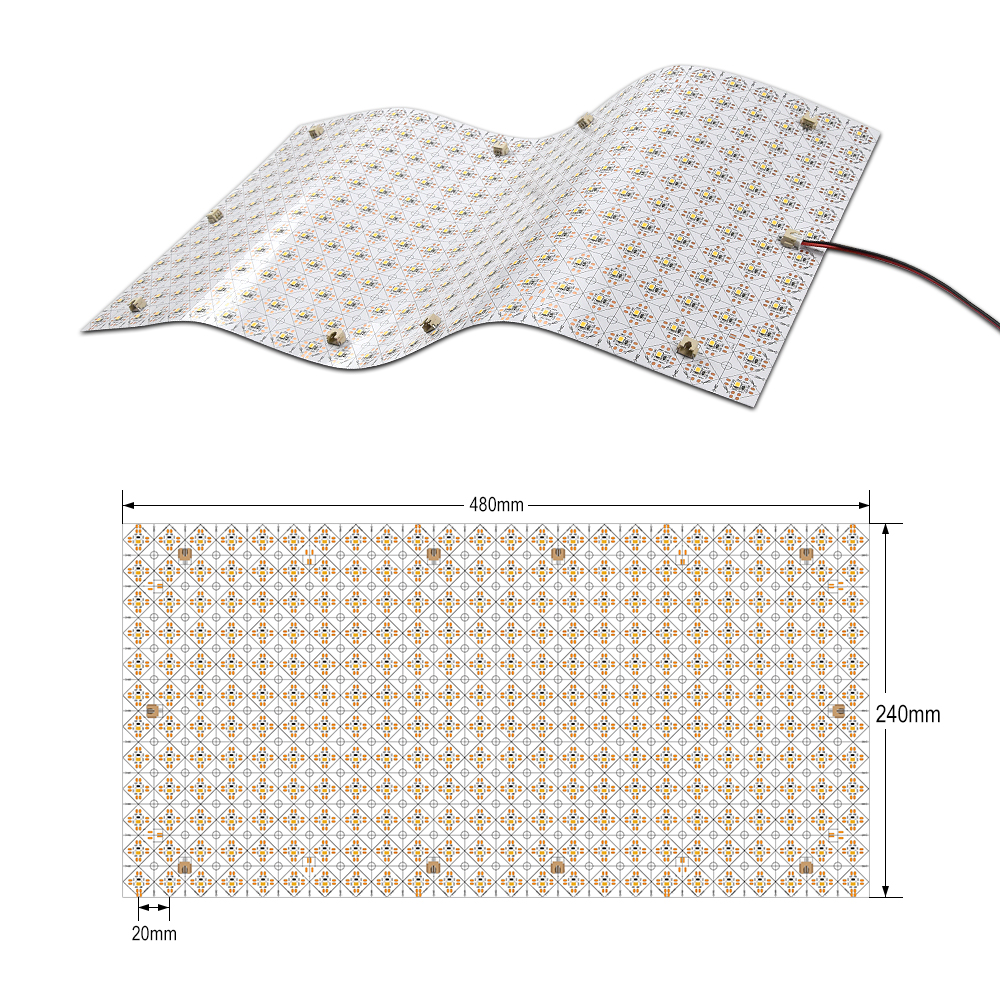
Tunable white CCT matrix sheet providing smooth 2300K to 6500K dynamic white ambiance for high-CRI architectural applications.
View ProductAn authoritative technical evaluation of addressable pixel lighting systems, manufacturing methodologies in China, and B2B procurement strategies.
In the global solid-state lighting (SSL) market, Dream Color LED Strips—commonly referred to as addressable, pixel, or digital LED tapes—represent the pinnacle of dynamic illumination control. Unlike conventional analog LED strips that shift the color of the entire reel simultaneously via Pulse Width Modulation (PWM), Dream Color strips integrate micro-driver integrated circuits (ICs) directly onto the Flexible Printed Circuit (FPC) or inside the LED package itself. This engineering architecture allows individual control over every single LED or group of LEDs, enabling infinite dynamic lighting effects including running water chases, complex color sweeps, video pixel mapping, and spatial 3D animations.
When engineering large-scale commercial or entertainment lighting projects, selecting the appropriate communication protocol is paramount to long-term operational stability and cost efficiency. The industry primarily splits into two digital signaling paradigms: Serial Peripheral Interface (SPI) and USITT DMX512-A (RS-485 based).
| Protocol Type | Common IC Models | Signal Architecture | Max Transmission Range | Primary Application |
|---|---|---|---|---|
| SPI (Single-Data) | WS2811, UCS1903, SM16703 | Data (DATA) + Ground (GND) | 5–10 Meters (Controller to First Pixel) | Decorative lighting, indoor coves, signs |
| SPI (Dual-Data Backup) | WS2813, WS2815, GS8208 | Data (DA) + Backup Data (BO) | 5–10 Meters (Single LED failure bypass) | Commercial retail, permanent installations |
| SPI High-Bit Precision | UCS8904B, UCS7604 (16-bit) | High-speed SPI Data + Clock | Up to 15 Meters with shielded cabling | HD Broadcast, theaters, opera houses |
| DMX512 / RDM | UCS512, TM512AC, Hi512 | RS-485 Differential (A, B) | Up to 100+ Meters without amplifiers | Architectural facades, bridges, stadiums |
SPI protocols operate with high transmission efficiency and lower per-meter cost, making them the preferred choice for indoor custom fixtures and mid-scale installations. However, single-wire SPI signals suffer from high vulnerability to electromagnetic interference (EMI) and signal degradation over distance. Modern high-reliability SPI variants like WS2813 and WS2815 resolve the physical point-of-failure vulnerability by incorporating a backup data line (BO). If a single LED IC sustains physical damage, the signal automatically bypasses the broken node, maintaining continuity across the remaining strip length.
Conversely, industrial-grade DMX512 addressable LED strips utilize differential signaling over RS-485 standard lines. By comparing the potential difference between two data lines (Data+ and Data-), DMX512 eliminates common-mode noise, allowing long cable runs up to 100 meters without external signal repeaters. Furthermore, DMX512 integrated circuits equipped with Remote Device Management (RDM) capabilities enable field engineers to write and rewrite unique DMX start addresses dynamically via handheld coders, eliminating manual pixel counting during installation.
A critical technical metric defined in Google Search Quality Rater Guidelines for lighting whitepapers is color depth resolution. Traditional addressable ICs (such as WS2812B or WS2811) utilize 8-bit resolution per color channel, offering $2^8 = 256$ discrete dimming steps per color. Across an RGBW 4-channel strip, this yields approximately 16.7 million color combinations. While sufficient for fast-moving visual chase effects, 8-bit dimming exhibits visible stepping (flickering latch points) when executing low-brightness dimming fades between 0.1% and 5% output.
To overcome this limitation for television studios, theater stages, and luxury architectural lighting, high-end Chinese manufacturers have commercialized UCS8904B and UCS7604 16-bit pixel ICs. Featuring $2^{16} = 65,536$ distinct dimming levels per channel, 16-bit LED strips deliver silky-smooth logarithmic dimming curves with zero stepping visible to the human eye or high-speed video camera sensors operating at elevated frame rates (over 4,000Hz PWM frequency).
High refresh rates (>3,840Hz) prevent rolling shutter banding effects under 4K HD broadcast cameras.
Dedicated Warm White (2700K) or Cool White (6500K) diode added alongside RGB for superior CRI>90 lighting.
Integrated silicone co-extrusion shielding strips against UV exposure, salt spray, and extreme cold (-40°C).
As B2B buyers navigate sourcing decisions in China, understanding emerging technological trajectories ensures product investments remain competitive and forward-compatible over 5 to 10-year facility lifecycles:
Key technical criteria to evaluate when auditing LED strip factories in Shenzhen and Guangdong manufacturing hubs.
Insist on 3oz or 4oz double-sided rolled-annealed (RA) copper flexible printed circuits. Lower-tier manufacturers use 1oz or 2oz electrolytic copper, leading to overheating, voltage drop, and trace delamination during SMT soldering.
High-speed Yamaha / Panasonic SMT lines ensure accurate IC chip positioning and solder paste placement. Ensure the factory enforces strict 3-step MacAdam ellipse color binning for consistent white color temperature across repeat production runs.
A verified factory must conduct 100% full-load 8-hour burn-in aging tests, thermal camera imaging, integrating sphere photometric verification, and IPX8 submersion testing prior to export packaging.
Shenzhen Fuvin Led Technology Co., Ltd. — Your verified manufacturing partner for customized pixel lighting solutions.
As an onsite verified manufacturer by SGS Group, Shenzhen Fuvin Led Technology Co., Ltd. specializes in engineering high-reliability addressable pixel lighting fixtures. Located in the heart of Shenzhen’s electronic design cluster, our factory integrates R&D, SMT surface-mount packaging, silicone extrusion, and custom driver engineering under one roof.
Tailored FPC widths (from 5mm ultra-slim to 50mm matrix), custom IC integration, specialized wire harness assembly, and custom PCB silkscreen branding.
Products conform to CE, Declaration of Conformity (DoC), RoHS compliance, and selected UL/cUL certifications for North American commercial tenders.
Technical solutions to common challenges encountered by engineering procurement managers and lighting designers.
Both ICs drive 4-channel RGBW pixels over an SPI signal interface. The primary distinction lies in color bit depth: UCS2904 operates at 8-bit resolution (256 grayscale levels per channel), suitable for general commercial decoration. UCS8904 provides real 16-bit resolution (65,536 grayscale levels per channel), allowing ultra-smooth, flicker-free low-end dimming mandatory for HD camera broadcast studios and professional stage lighting.
For long-distance architectural facades, bridges, or outdoor building outlines, choose DMX512. DMX512 utilizes RS-485 differential signals, permitting data transmission up to 100 meters without corruption and offering superior resistance to electromagnetic noise. SPI strips are ideal for shorter, budget-sensitive indoor runs controlled directly via pixel or ArtNet controllers within a 5 to 10-meter distance.
Voltage drop causes color shifting (e.g., white turning pink or red at the end of the strip). To prevent this: (1) Select 24V operating voltage instead of 5V or 12V; (2) Utilize 3oz/4oz copper FPC; (3) Implement parallel power injection cables every 5 to 10 meters directly from the power supply bus bar.
Yes. We manufacture full silicone co-extruded LED neon strips rated at IP68. Unlike hollow sleeve silicone or glue-injected PVC, our solid silicone extrusion completely eliminates air pockets, preventing moisture condensation and water ingress under submersion pressure up to 2 meters depth.
For standard catalog products, our MOQ starts at 10 meters. For OEM custom products (custom PCB color, specific IC chip integration, or bespoke packaging), the MOQ is typically 500 meters. Standard production lead time is 7 to 12 working days following sample approval.
Yes, we provide complete end-to-end pixel lighting solutions, including ArtNet-to-SPI controllers, DMX address coders, Mean Well / custom IP67 power supplies, aluminum extrusions, and waterproof connectors—fully bench-tested as a unified system before shipment.
Consult directly with our senior LED application engineers. Receive detailed datasheets, wiring schematics, and factory-direct wholesale pricing within 12 hours.
 Shenzhen, Guangdong, China