Engineered for stage performance, architectural media facades, commercial entertainment venues, and bespoke spatial installations.
An authoritative evaluation framework for B2B procurement managers, lighting designers, and OEM project integrators.
Understanding driver IC architectures is crucial when specifying wholesale LED tapes. Single-wire SPI ICs (WS2812B, SK6812, UCS2904) offer cost-efficiency for direct controller communication. Dual-wire SPI (APA102, WS2801) isolates the clock line, allowing ultra-high refresh rates required by slow-motion cameras. For commercial infrastructure, differential RS-485 signaling (DMX512 / RDM via UCS512 or TM512AC) provides noise immunity across cable lengths up to 300 meters.
Thermal management dictates long-term lumen maintenance and voltage drop performance. Low-tier manufacturers compromise on 1oz single-sided flexible printed circuits (FPC), resulting in chromatic drift and rapid LED degradation. Tier-1 China factories utilize 3oz rolled-annealed double-sided copper PCBs with thermal conductivity ratings exceeding 2.0 W/m·K, keeping thermal expansion low and current density uniform over 10-meter single-feed runs.
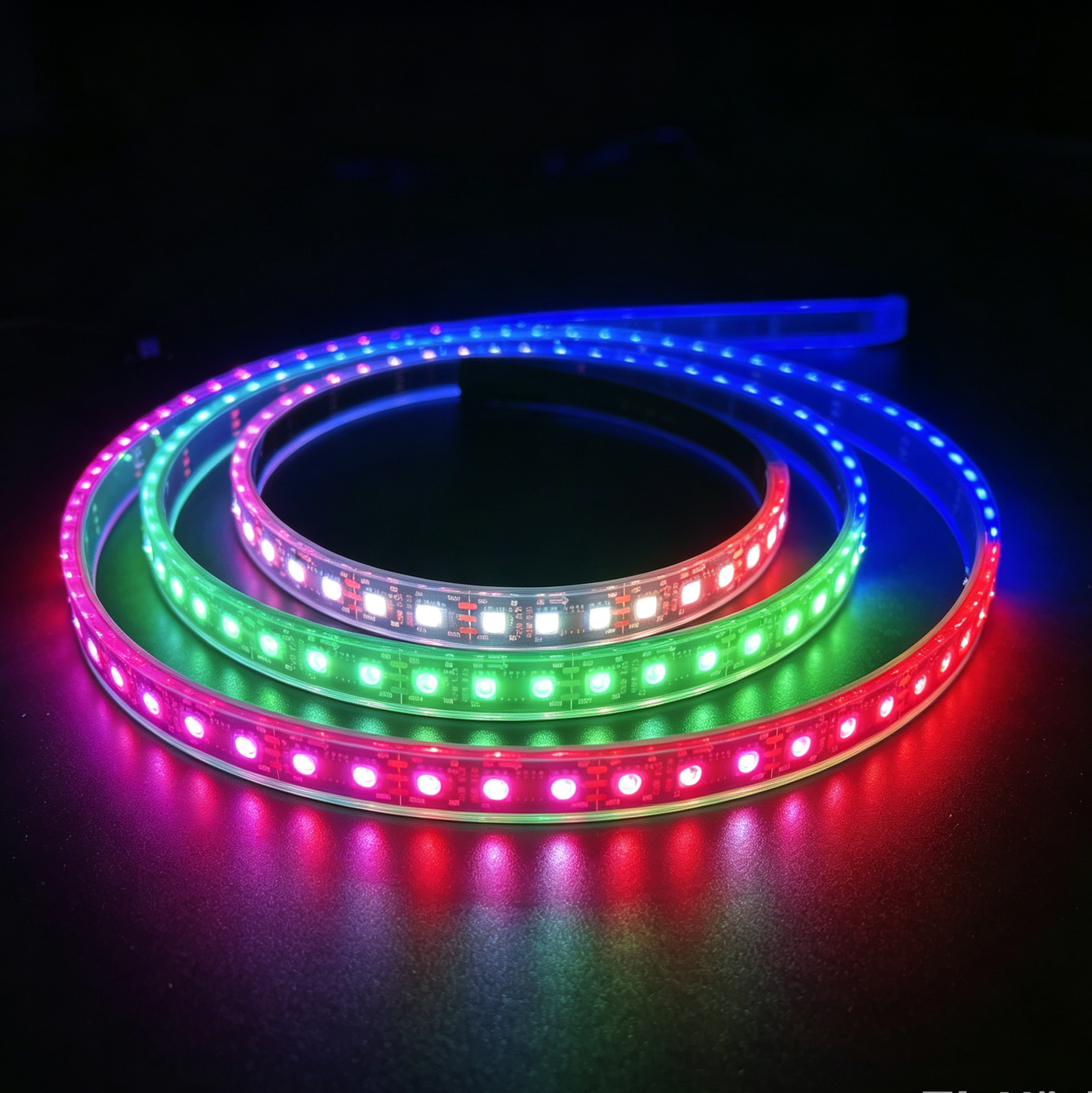
Selecting the right IP rating involves evaluating physical polymers. Traditional PVC and PU (polyurethane) yellow over time and crack under UV exposure. Modern OEM facilities like Shenzhen Fuvin Led Technology Co., Ltd. employ food-grade liquid silicone co-extrusion. Liquid silicone withstands extreme operating temperatures (-40°C to +80°C), resists salt-water oxidation in marine installations, and achieves true IP67/IP68 ingress protection without clouding optic output.
| Driver IC Model | Signal Standard | Grayscale Depth | PWM Frequency | Optimal Application Scenario |
|---|---|---|---|---|
| UCS8904B | SPI Pixel Protocol | 16-Bit (65,536 Levels) | > 4,000 Hz | HD Broadcast Studios, Stage Theaters, High-Speed Camera Tracking |
| UCS2904 | 4-Channel RGBW SPI | 8-Bit (256 Levels) | ~ 1,200 Hz | Bespoke Commercial Interiors, RGBW Architectural Coves, Retail Displays |
| DMX512 / UCS512 | RS-485 Differential | 8-Bit / 16-Bit Configurable | ~ 2,000 Hz | Building Media Facades, Bridges, Long-Distance Outdoor Infrastructure |
| WS2814 (COB) | RGBW COB SPI | 8-Bit (256 Levels) | ~ 2,000 Hz | Dot-Free Linear Lighting, Direct View Aluminium Profiles, Hospitality Coves |
| SK6812 | Single-Wire SPI | 8-Bit (256 Levels) | ~ 1,200 Hz | Signage, Custom OEM Devices, Short Dynamic Accent Run Lines |
Strategic technological transitions shaping global bulk LED sourcing over the next decade.
Traditional 8-bit LED strips (providing 256 dimming steps per channel) suffer from visible stepping artifacts at lower light thresholds (<5% brightness). Modern architectural and entertainment specs mandate 16-bit dimming engines (65,536 micro-steps) such as UCS8904 and UCS7604. Procurement professionals must align with factories capable of high-bit SMT calibration to satisfy broadcast-grade flicker-free requirements.
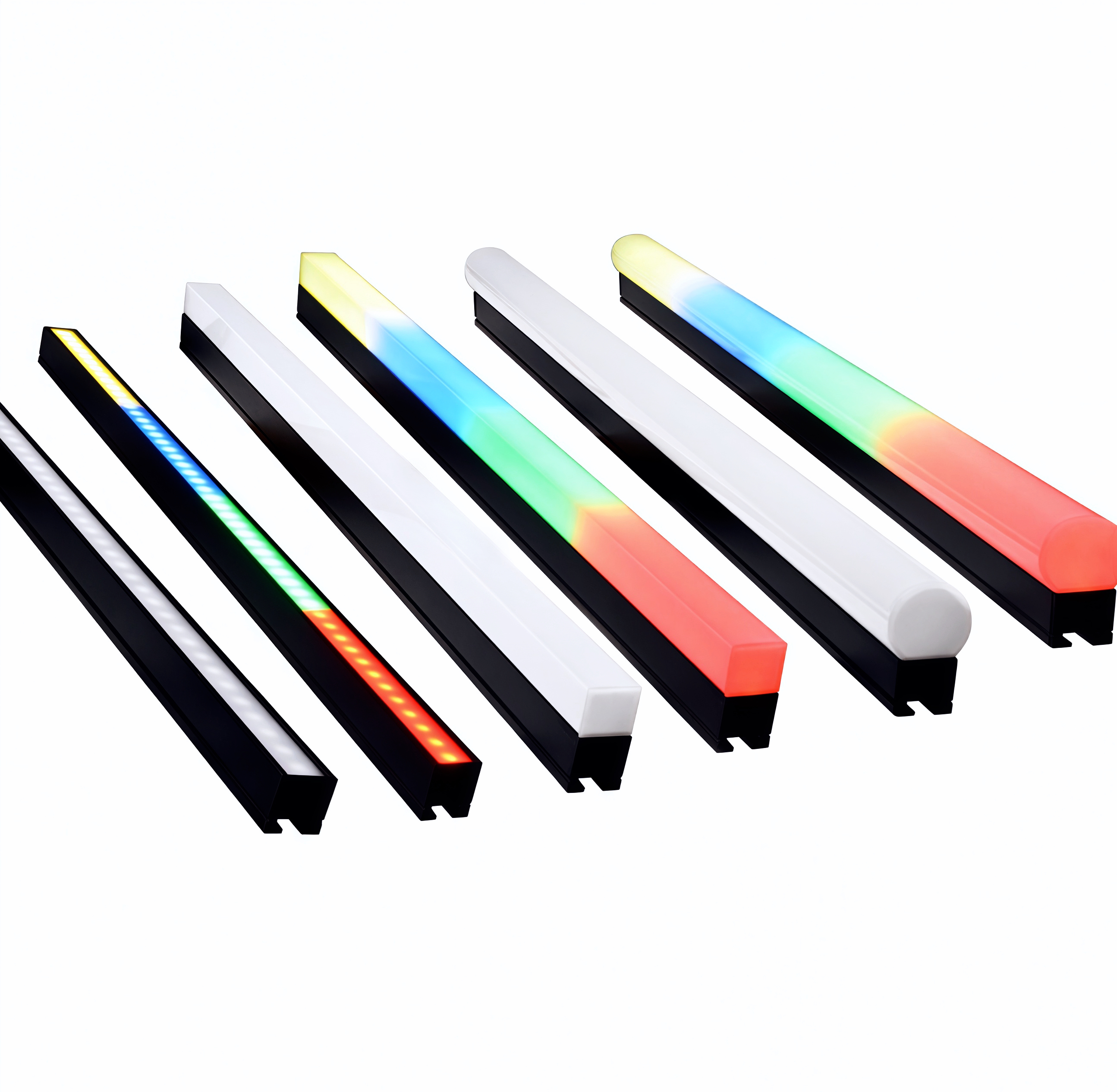
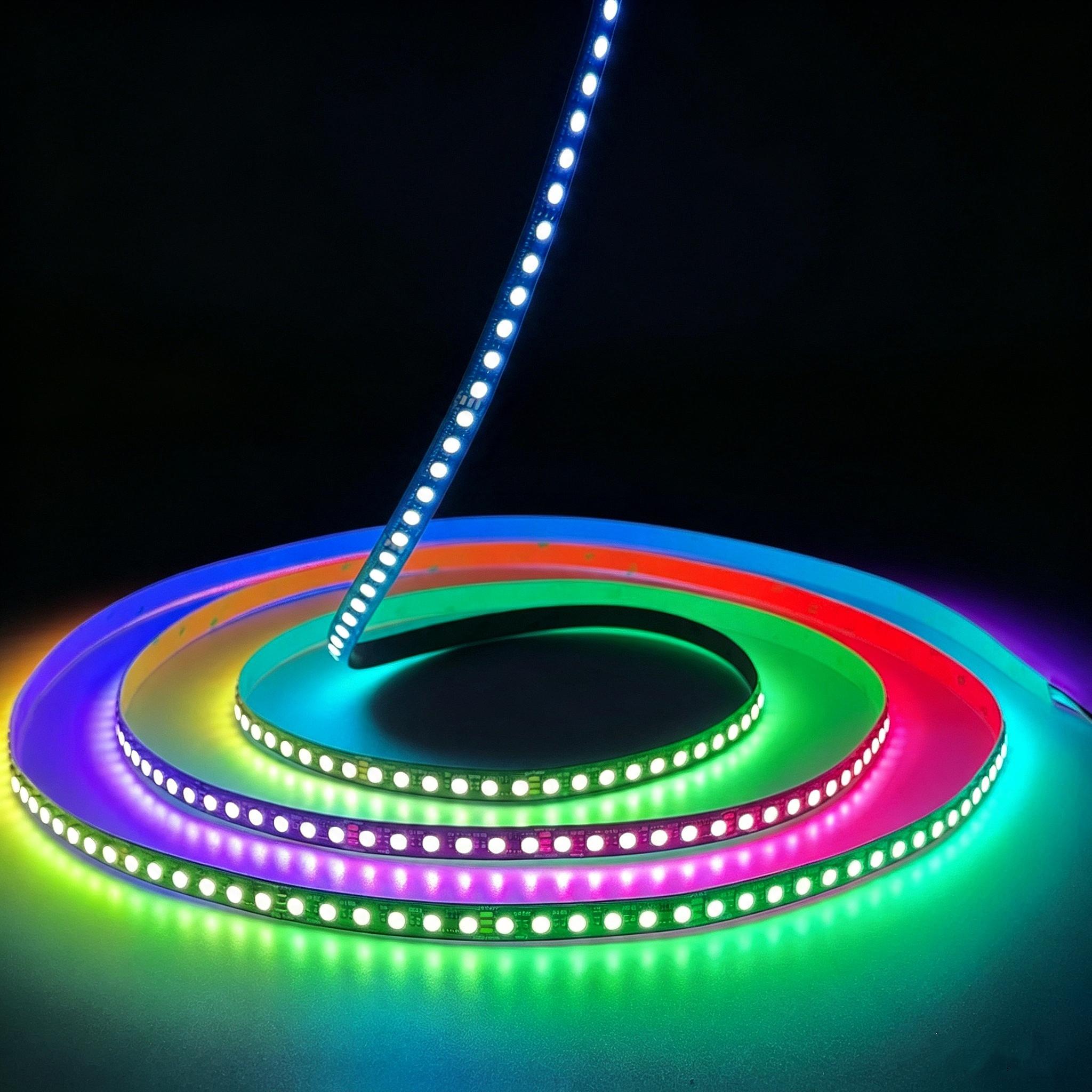
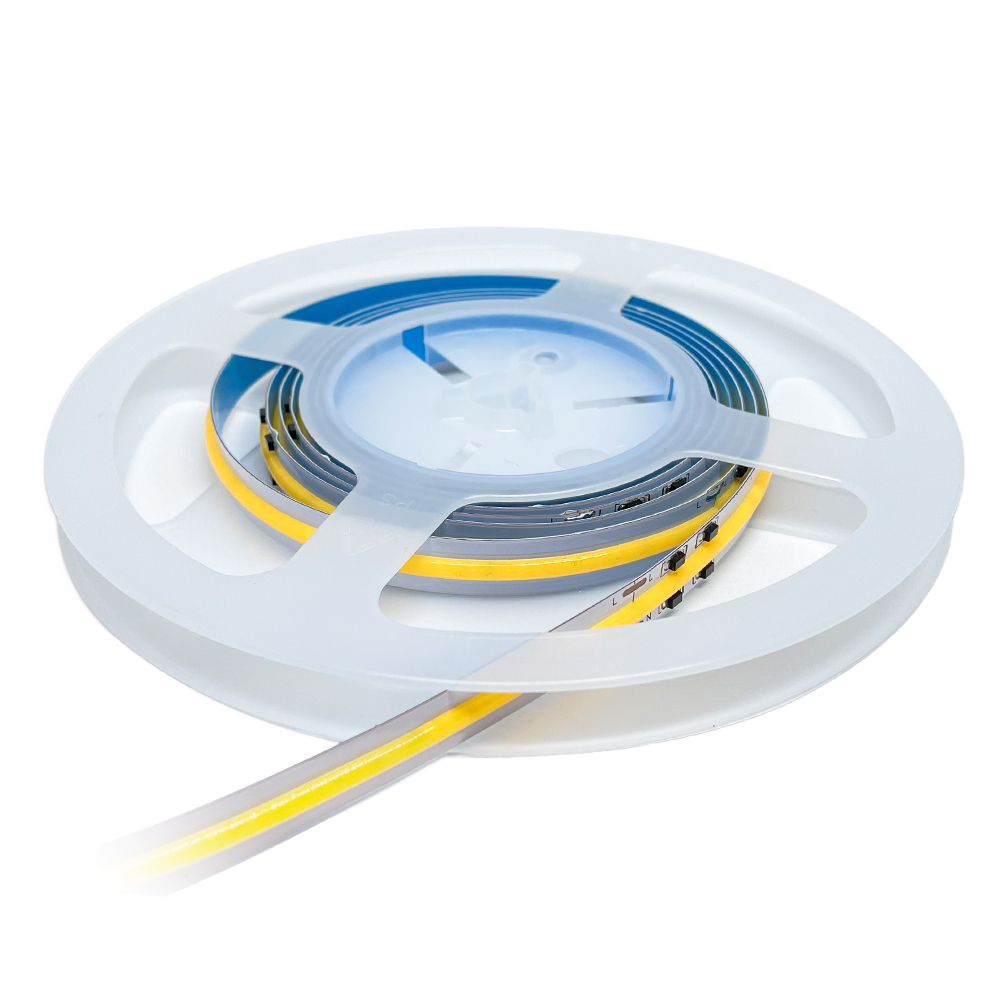
Traditional Surface Mount Devices (SMD5050, SMD2835) leave visible pixel hotspots unless mounted deep inside diffuse aluminium channels. Addressable COB (Chip-on-Board) tapes, like the WS2814 series, flip chip silicon directly onto a continuous phosphor channel. Achieving phosphor-level continuity at densities exceeding 720 LEDs/m provides uninterrupted linear light lines with ultra-thin profiles.
Voltage drop remains the single largest cost multiplier in field installation due to excessive power injection wiring. Next-generation wholesale manufacturing is shifting toward 24V and 48V step-down IC topologies. 48V pixel tapes cut line current in half relative to 24V systems, allowing continuous run lengths up to 20 meters from a single power feed without chromatic fading.
When placing wholesale OEM orders from China manufacturers, request spectroscopic MacAdam Ellipse binning reports. Tier-1 manufacturers enforce 3-Step MacAdam Ellipse consistency across all LED batches, ensuring color temperature uniformity (e.g., 3000K ±50K) across multi-thousand meter production runs.
Request Factory Binning Technical DataFrom intelligent protocol translation to multi-channel optical spectrum control.
Modern lighting visualizers map complex video matrices across thousands of individual nodes. Traditional DMX universes (512 channels) become bottlenecks. Modern factories integrate ArtNet and sACN raw Ethernet controllers capable of mapping 64 to 128 DMX universes over a single Cat6 line, seamlessly routing raw data directly into high-speed SPI pixel strips.
Generic RGB strips create poor, unnatural white light with low Color Rendering Index (CRI < 70). Industry leading wholesale suppliers integrate dedicated white emitters (2700K to 6500K) alongside RGB dice in a single 4-in-1 package. This yields CRI > 90 and R9 > 80, fulfilling both dynamic chromatic staging and museum-grade architectural white illumination from one tape.
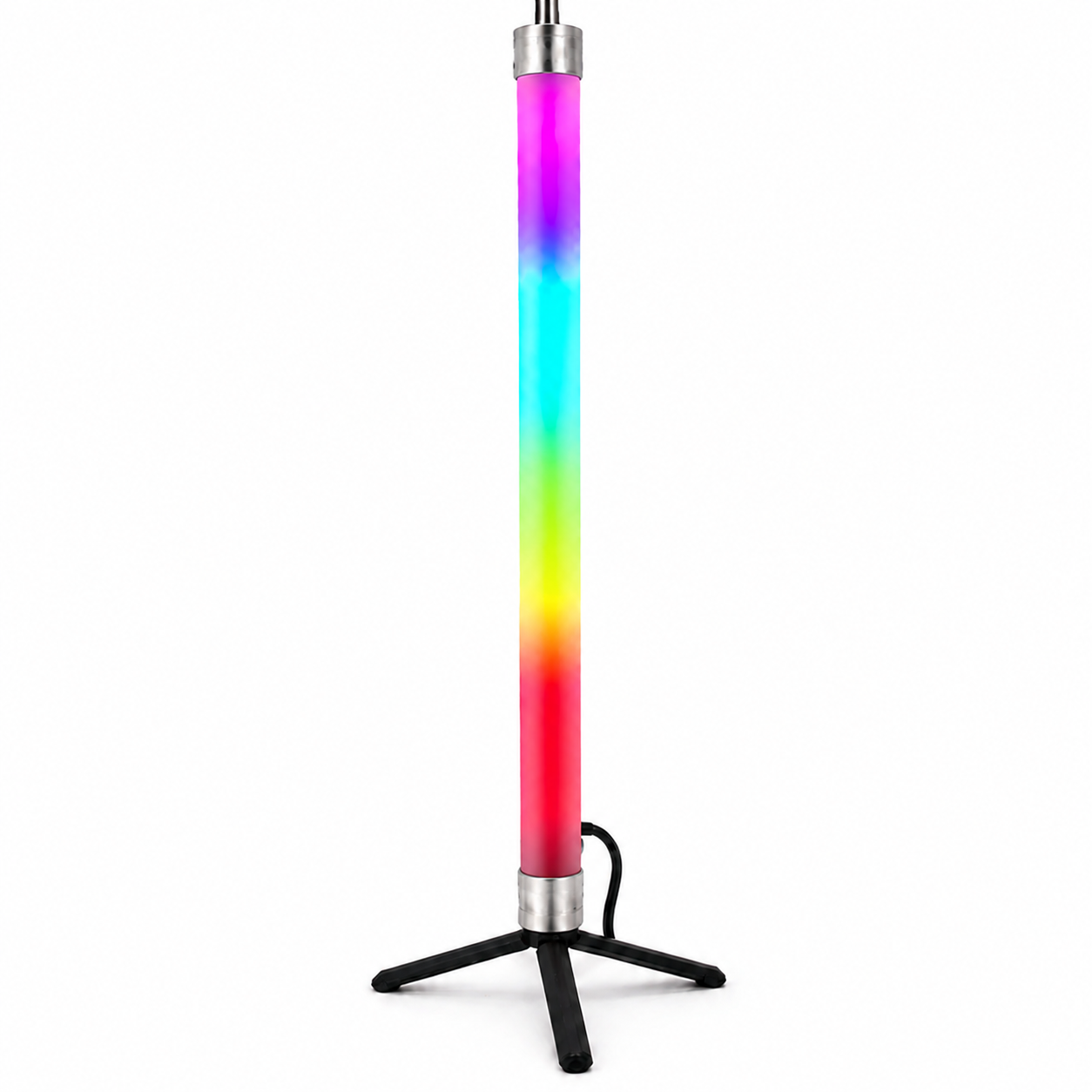
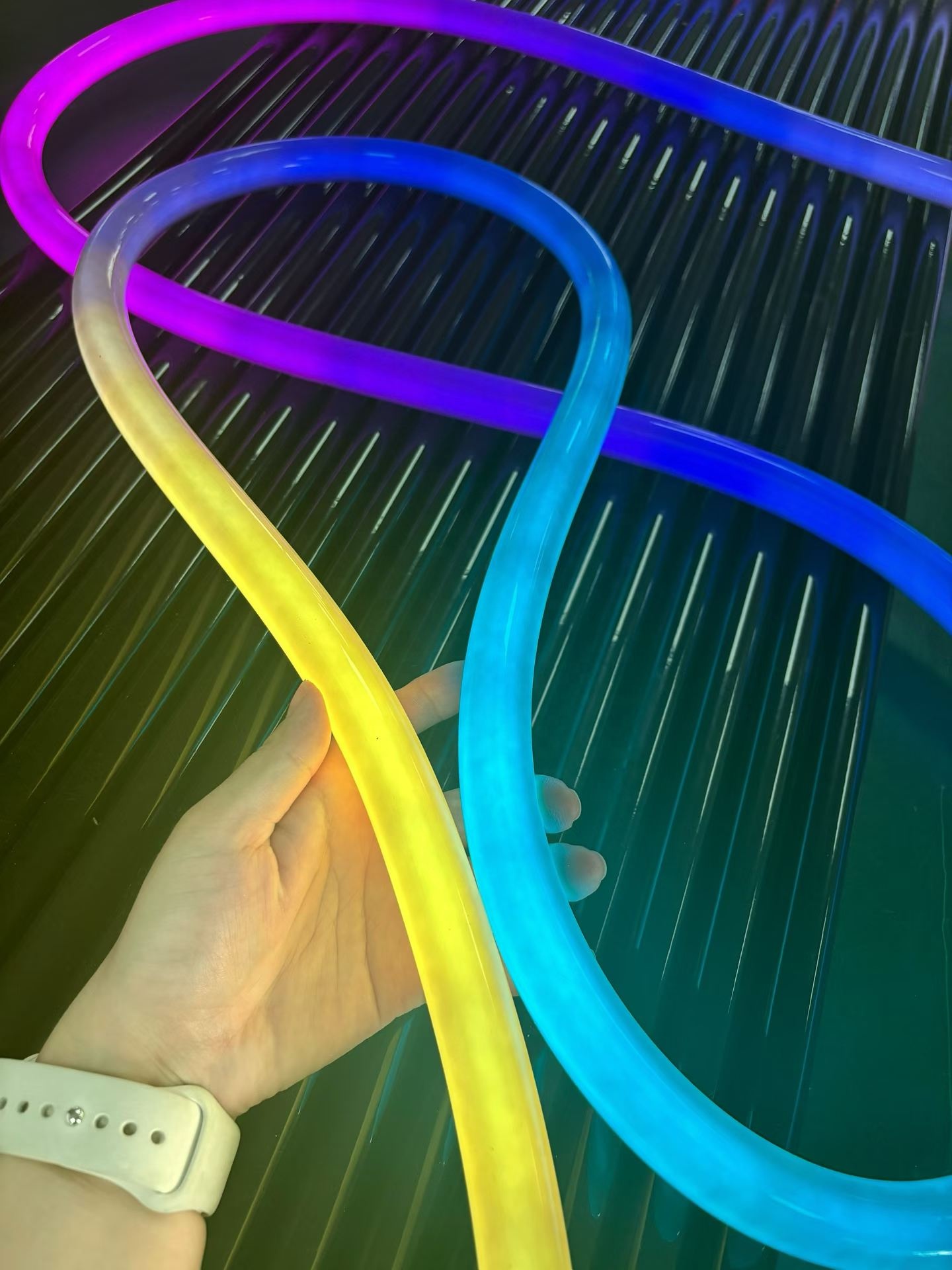
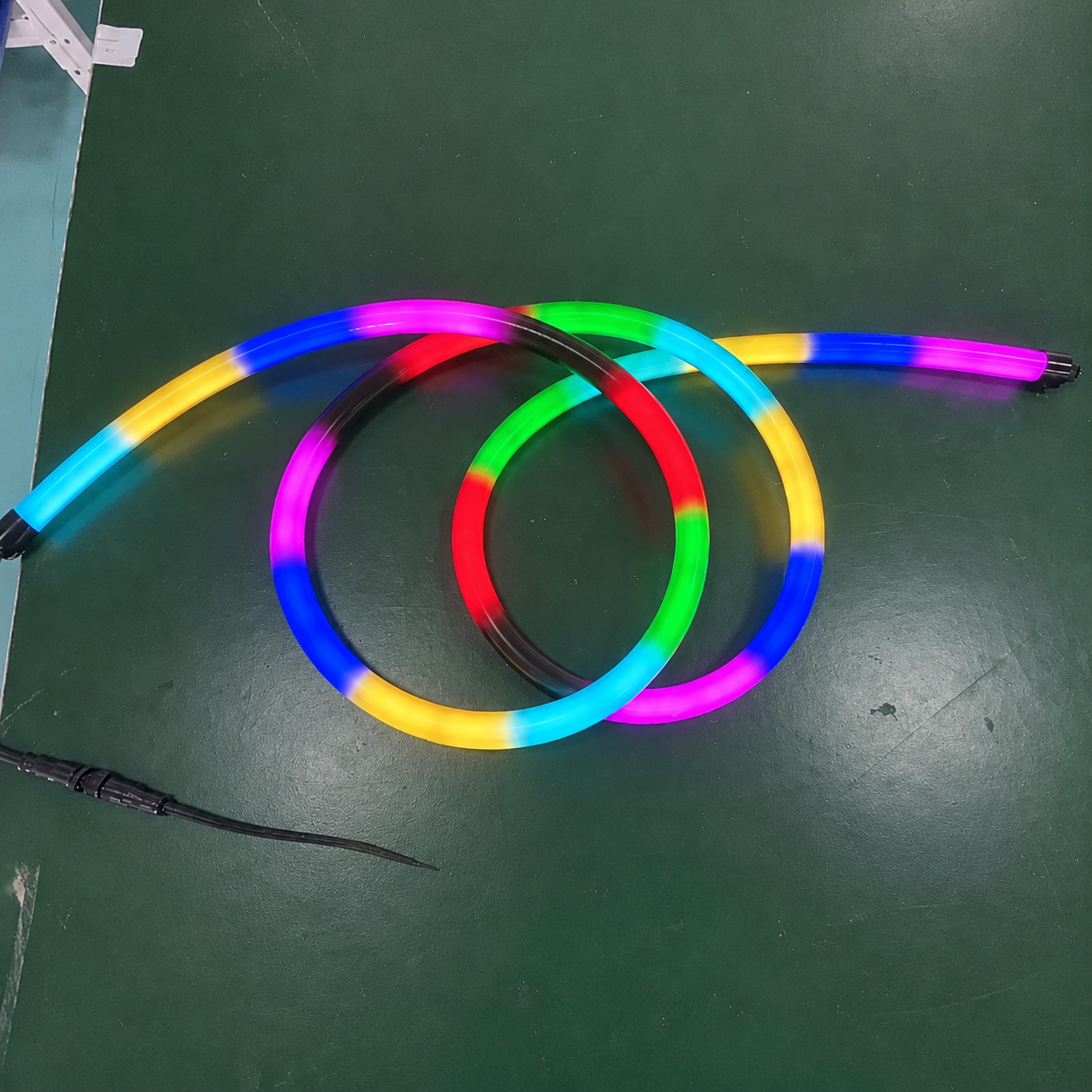
Linear accent lighting has evolved beyond flat 2D ribbons. Omnidirectional silicone neon tubes (such as the D22 360° series) utilize circular diffuse matrices, emitting uniform illumination in three dimensions. These fixtures can be curved, knotted, or suspended dynamically above event spaces and public rotundas.
Direct answers to common technical, compliance, and logistical inquiries faced by international lighting buyers.
Both driver ICs control 4-channel RGBW pixel nodes over an SPI protocol stream. However, the fundamental difference lies in grayscale processing bit-depth:
The choice depends on installation distance, signal environment, and control topology:
Voltage drop occurs due to trace resistance in flexible copper circuit boards. To maintain uniform lumen output and prevent color shifting at the end of a line, implement these practices:
1. Specify 3oz double-sided copper PCBs to minimize trace resistance.
2. Transition from 5V or 12V architectures to 24V or 48V systems, reducing current draw for the same power load.
3. Apply parallel power injection feeds every 5 to 10 meters depending on LED power density.
4. Utilize constant-current driver IC designs integrated directly into the PCB trace layout.
For European Union clearance, products require valid CE-EMC and CE-LVD compliance reports alongside RoHS 2.0 material safety declarations. For North American commercial markets, the installation standard requires UL Listed or cUL Listed certification under UL2108 / UL8750 standards. Shenzhen Fuvin Led Technology Co., Ltd. provides verified test reports, Declarations of Conformity (DoC), and UL file documentation upon request.
Full OEM/ODM manufacturing customization includes:
Combining advanced SMT automation, rigorous quality control, and international export expertise.
Located in Shiyan, Shenzhen — the global hub of solid-state lighting innovation — our production facility undergoes annual onsite audits by SGS Group. Our manufacturing lines feature automated high-speed SMT placement lines, reflow soldering ovens, automatic wire bonding stations, and precision silicone extrusion machinery.
Quality assurance is embedded at every step. Every production reel undergoes raw component inspection, automated optical solder joint checking, followed by a mandatory 48-hour powered continuous burn-in aging cycle to screen out early component failures before vacuum-sealed packaging.
Serving lighting importers, system integrators, stage rental firms, and distributors across Western Europe, North America, Oceania, and the Middle East. We provide comprehensive logistics flexibility including FOB, EXW, and express door-to-door delivery with customs documentation compliance.
Consult with our engineering team to review project schematics, request sample kits, or receive a competitive factory-direct wholesale quotation within 12 hours.
Contact Us Shenzhen, Guangdong, China