Precision-Manufactured Linear LED Tapes, Pixel Strings, Heavy-Duty Neon Flex & Addressable Hardware Direct from Shenzhen
A Comprehensive Technical Standard for Procurement Directors, Architectural Lighting Designers, and OEM Wholesalers
The global commercial and residential architectural lighting market has undergone a structural transformation. Procurement metrics for linear LED lighting have evolved beyond basic lumen-per-watt efficiency to encompass complex photometric fidelity, spectral power distribution (SPD) control, thermal reliability, and deep dimming compatibility. As a premier China Wholesale White LED Strip Exporter, Shenzhen Fuvin Led Technology Co., Ltd. operates at the intersection of optoelectronic innovation and rigorous manufacturing standards.
Overseas B2B buyers—ranging from electrical distributors in Western Europe to lighting integrators across North America and Oceania—face significant challenges when evaluating Chinese manufacturing partners. The market contains immense quality variance, ranging from low-tier trade vendors utilizing thin 1oz recycled copper PCBs with high-SDCM phosphor degradation, to advanced Tier-1 manufacturers producing continuous-run, zero-voltage-drop, 16-bit dimmable linear solutions. Achieving strategic procurement advantage requires an engineering-level understanding of LED packaging, phosphor technology, thermal dynamics, and optical binning principles.
Deconstructing CRI, TM-30-18 Metrics, Phosphor Decay, and Color Consistency Standards
Traditional evaluation relies heavily on the general Color Rendering Index ($R_a$), which averages only the first eight monochromatic pastel test colors ($R_1$ through $R_8$). However, premium architectural installations—such as luxury retail displays, art galleries, high-end hospitality ceilings, and broadcast studios—demand strict color accuracy across vivid saturated hues, particularly $R_9$ (saturated red) and $R_13$ (skin tones).
Our technical manufacturing process integrates broad-spectrum blue LED die packaging with proprietary multi-phosphor matrix coatings (silicate and nitride phosphors). This yields linear LED tapes with $R_a > 95 / 98$, $R_9 > 90$, and $R_15 > 95$. Furthermore, we evaluate all production batches against the IES TM-30-18 framework, measuring both Fidelity Index ($R_f \ge 95$) and Gamut Index ($R_g \ge 100$).
| Photometric Parameter | Standard Economy Tape | Fuvin Commercial Grade | Fuvin Architectural Whitepaper Grade |
|---|---|---|---|
| Color Rendering Index ($R_a$) | Ra 70 - 80 | Ra 90+ | Ra 95 - 98 (Ultra-High CRI) |
| Special Color Index ($R_9$ Red) | R9 < 0 | R9 > 50 | R9 > 90 - 95 |
| TM-30-18 Fidelity ($R_f$) | Rf 72 - 78 | Rf 88 - 90 | Rf 95 - 97 |
| TM-30-18 Gamut ($R_g$) | Rg 85 - 90 | Rg 98 - 102 | Rg 100 - 104 |
| Color Consistency (SDCM) | 5-Step MacAdam | 3-Step MacAdam | 1.5 to 2-Step MacAdam Ellipse |
| L70 Lumen Maintenance | 15,000 Hours | 36,000 Hours | > 54,000 Hours (LM-80 Tested) |
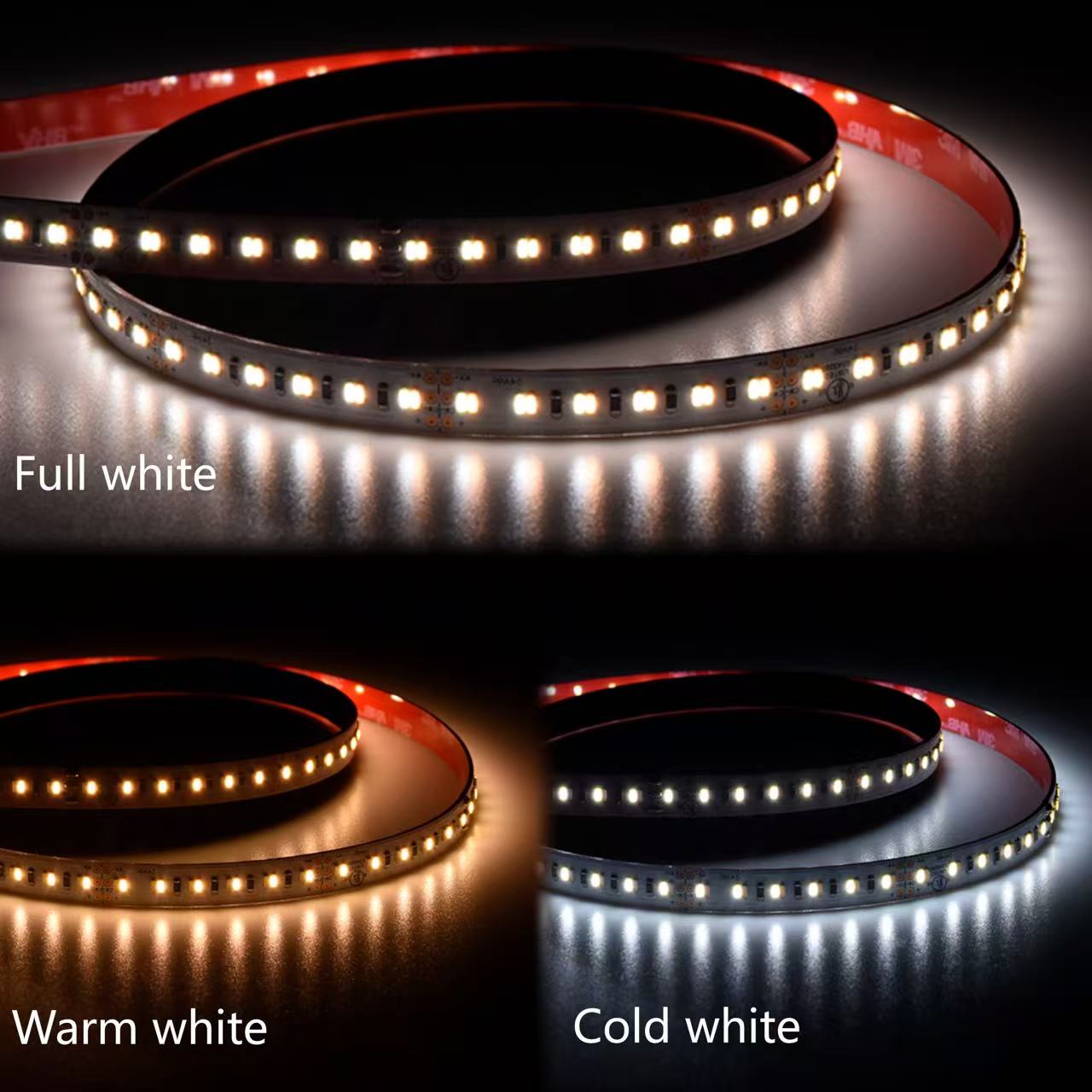
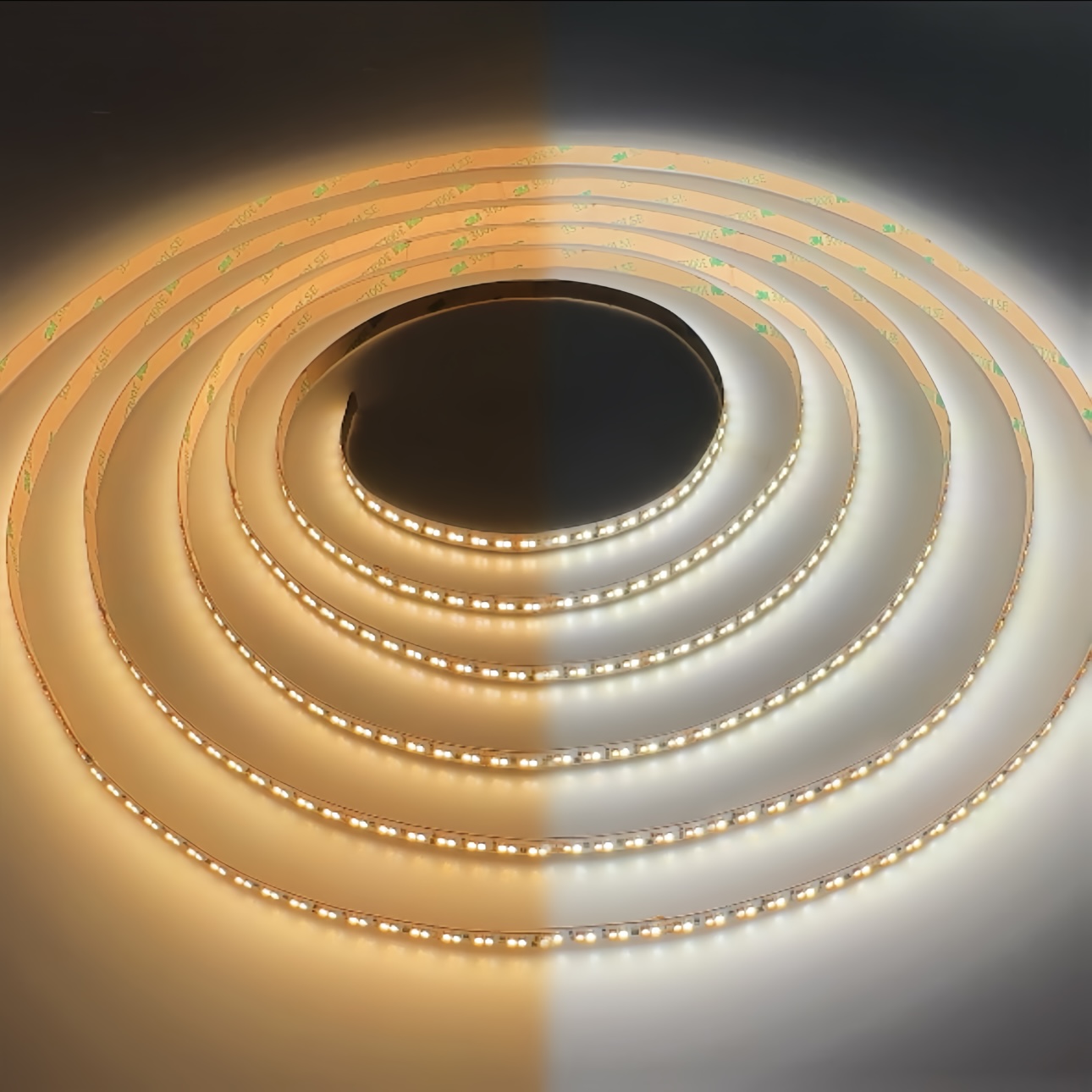
Maintaining strict color consistency across multi-kilometer project installations requires rigorous binning protocols. Fuvin LED enforces 2-Step MacAdam Ellipse (SDCM ≤ 2) sorting on all static white (2700K, 3000K, 4000K, 5000K, 6500K), CCT Tunable White, and Dim-to-Warm (DTW) LED strip production runs. This guarantees zero perceptible color shifting between adjacent reels or separate production shipments over time.
Thermal management dictates the operational lifespan and lumen maintenance of flex linear tapes. Cheap export strips suffer from significant line losses and rapid lumen depreciation due to sub-standard 1oz electrolytic copper PCBs. Excessive heat buildup at the LED junction temperature ($T_j$) accelerates phosphor degradation, causing irreversible color shifts toward blue/green spectrums within months of continuous operation.
As an engineering-driven white LED strip supplier, Fuvin LED utilizes double-sided, electro-deposited rolled copper PCBs with thicknesses ranging from 2oz to 4oz (70μm to 140μm). This heavy copper trace architecture delivers three critical operational advantages:
The linear architectural lighting landscape is bifurcating into two primary packaging architectures: Surface Mount Device (SMD2835, SMD3014, SMD5050) and Chip-on-Board (COB) flip-chip arrays.
Utilizes discrete lead-frame packages soldered onto flexible PCBs. Our UL-listed 240 LEDs/m SMD3014/2835 CCT Tunable White series offers ultra-high luminous efficacy (>130-150 lm/W), tight beam control, and outstanding suitability for high-output task lighting and recessed aluminum profiles with diffusors.
Directly encapsulates semiconductor LED dies under a continuous linear phosphor layer. Eliminates dark spots ("dotting") even inside shallow 5mm aluminum channels or frameless drywall profiles. COB linear arrays offer a 180-degree seamless beam angle and eliminate wire-bond mechanical failure points.
Strategic Technological Vectors Shaping Sourcing Specifications over the Next Decade
Procurement demands are shifting rapidly away from single static white CCTs toward dynamic Human-Centric Lighting (HCL) systems. Modern commercial office buildings, healthcare facilities, and luxury residences mandate linear systems that track natural circadian rhythms—shifting automatically from energetic 6500K cool white at noon to relaxing 2700K warm light at dusk.
Simultaneously, Dim-to-Warm (DTW) technology is replacing halogen fixtures in hospitality projects. Our 24V SMD2835 DTW strips seamlessly transition from 3000K or 6000K down to a ultra-warm 1800K candle-light hue as intensity is dimmed down to 1%, utilizing smooth dual-chip current-steering circuitry without shifts in color fidelity.
With the explosion of virtual production, LED video volumes, stage entertainment, and broadcast film sets, traditional 8-bit digital LED drivers (which feature only 256 dimming steps) create visible banding, flickering, and stepping artifacting at lower light levels (0.1% - 10%).
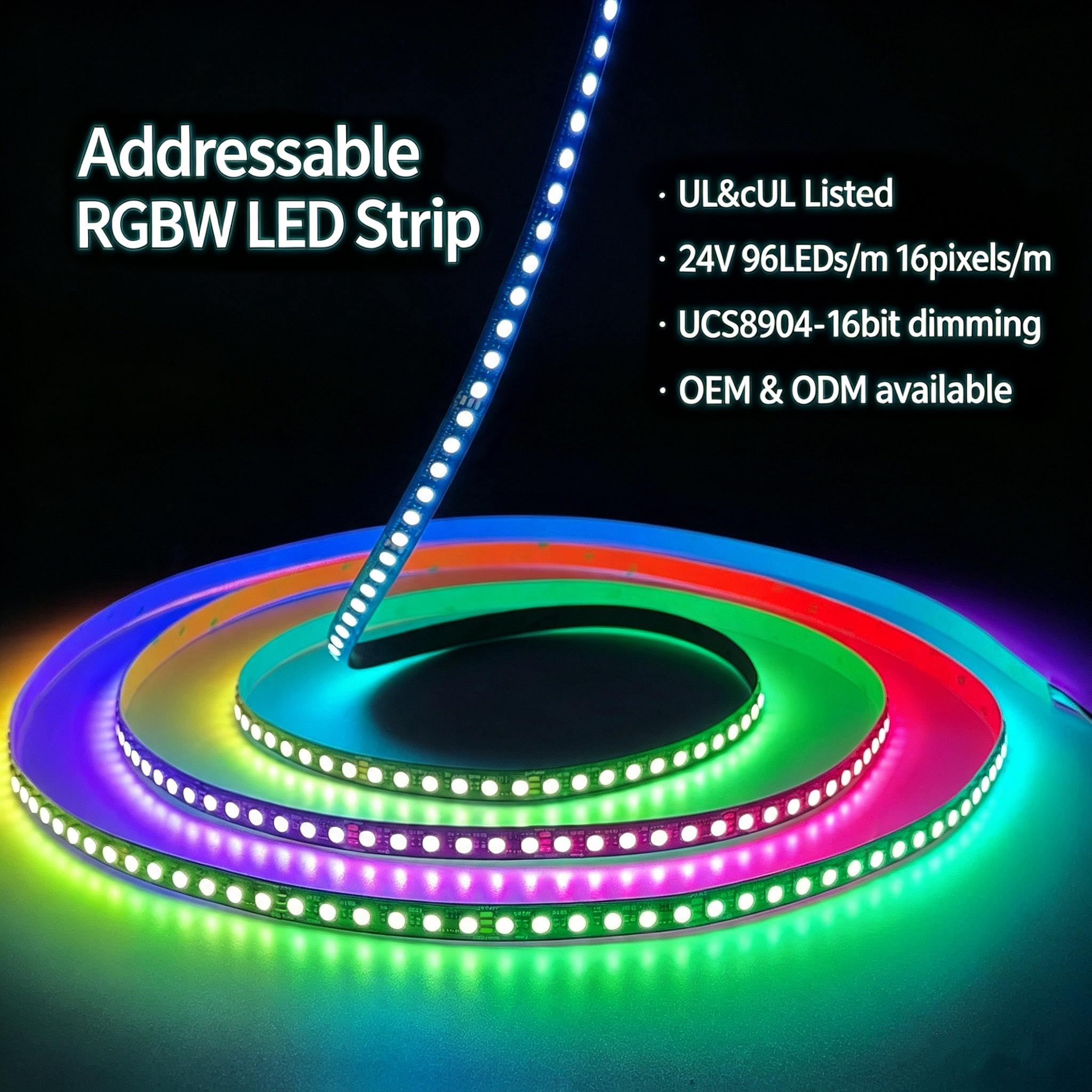
The industry benchmark has elevated to True 16-Bit Grayscale IC Protocols, such as our UCS8904 and UCS7604 driver series. Generating 65,536 discrete intensity steps per channel, these smart white/RGBW tapes eliminate visual step-changes during ultra-slow lighting fades. Operating at PWM frequencies in excess of 10kHz to 16kHz, they guarantee completely flicker-free performance on ultra-high-speed cinema cameras shooting at 120fps to 1000fps.
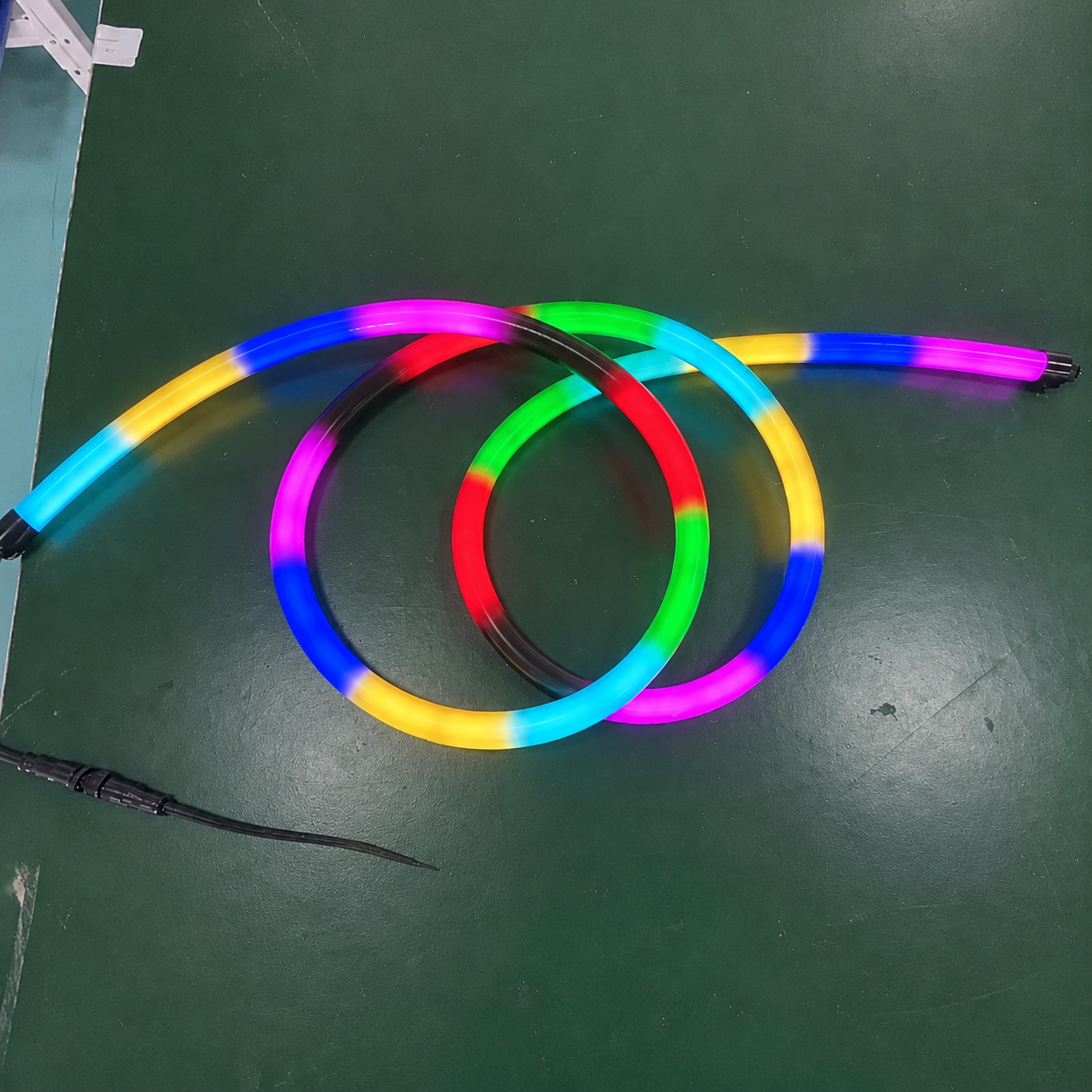
Legacy PVC coating or cheap spray-silicone sleeves suffer yellowing, cracking, micro-fissures, and water ingress under harsh outdoor solar UV and salt-spray exposure. Sourcing trends favor integrated solid silicone co-extrusion and 360-degree round flexible neon profiles (such as our D22 series).
Silicone co-extrusion delivers IP67/IP68 submersible protection, IK10 impact resistance, chemical salt resistance for coastal facade installation, and temperature stability spanning $-40^\circ\text{C}$ to $+80^\circ\text{C}$ without optical lumen attenuation or color-temperature shift over time.
Large-scale architectural media facades, bridges, and commercial plazas require direct integration into lighting control consoles (MA Lighting, Avolites, Madrix) without relying on fragile external SPI-to-DMX translators.
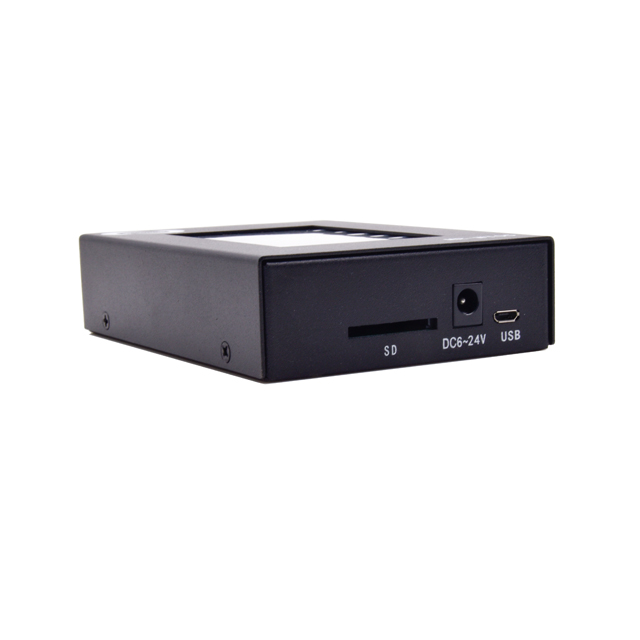
Future-proof procurement focuses on native RS-485 differential DMX512/RDM LED tapes and bars. Operating via standard DMX protocols, each pixel segment can be dynamically addressed using handheld programming units (e.g., our MR-WT35 touch-screen address writer) and monitored for thermal health, operating hours, and fault diagnostics in real time via bidirectional RDM feedback.
Why Global Wholesalers and Engineering Procurement Officers Partner with Shenzhen Fuvin Led Technology Co., Ltd.
Established in 2016 in the high-tech Shiyan lighting manufacturing cluster of Shenzhen, China, Shenzhen Fuvin Led Technology Co., Ltd. has grown into a leading OEM/ODM custom manufacturer specializing in high-end linear lighting, addressable pixel tapes, DMX512 architectural fixtures, and specialized controllers. Our manufacturing facilities were inspected and verified onsite by the SGS Group, confirming our production capacities, strict quality management systems, legal standing, and export execution tracks.
Our manufacturing ecosystem enforces a stringent **12-Step Quality Assurance Workflow**, ensuring that zero defects enter international logistics channels:
Incoming Raw Material Inspection (IQC), LED Chip Spectroradiometer Sorting, & Substrate Solderability Test.
High-Speed SMT Surface Mounting, Automatic Optical Inspection (AOI), & Continuous Ultrasonic Roll-Welding.
100% 24-to-48 Hour Full-Power Burn-In Aging, Integrating Sphere Photometric Testing, & IP68 Waterproof Injection Molding.
Multimeter Electrical Verification, Anti-Static Moisture-Proof Vacuum Sealing, & Final OQC Pre-Shipment Inspection.
Technical and Commercial Clarifications for Direct Importers and Project Contractors
Partner directly with an SGS-verified China wholesale white LED strip exporter. Send us your project CAD drawings, photometrics requirement list, or custom OEM specification sheet. Our senior optoelectronic engineering team responds within 12 hours with complete technical pricing, photometrics, and sample kits.
 Shenzhen, Guangdong, China