Engineered for stage production, architectural facade integration, commercial entertainment, and custom OEM installations.

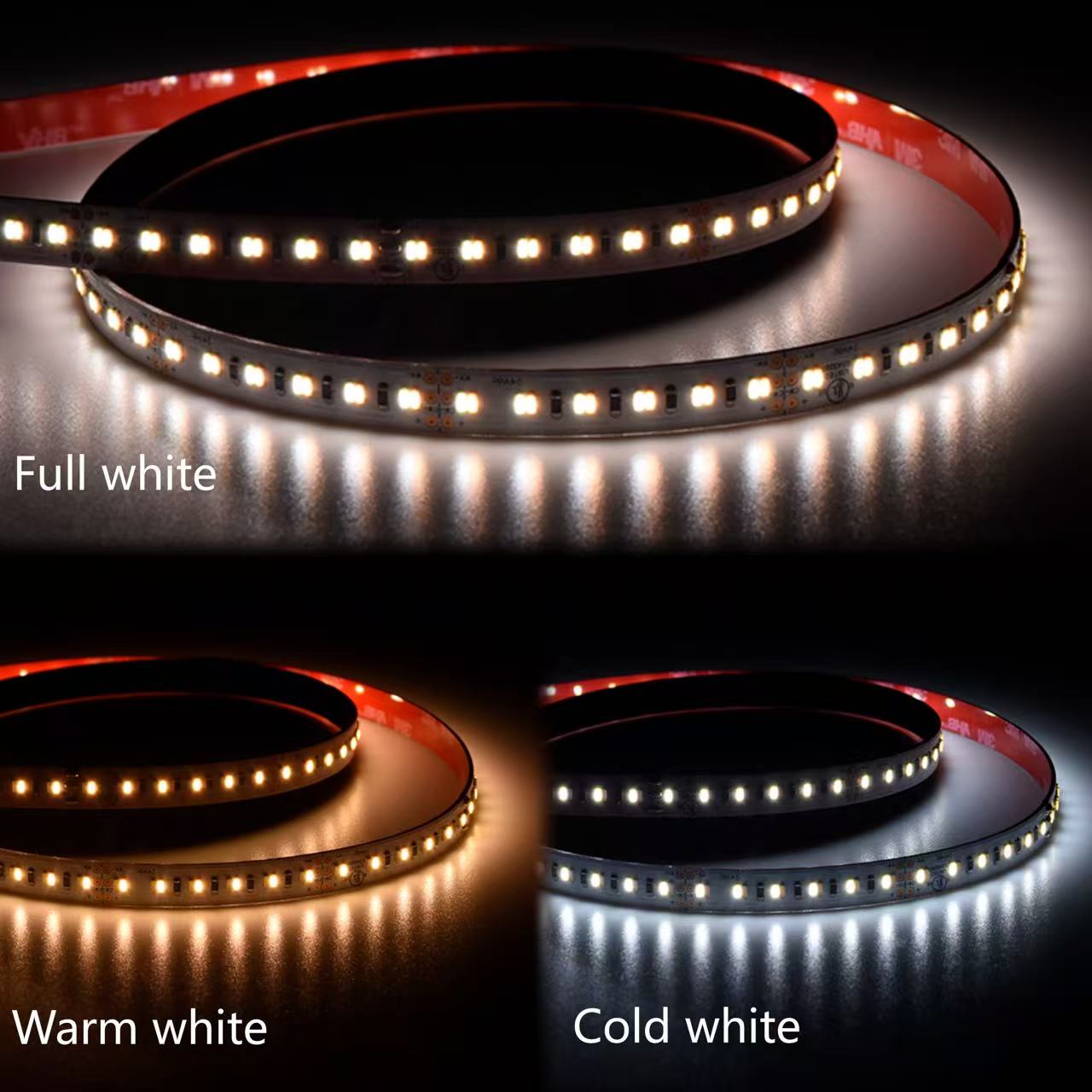
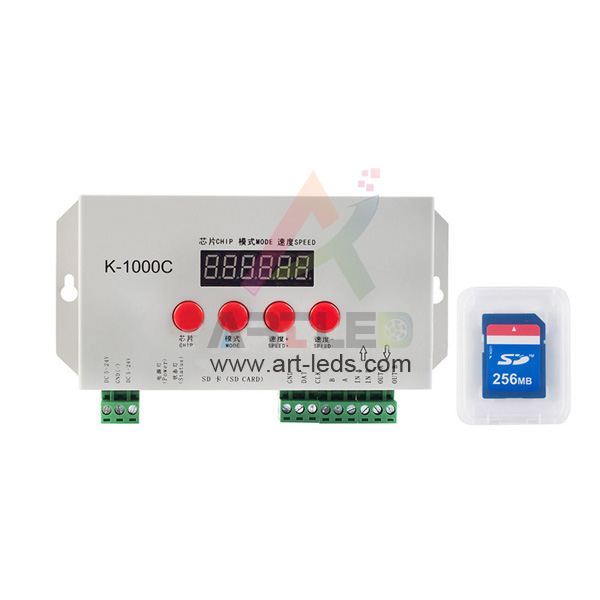
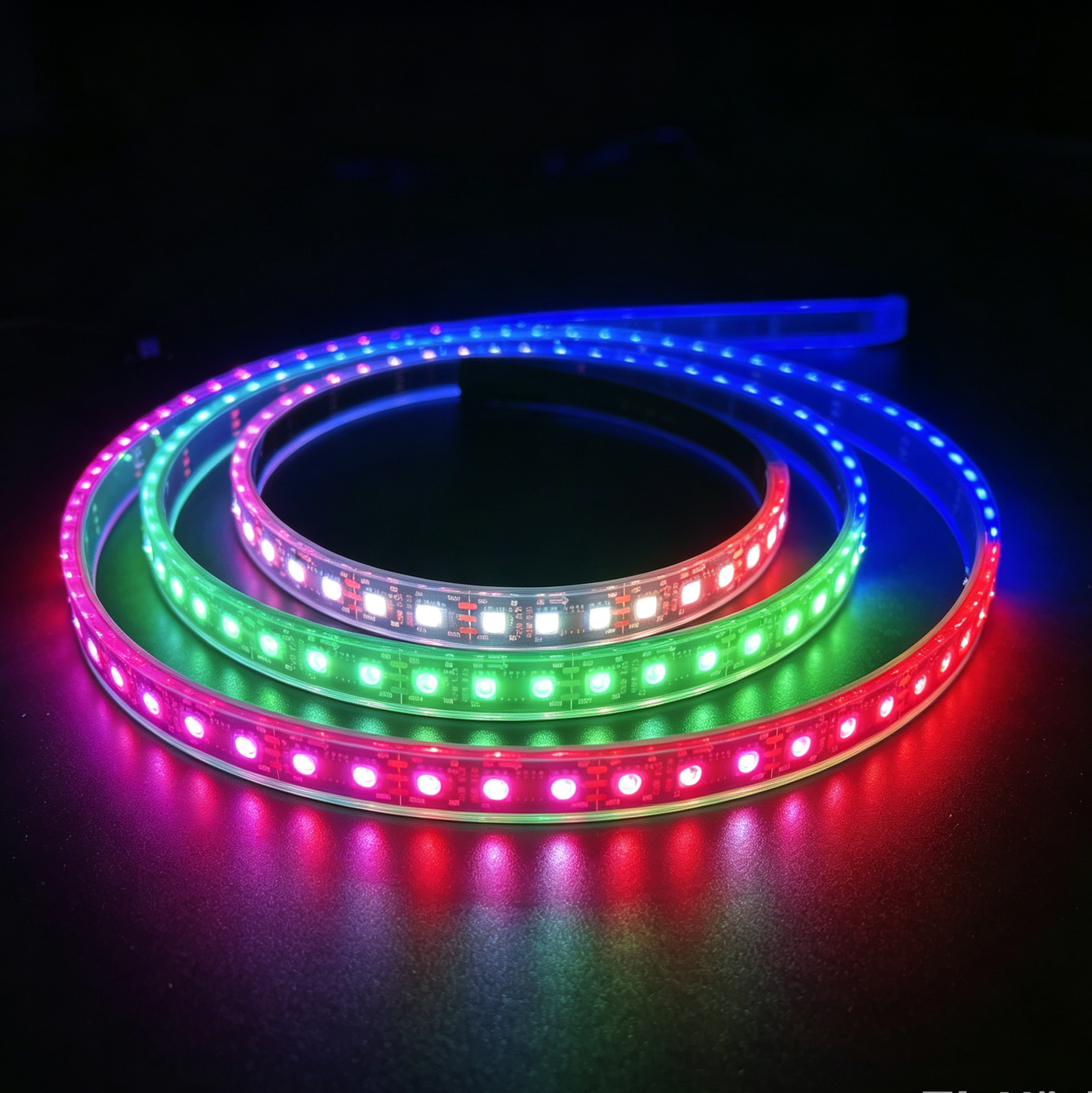
Analyzing signal protocols, color rendering mechanisms, and thermal management in high-density digital LED strip engineering.
Traditional RGB addressable strips generate white light by mixing Red, Green, and Blue channels at full intensity. This approach yields an unnatural, bluish white with low Color Rendering Index (CRI < 70) and excessive power draw. Modern custom OEM addressable RGBW strips integrate a dedicated white emitter—available in 2700K Warm White, 4000K Natural White, or 6500K Cool White—alongside RGB dies. This 4-channel configuration delivers pure pastel tones, higher luminous efficiency (>100 lm/W on white channel), and precise architectural lighting integration.
Commercial pixel controllers typically utilize 8-bit pulse-width modulation (PWM), offering 256 dimming steps per channel (16.7 million total colors). However, in slow ambient transitions, stage dim-to-dark scenes, and broadcast studio setups, 8-bit resolution causes visible color stepping (banding). Advanced IC drivers like UCS8904 and UCS7604 feature 16-bit PWM resolution, elevating dimming performance to 65,536 grayscale levels per channel. This eliminates camera flickering and delivers ultra-smooth low-end dimming down to 0.01% brightness.
Engineering addressable strips requires selecting between Single-Wire TTL (SPI), Dual-Wire (Data & Clock), and RS-485 Differential Protocols (DMX512). Single-wire ICs like WS2812B and UCS2904 optimize cost for short runs (<5 meters), while dual-line backup ICs (WS2813 / SK6813) feature breakpoint continuous transmission—ensuring that a single defective LED chip will not interrupt data flow to downstream pixels.
Comprehensive technical metrics for lighting designers, system integrators, and OEM procurement managers.
| IC Model / Protocol | Channel Type | Gray Scale Depth | Working Voltage | Signal Standard | Max PWM Frequency | Primary Target Application |
|---|---|---|---|---|---|---|
| UCS2904 | RGBW (4-CH) | 8-Bit (256 Level) | DC 12V / 24V | SPI Single-Wire TTL | 1.2 kHz | Architectural & Commercial Facades |
| UCS8904 | RGBW (4-CH) | 16-Bit (65,536 Level) | DC 5V / 12V / 24V | SPI Single-Wire TTL | 4.0 kHz (Flicker-Free) | Broadcasting, Stage & High-End Retail |
| SK6812 RGBW | RGBW (4-CH) | 8-Bit (256 Level) | DC 5V / 12V | SPI Single-Wire TTL | 1.2 kHz | Custom Displays & Accent Lighting |
| WS2814 | RGBW COB / SMD | 8-Bit (256 Level) | DC 12V / 24V | SPI Single-Wire TTL | 2.0 kHz | Dotless Continuous Neon & Coves |
| DMX512 (UCS512) | RGB / RGBW | 8-Bit / 16-Bit | DC 12V / 24V | RS-485 Differential | 2.5 kHz | Long-Distance Exterior Building Outlines |
| UCS7604 | RGBW / WWA | 16-Bit High Precision | DC 12V / 24V | SPI Parallel Data | 8.0 kHz | High-Frame-Rate Video Pixel Mapping |
As the global commercial lighting market transitions toward hyper-personalized environments, digital video mapping, and building-integrated photovoltaics (BIPV), the demand for high-reliability, custom OEM addressable RGBW LED strips is accelerating exponentially. Procurement professionals must align with forward-looking manufacturing paradigms to maintain competitive advantage.
Historically, digital pixel strips operated predominantly on DC 5V, resulting in severe voltage drop, color shift across long runs, and requirement for frequent power injection every 2.5 to 5 meters. Industry procurement is rapidly standardizing on 24V step-down IC drivers (e.g., 24V UCS2904 / DMX512). Higher operating voltages reduce current flow by 75% for identical wattage, minimizing thermal buildup on the PCB copper traces and enabling continuous power runs up to 10–15 meters from a single power feed.
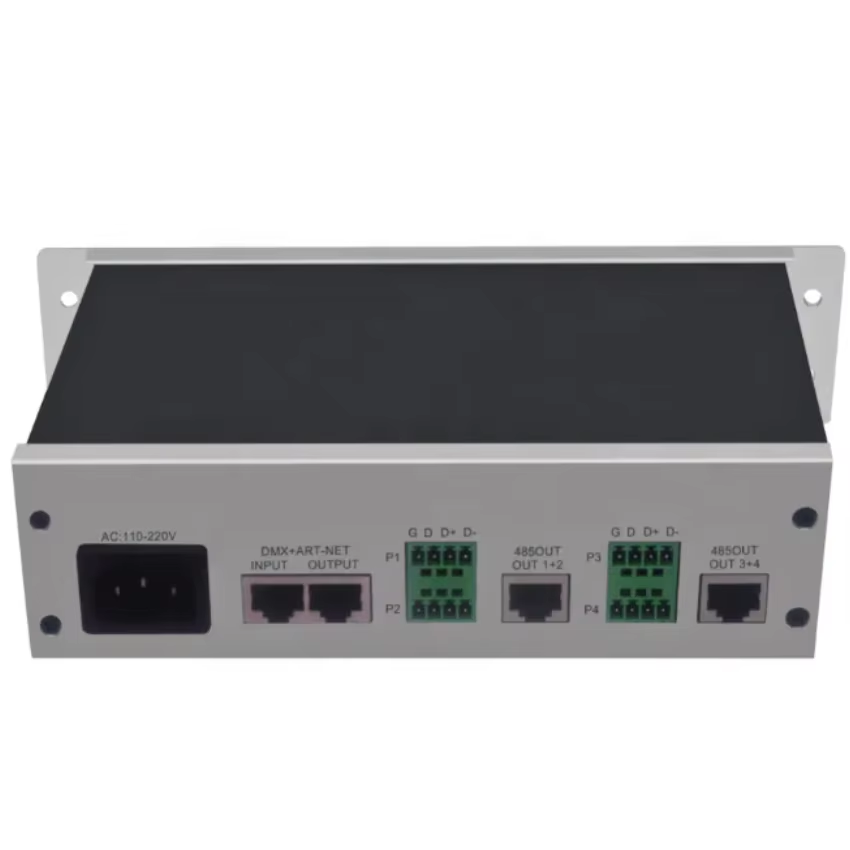
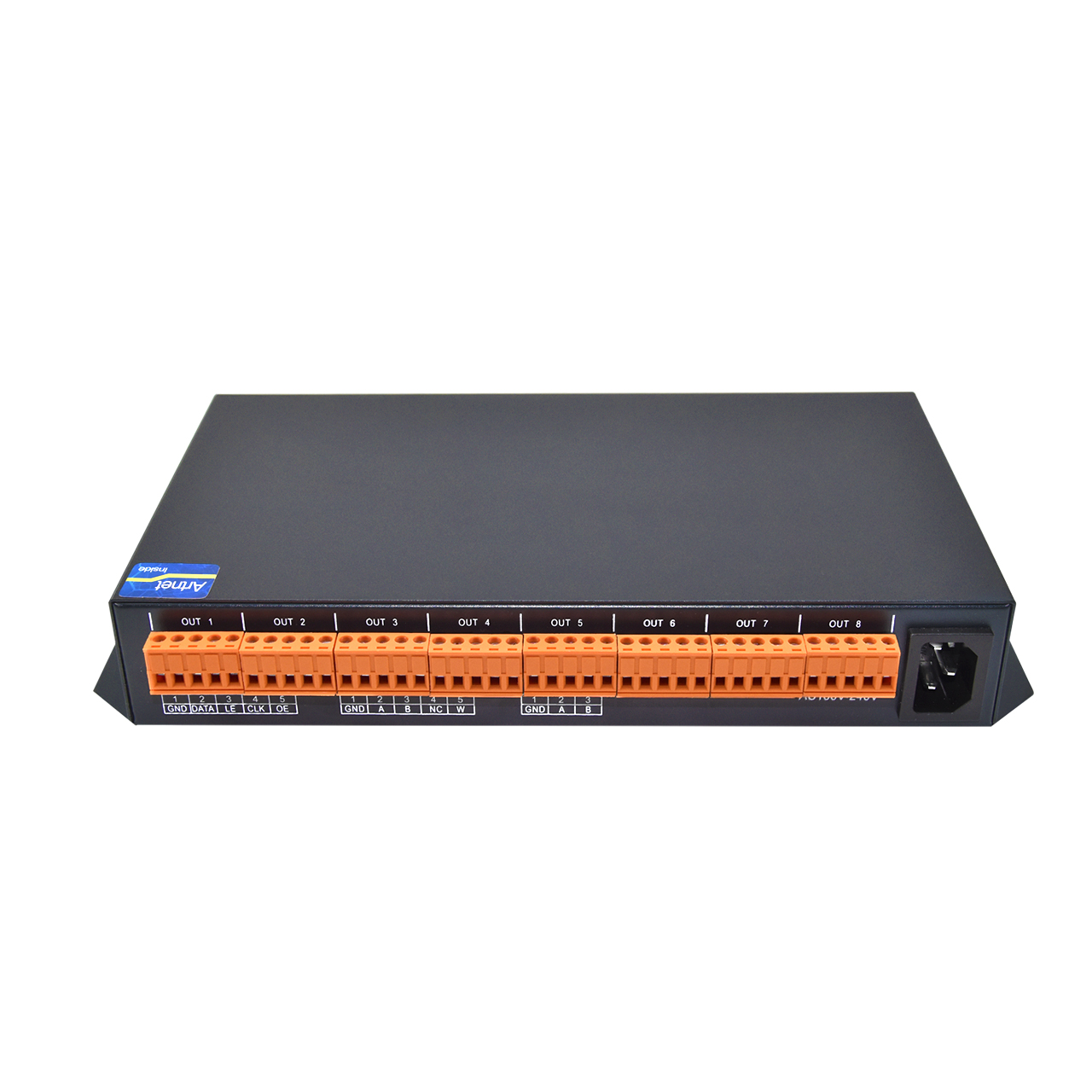
Standalone SPI controllers are increasingly being bridged with Ethernet-based network protocols. Enterprise projects now mandate native support for ArtNet-to-SPI gateways and sACN (E1.31) control nodes capable of driving up to 64 or 128 DMX universes (32,768+ addressable channels) from a central media server. Furthermore, RDM (Remote Device Management) enabled pixel chips allow technicians to set DMX start addresses and run diagnostics remotely without manual DIP-switch configuration.
Traditional SMD5050 and SMD3535 addressable strips rely on discrete plastic LED packages mounted at set intervals (e.g., 60 LEDs/m), requiring deep aluminum channels and thick frosted diffusers to eliminate pixel hot spots. The emergence of Addressable RGBW COB LED Tapes (such as WS2814 COB) packages hundreds of LED dies directly under a continuous silicone phosphor matrix (up to 560 chips/m), achieving 100% seamless, dot-free linear illumination in slim profile extrusions.
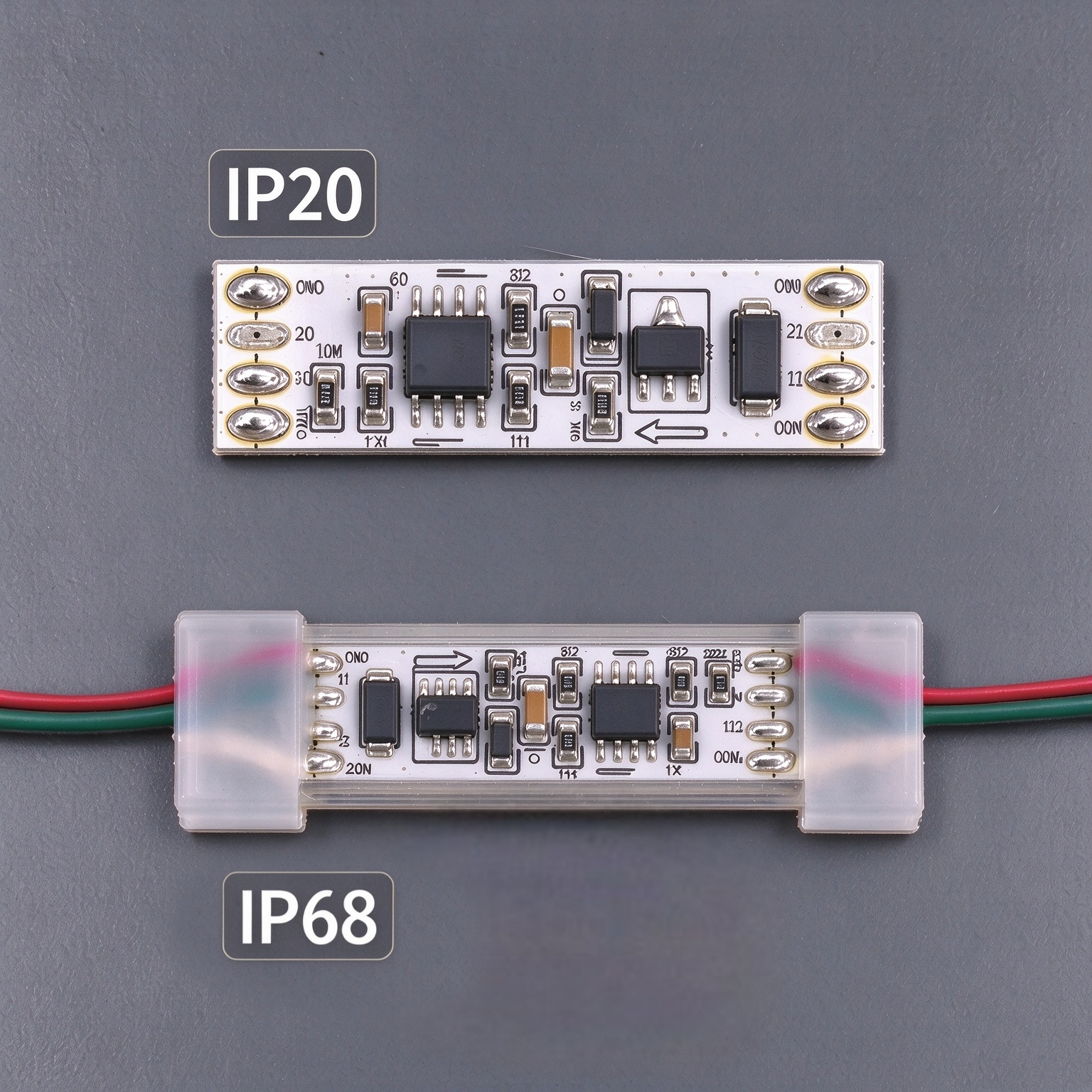
Traditional PVC tubing and epoxy resin encapsulation degrade under ultraviolet radiation, resulting in yellowing, cracking, and water ingress in outdoor installations. Sustainable procurement strategies prioritize 100% UV-resistant silicone co-extrusion technology. Solid silicone neon tubes and IP68 addressable strips withstand extreme ambient temperatures (-40°C to +70°C), saline coastal environments, and intense UV exposure without optical distortion.
Shenzhen Fuvin Led Technology Co., Ltd. provides comprehensive engineering and private-label production services tailored for global buyers.
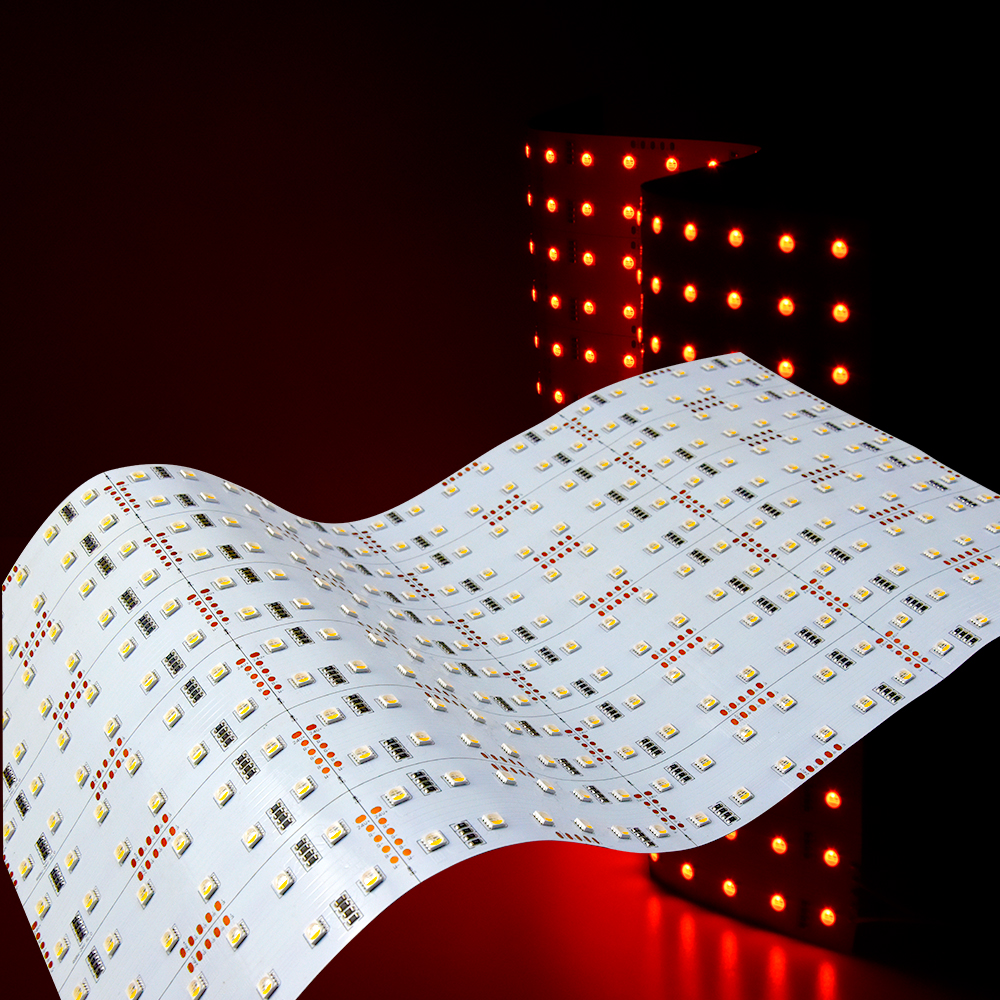
We design custom FPC (Flexible Printed Circuit) board widths (from ultra-narrow 4mm up to 50mm backlight sheets), copper thickness choices (2oz, 3oz, or 4oz rolled-annealed copper for low resistance), and custom PCB colors (white, black, black-gold, clear).
For large-scale architectural projects, color consistency between production lots is paramount. We implement strict MacAdam 3-Step Ellipse LED binning on all custom RGBW orders, guaranteeing identical color temperature (CCT) and chromaticity coordinates across thousands of reels.
All manufactured goods undergo rigorous 100% automated optical inspection (AOI), 48-hour continuous power aging, and ESD moisture-vacuum packing. Supplied with CE, RoHS, Declaration of Conformity (DoC), and UL/cUL certification compliance for global distribution.
Technical & commercial insights to streamline your custom OEM addressable LED strip order.
Both UCS2904 and SK6812 are 4-channel (RGBW) single-wire TTL SPI ICs. However, UCS2904 is natively engineered for higher voltage operations (12V and 24V), where multiple LED dies are grouped per pixel to significantly minimize current consumption over long runs. SK6812 is traditionally a 5V integrated-driver LED chip where each single die is individually addressable, making it ideal for micro-displays and short, dense pixel matrix installations.
TTL SPI signals (used in WS2811, SK6812, UCS2904) typically experience data degradation beyond 5 to 10 meters between the controller and the first pixel, or between adjacent pixels. Signal boosters (TTL data amplifiers) are required for longer gaps. In contrast, RS-485 differential DMX512 protocol supports cable distances up to 300 meters without signal distortion, making DMX512 the preferred protocol for massive exterior building outlines and stadium lighting.
Standard 8-bit digital strips step between brightness levels in increments of 1/256th. When dimming from 5% down to 0% brightness during delicate stage cues, this creates visible "jumping" or stepping. 16-bit ICs divide brightness into 65,536 micro-steps, generating flawless fade-to-black curves that match high-end automated profile fixtures and eliminate high-speed camera shutter flicker.
As an SGS-verified custom manufacturer, we accommodate custom FPC copper layouts, specialized cut-unit intervals, pre-soldered IP68 waterproof connectors (e.g., xConnect, IP67 aviation plugs), custom reel labels, and branded anti-static packaging based on your CAD drawings and OEM requirements.
RGBW strips running at high densities (such as 96 LEDs/m or 120 LEDs/m) can draw between 18W and 28W per meter. Operating these strips without proper thermal sinks will degrade LED lumens and cause color shift. We mandate installing strips exceeding 12W/m inside aluminum extrusion profiles with minimum 2oz double-sided FPC copper to dissipate junction heat efficiently.
For outdoor permanent installations, we recommend IP67 silicone tube encapsulation or IP68 full silicone solid injection (co-extrusion). Silicone resists UV radiation and yellowing far better than traditional epoxy resin or PVC, maintaining optical clarity and flexibility across temperature ranges from -40°C to +70°C.
Consult with our senior engineer team today. We provide free circuit schematic evaluation, custom sample prototyping, photometrics, and factory-direct wholesale pricing within 24 hours.
 Shenzhen, Guangdong, China