Precision-manufactured pixel tapes, rigid bars, controllers, and modules tailored for global B2B procurement.
In modern architectural lighting, stage design, and commercial visual environments, the transition from standard analog PWM lighting to dynamic, addressable pixel control represents a fundamental shift. As a dedicated OEM/ODM manufacturer headquartered in Shenzhen, China, Shenzhen Fuvin Led Technology Co., Ltd. builds enterprise-grade LED lighting solutions designed to overcome signal attenuation, color shifting, thermal degradation, and grayscale stepping.
A primary consideration in professional LED procurement is selecting the optimal control topology for the physical environment:
Traditional addressable ICs operate at 8-bit color depth, delivering 256 steps of brightness per channel (Red, Green, Blue, White). In low-luminance dimming ranges (0.1% to 10%), 8-bit systems exhibit visible "stepping" or flicker—an unacceptable defect in broadcast television, theater, and luxury hospitality lighting.
Next-generation ICs, such as the UCS8904 and UCS7604, process true 16-bit PWM grayscale depth. This delivers 65,536 discrete steps of brightness per channel, resulting in mathematically continuous dimming curves, ultra-smooth color transitions, and zero camera flicker at high shutter speeds (high PWM refresh rates exceeding 4,000Hz to 8,000Hz).
| Driver IC / System | Signal Type | Color Depth | Voltage Input | Data Redundancy | Primary Application |
|---|---|---|---|---|---|
| UCS8904 | SPI Protocol | 16-Bit (65,536 Steps) | DC12V / DC24V | Single Data / Dual Clock Option | Broadcast, High-End Architectural, Stage |
| UCS2904 | SPI Protocol | 8-Bit (256 Steps) | DC12V / DC24V / DC36V | External/Internal RGBW IC | Building Facades, Outdoor Point Lights |
| UCS512 / TM512AC | DMX512 / RS-485 | 8-Bit / 16-Bit Configurable | DC12V / DC24V | Parallel Differential Signal | Long-Distance Facade Outlines, Bridges |
| WS2814 COB | SPI Protocol | 8-Bit RGBW | DC24V | Continuous COB Array | Dotless Cove Lighting, Linear Channels |
| SK6812 RGBW | SPI Protocol | 8-Bit (Embedded IC) | DC5V / DC12V | Single Signal Line | Signage, Custom Displays, Retail Fixtures |
As global lighting markets evolve toward smart infrastructure and immersive environmental design, several core technological shifts are dictating B2B manufacturing standards.
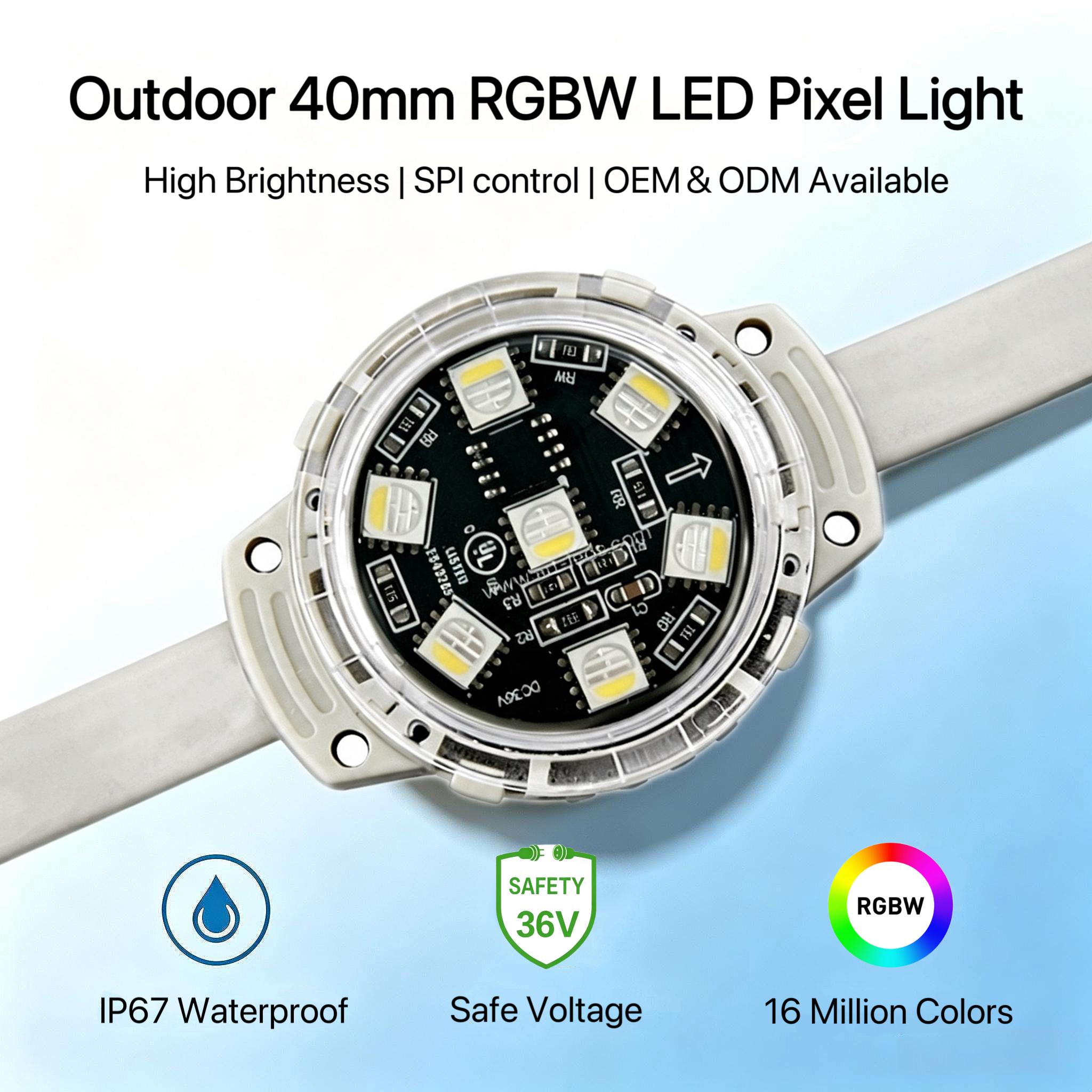
Traditional 5V and 12V addressable strips suffer from severe voltage drop over extended runs, requiring frequent power injection points every 2.5 to 5 meters. Modern engineering prioritizes 24V and 36V pixel topologies. By lowering operating current for the same wattage output, 24V/36V systems reduce line losses, allow continuous runs up to 10–15 meters with single-end power feeding, and dramatically simplify on-site electrical wiring for large-scale building facades.
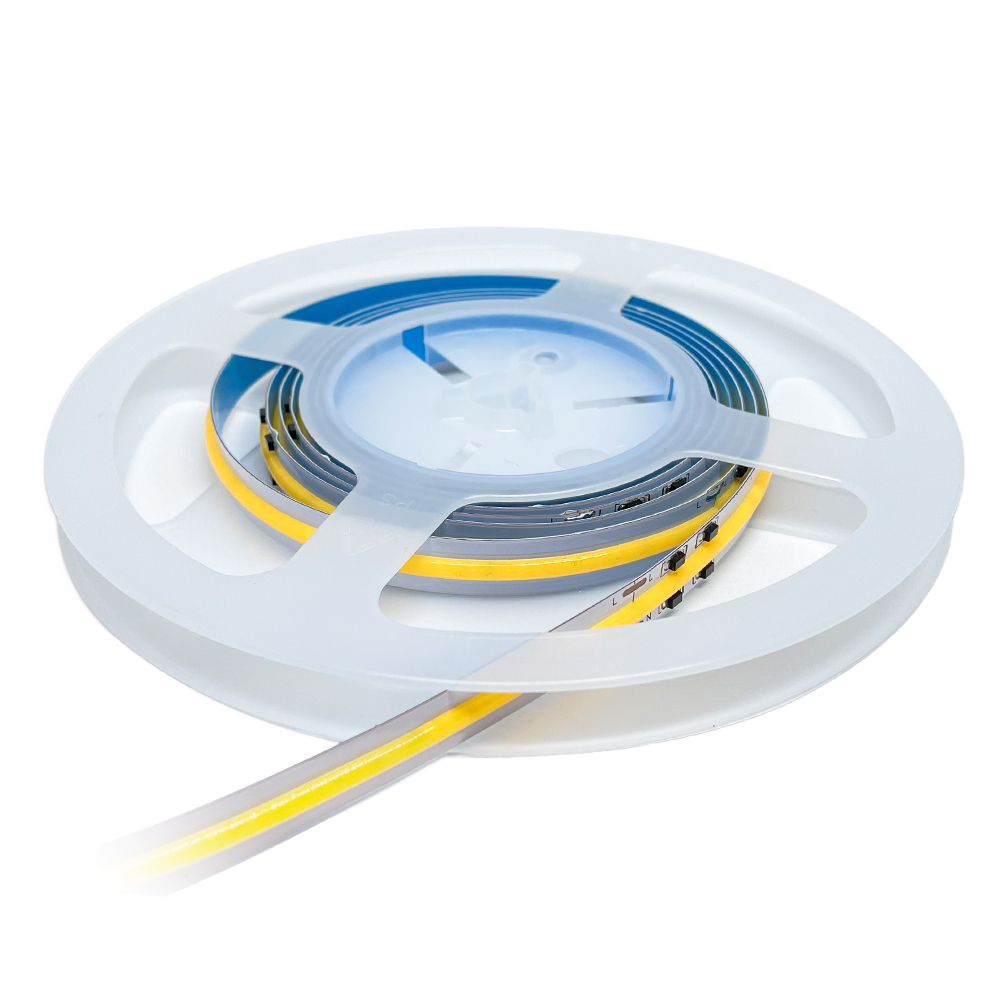
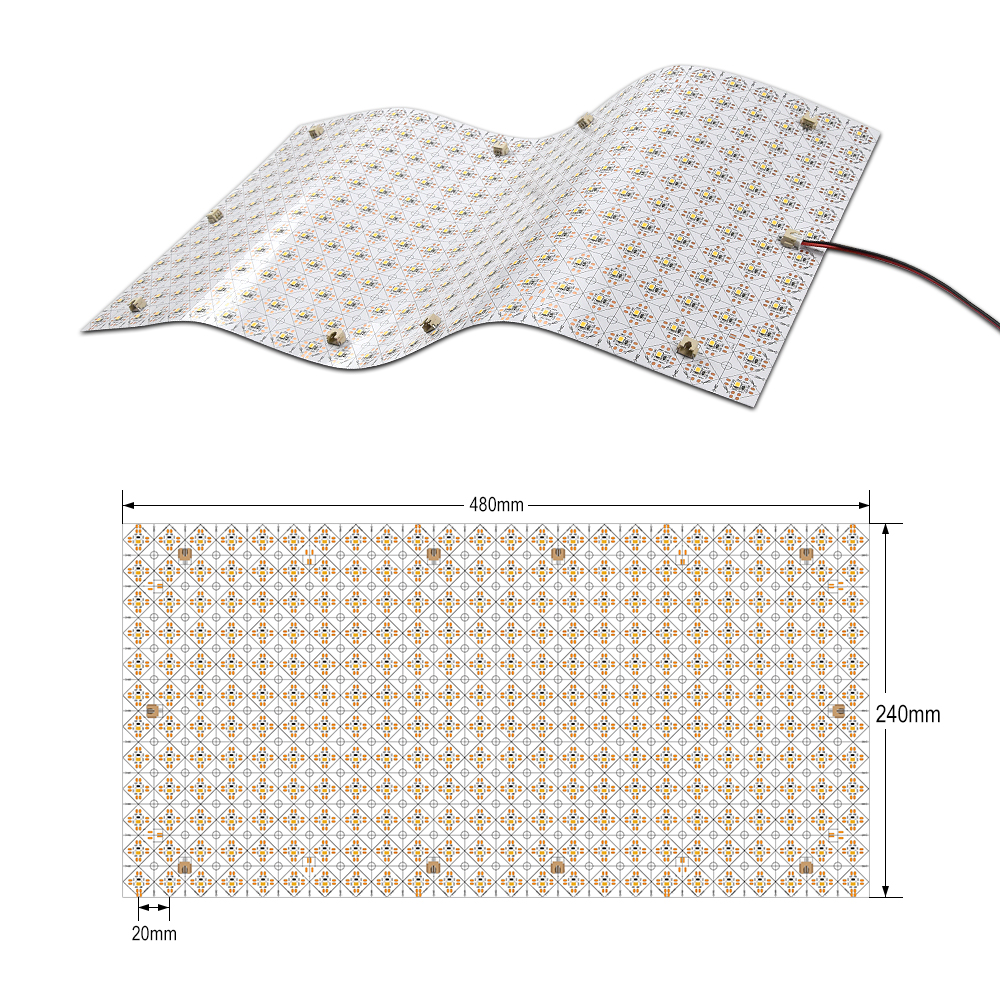
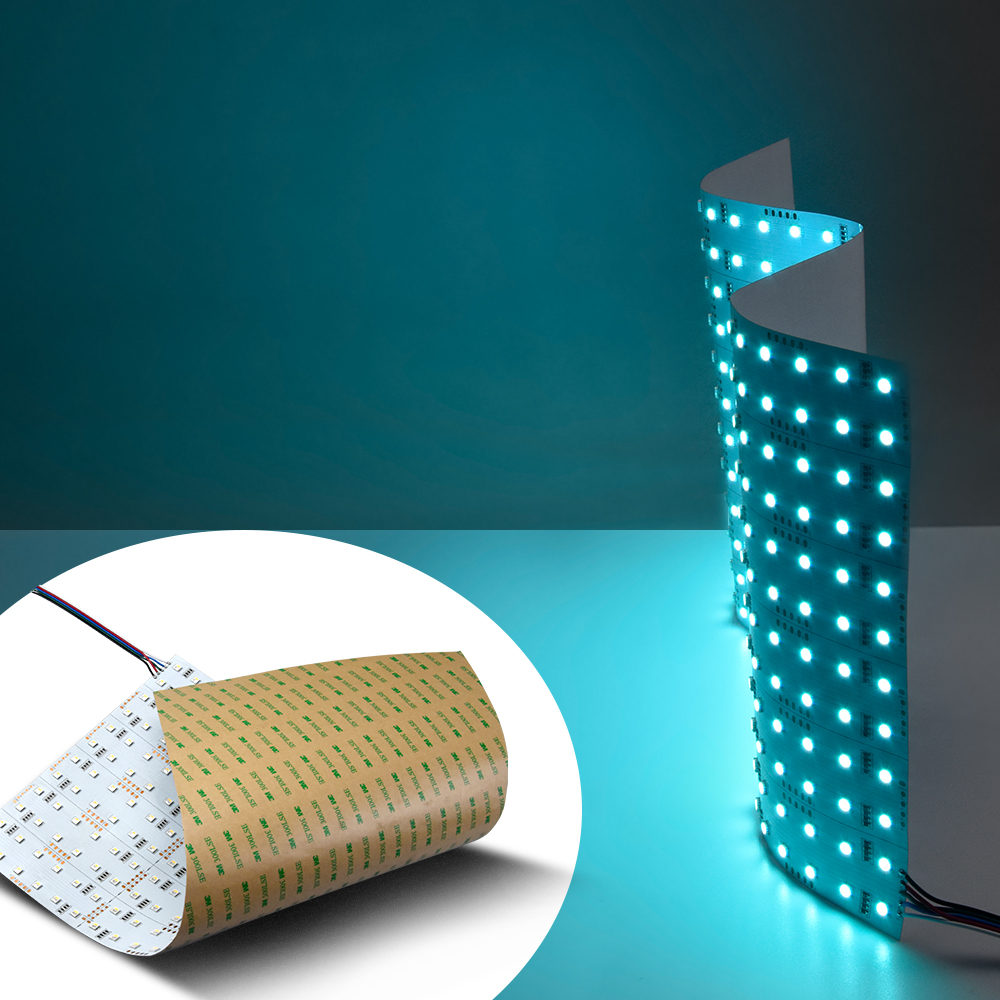
SMD-based flexible strips often produce visible light hotspots unless paired with deep aluminum diffusers. The industry is rapidly adopting WS2814 and UCS2904 COB Pixel Tapes. Featuring up to 720 or 784 micro-chips per meter encapsulated under a continuous phosphor silicone strip, COB pixel lighting offers completely dot-free linear illumination across 360-degree bendable profiles, thin light sheet backlights, and low-profile interior coves.
Outdated PU (polyurethane) potting glue and hollow PVC sleeve waterproofing methods suffer from UV degradation, yellowing, and thermal cracking under high ambient temperatures. Sourcing trends favor full silicone co-extrusion technology. Solid silicone resists saltwater corrosion, chemical exposure, extreme temperature ranges (-40°C to +80°C), and harsh UV radiation, guaranteeing IP67 and IP68 reliability for outdoor bridge, eave, and landscape lighting.
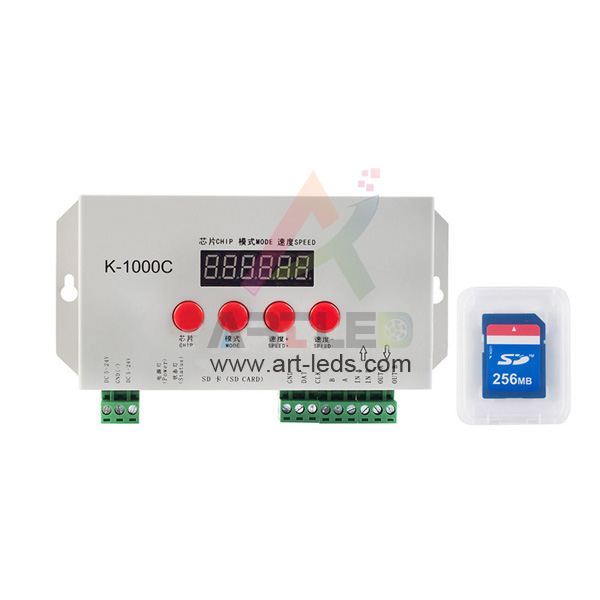
The control plane for commercial installations is migrating toward centralized IP-based distribution. Hardware controllers like the K-1000C and rack-mounted ArtNet/sACN-to-DMX/SPI nodes bridge physical light fixtures directly to media servers (Madrix, Resolume, TouchDesigner). Future-proof procurements demand controllers with native RDM feedback, web-server configuration, and firmware support for custom chip protocols.
When procuring commercial lighting systems from China, evaluating suppliers based on unit price alone frequently results in post-installation failures, binning discrepancies, or warranty disputes. Procurement directors, system integrators, and lighting importers should evaluate factories against rigorous manufacturing standards:
The thermal and electrical performance of flexible LED strips relies on the printed circuit board. High-grade custom manufacturing specifies 3oz double-sided rolled copper PCBs (or minimum 2oz extra-thick copper) compared to cheap 1oz single-sided alternatives. Heavy copper reduces internal resistance, minimizes voltage drop along the run, and conducts heat away from the LED dies to prevent lumen depreciation.
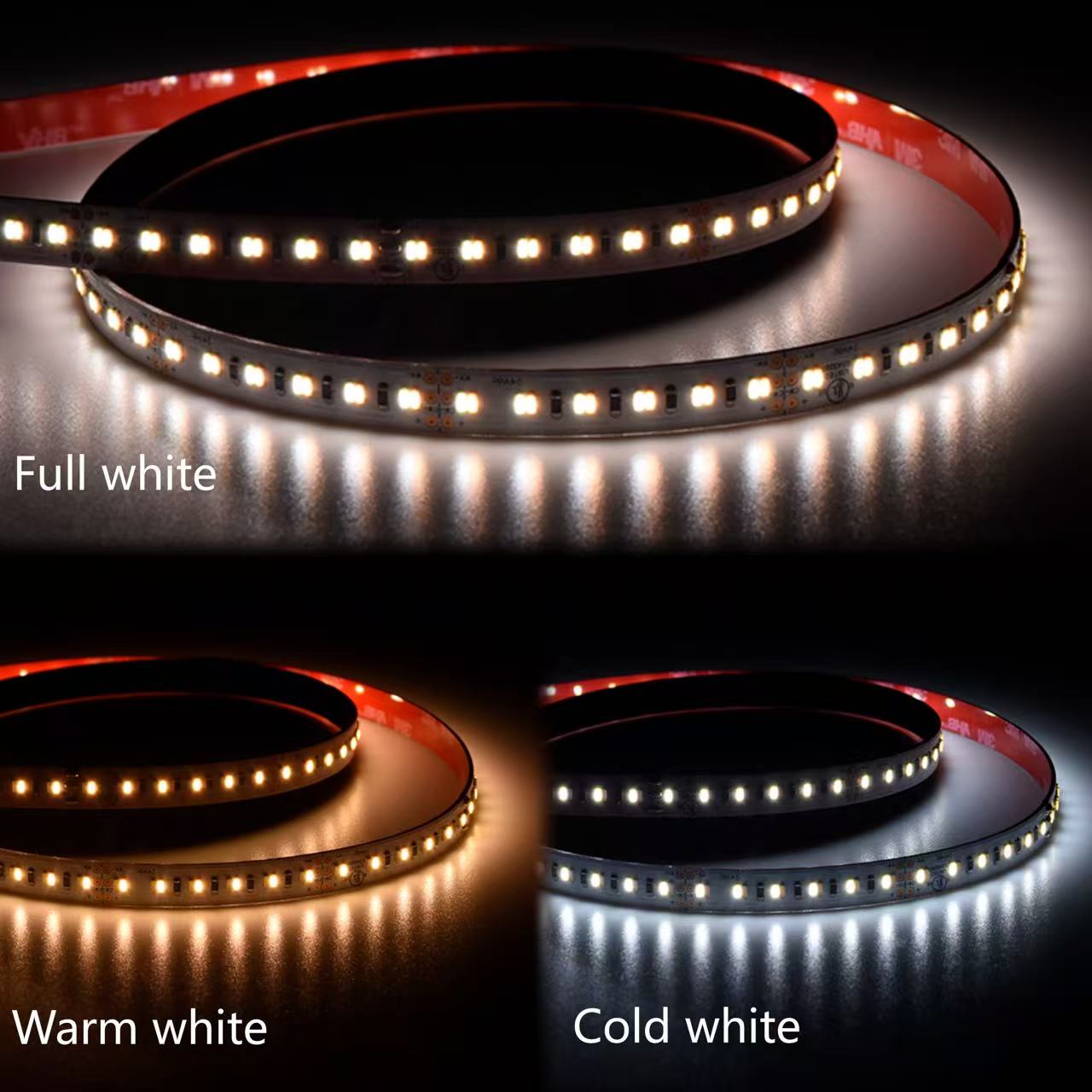
Color matching across multiple production batches is critical for large architectural installations. Fuvin LED enforces strict 3-step MacAdam Ellipse (3 SDCM) binning for all white-light diodes (including CCT Tunable White 2300K-6500K and RGBW dedicated white channels). This ensures that replacement reels or secondary project phases perfectly match previously installed fixtures.
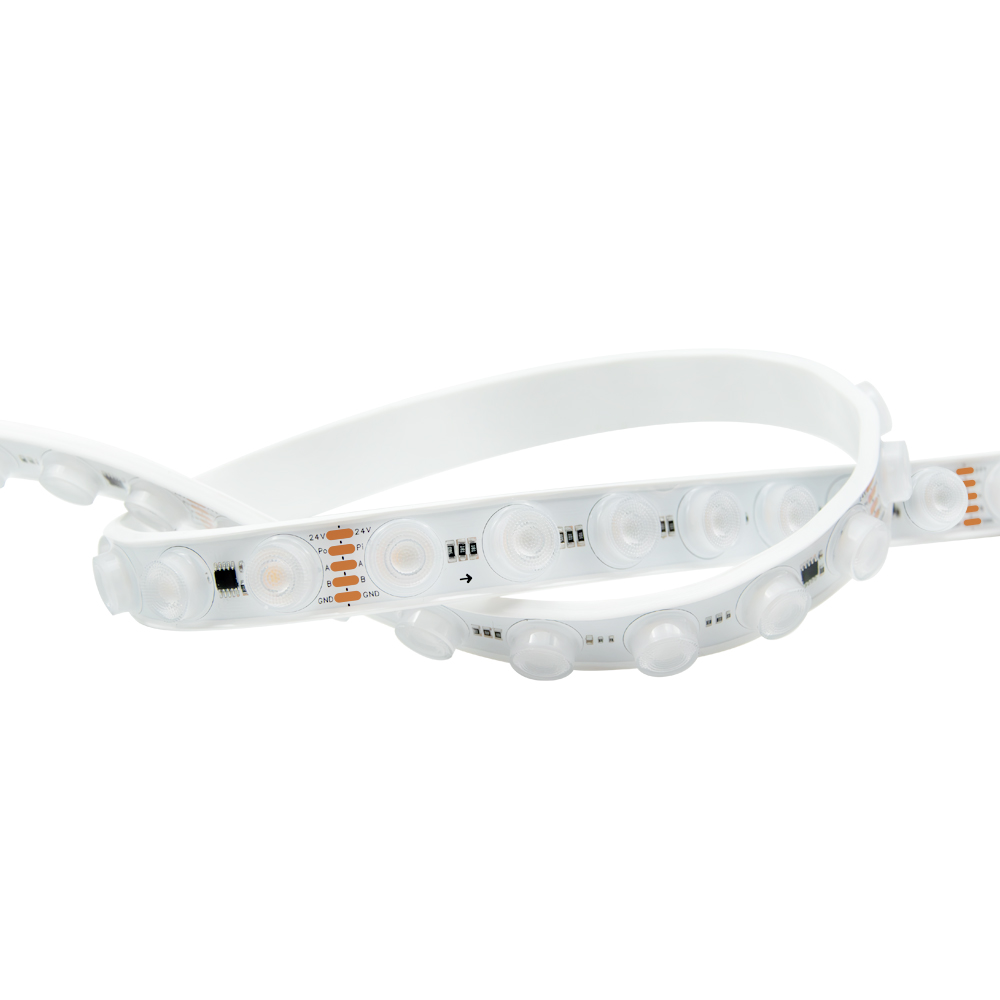
For application-specific products like flexible DMX wall washers and pixel linear bars, optical beam control is vital. Integrating specialized 30°, 45°, or 60° silicone optical lenses transforms a flood tape into a narrow-beam wall washer capable of projecting vibrant RGBW light up 5+ meter vertical structures. Furthermore, flexible backlight sheets and dense LED arrays utilize bendable aluminum backing or thermal interface layers to optimize heat dissipation.
Overseas buyers must ensure compliance with regional electrical safety regulations. Shenzhen Fuvin Led Technology Co., Ltd. is onsite verified by SGS Group. Our product lines hold CE, RoHS compliance, and Declaration of Conformity (DoC) certifications, with selected strip lines certified under UL and cUL standards for North American commercial code compliance.
Combining advanced SMT assembly lines, automated silicone extrusion, and rigorous 12-step quality control to deliver bespoke lighting solutions.
We engineer custom PCB widths (from 4mm ultra-narrow to 480mm bendable backlight sheets), custom PCB substrate colors (black, white, clear, copper), and custom copper weights up to 3oz/4oz.
Select your exact driver chip requirement: UCS8904 (16-bit), UCS2904, UCS512 (DMX), TM512AC, SK6812, WS2814, WS2811, or custom ICs configured for specialized baud rates and SPI timing.
Tailored IP ratings from indoor IP20 dry location to IP65 nano-coating, IP67 silicone hollow tube, and IP68 solid silicone extrusion for submersion in fountains and outdoor marine environments.
Every meter of LED strip undergoes incoming component inspection, automated optical SMT verification, ultrasonic wire bonding checks, 48-hour continuous powered aging tests, waterproof pressure testing, and vacuum-sealed anti-static packaging prior to export.
Expert guidance for lighting designers, electrical engineering contractors, and OEM importers.
Both UCS2904 and UCS8904 are 4-channel driver ICs designed for RGBW pixel control over SPI signals. However, the UCS2904 processes standard 8-bit color depth (256 grayscale levels per channel), making it ideal for standard commercial displays, retail cove lighting, and decorative applications. The UCS8904 features true 16-bit color depth (65,536 grayscale levels per channel), delivering ultra-fine, flicker-free dimming at ultra-low brightness levels. UCS8904 is specified for camera-critical television studios, high-end theatrical stages, and luxury architectural projects.
DMX512 (RS-485 differential signaling) should be specified when long cable transmission distances (up to 300m), industrial noise immunity, and direct integration with professional lighting consoles (GMA, Avolites, Chamsys) are required. DMX512 fixtures also support RDM for remote addressing. SPI addressable strips are ideal for high-density pixel mapping, video matrix displays, and cost-sensitive local installations controlled via ArtNet-to-SPI gateways or SD-card controllers like the K-1000C.
Flexible DMX RGBW wall washer strips integrate specialized optical lenses (such as 30°, 45°, or 60° beam angles) directly over each SMD LED package within a flexible silicone channel. Unlike standard flood LED tape that emits light at 120°, flexible wall washers project a focused beam of light up tall surfaces, grazing textured walls, facades, and columns without requiring rigid aluminum fixtures.
As a custom manufacturer, Shenzhen Fuvin Led Technology Co., Ltd. offers comprehensive OEM/ODM options: custom PCB layout & color, custom LED density (e.g., 60, 96, 120, 240, or 720 LEDs/m), custom operating voltages (DC5V, DC12V, DC24V, DC36V), specified IC driver models, custom cut-lengths, white color temperature binning (2300K to 6500K CCT), private buyer labeling, and custom packaging reelling.
We enforce 3-step MacAdam Ellipse LED binning for all white diodes and utilize high-purity 2oz/3oz copper PCBs to manage operating heat. Furthermore, our LEDs are encapsulated in thermal-conductive silicone rather than cheap epoxies, ensuring continuous operation with less than 3% lumen depreciation over 10,000 hours.
Shenzhen Fuvin Led Technology Co., Ltd. is verified onsite by SGS Group. Our manufactured LED products are supplied with CE, EMC, LVD, RoHS compliance, and official Declaration of Conformity documentation. Selected addressable LED tape series are UL and cUL listed for North American market requirements.
Whether you require custom 16-bit UCS8904 pixel tapes, DMX512 flexible wall washers, COB RGBW strips, or full architectural lighting systems, our engineering team provides rapid prototyping, CAD/schematic support, and factory-direct pricing.
Send an Inquiry Shenzhen, Guangdong, China