Explore our SGS-certified flagship pixel LED lighting products. Every item supports custom PCB copper weights, voltage parameters, IC chip integration, and IP ratings.
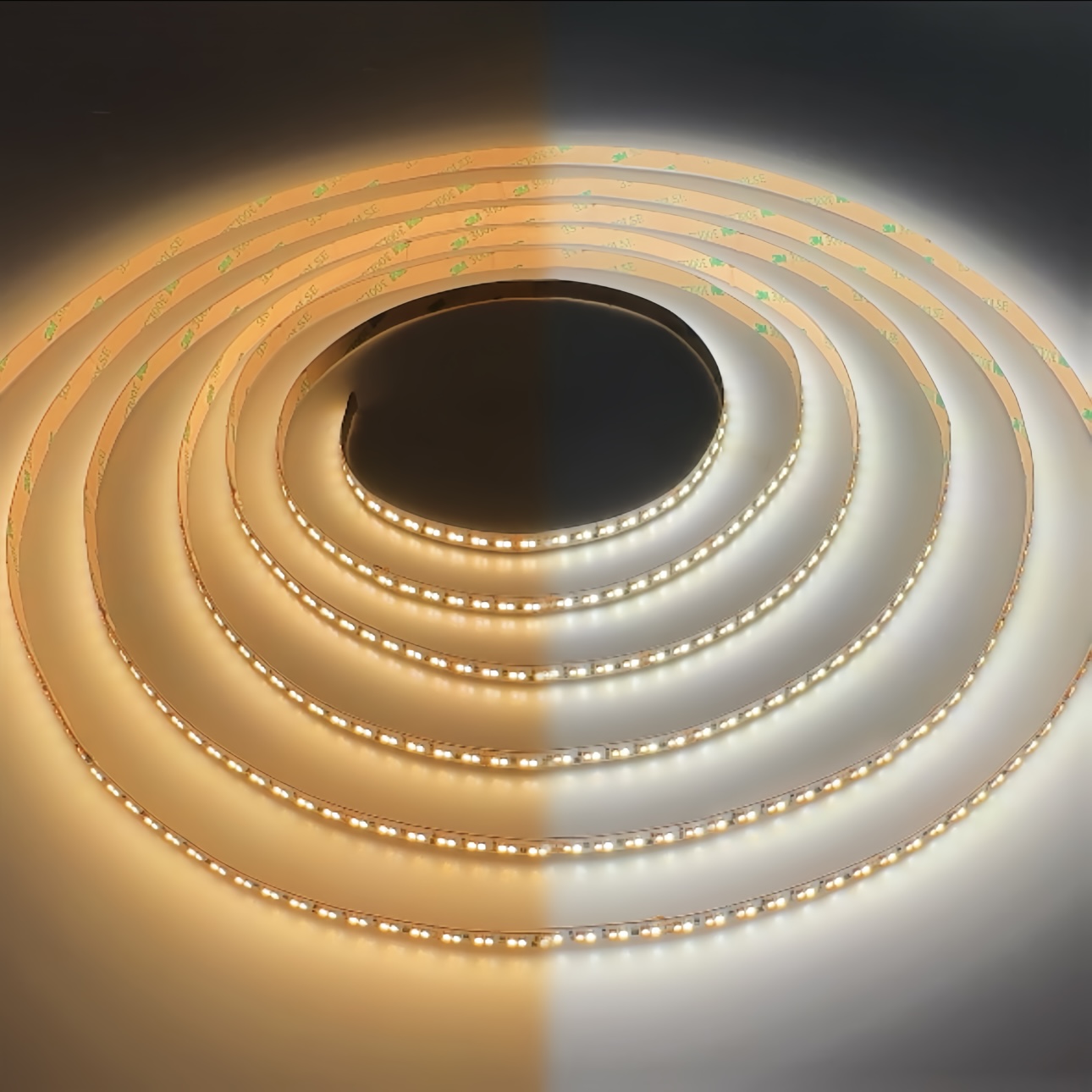
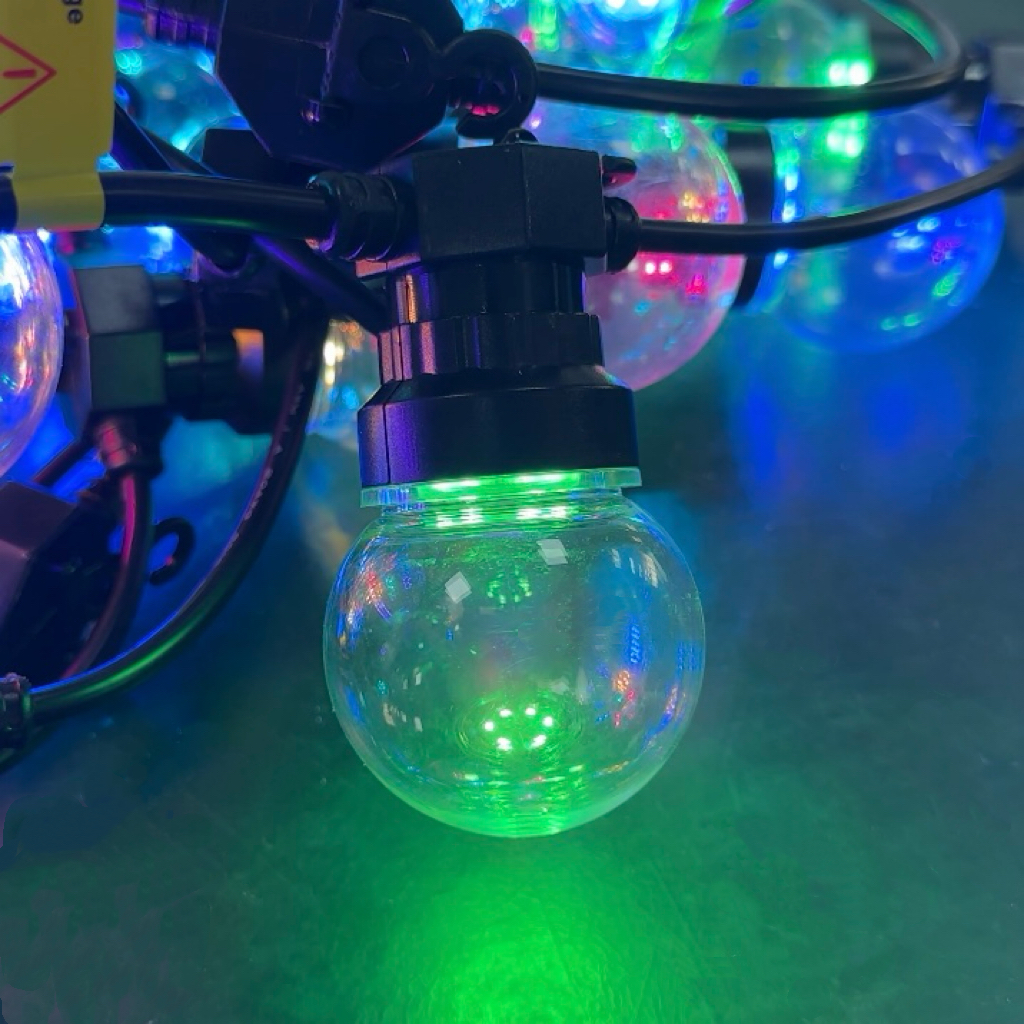
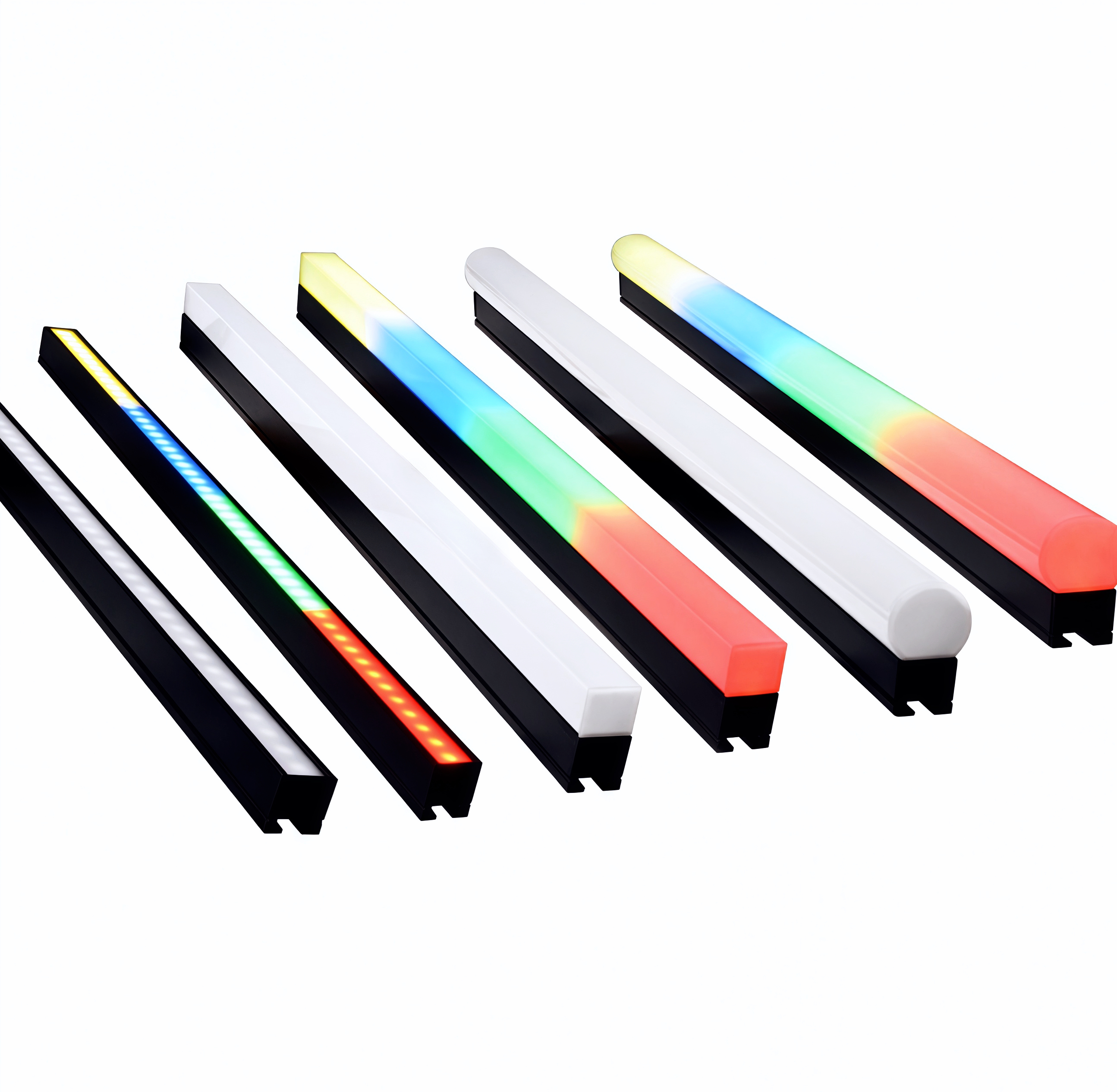
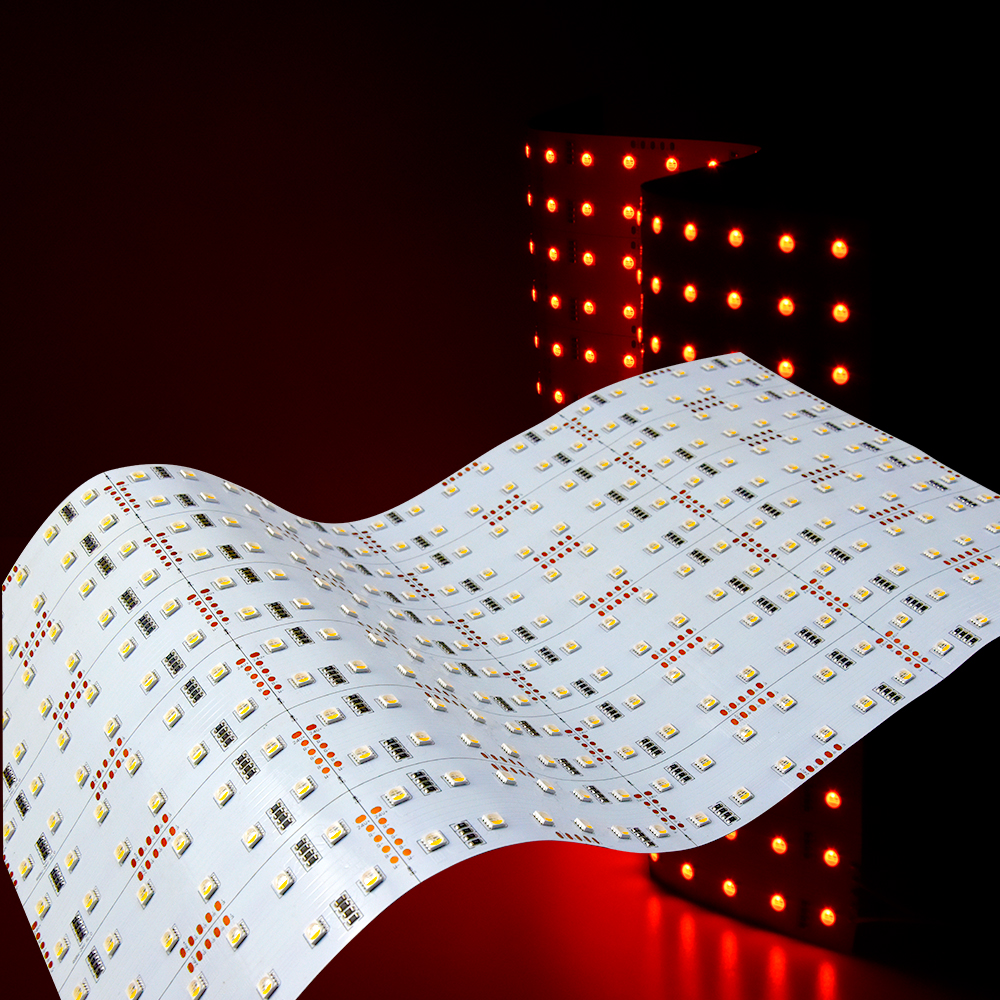
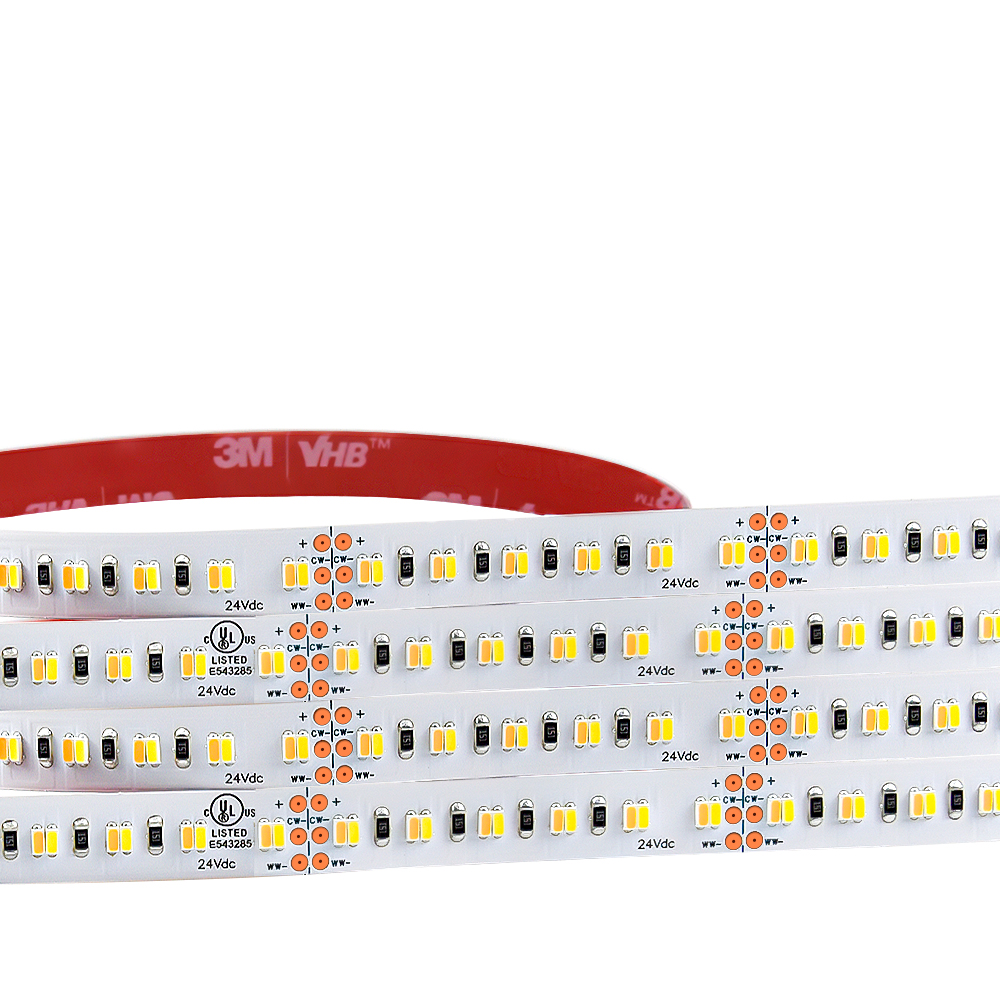
In modern commercial, architectural, and live performance environments, the demand for precision light control has transcended traditional static or analog RGB lighting. While standard RGB strips rely on additive color mixing to approximate white light—frequently resulting in muddy spectrums, low Color Rendering Index (CRI), and unsightly color-shift halos—Addressable RGBW Pixel LED Strips integrate a dedicated white diode channel (3000K Warm White, 4000K Neutral White, or 6000K Cool White) directly alongside the Red, Green, and Blue emitters within a single package or COB array.
As a specialized custom OEM RGBW pixel strip factory, Shenzhen Fuvin Led Technology Co., Ltd. manufactures advanced digital tapes engineered specifically to solve complex lighting challenges. By adding an independent White channel governed by integrated driver ICs (Integrated Circuits), specifiers achieve superior energy efficiency, pastels with accurate saturation control, and true architainment-grade white light exceeding CRI 90.
Information Gain Key Takeaway: Modern pixel control is no longer limited to basic 8-bit dynamic chasing effects. Implementing 16-bit IC architectures (such as UCS8904 and UCS7604) enables 65,536 levels of dimming resolution per channel, totally eliminating low-end step dimming, flicker on high-framerate camera sensors, and voltage drop color distortion across extended structural runs.
When engineering custom pixel LED tapes for international OEM clients, selecting the correct driver chip protocol dictates controller hardware requirements, maximum refresh rates, wiring distances, and installation reliability. Below is an engineering comparison matrix executed by our R&D department:
| IC Chip Model | Signal Type | Grayscale / Bit Depth | Operating Voltage | PWM Frequency | Primary Target Application |
|---|---|---|---|---|---|
| UCS2904 | SPI (TTL Data) | 8-Bit (256 Level) | 12V / 24V DC | 1.2 kHz | Commercial facades, retail displays, custom furniture |
| UCS8904 | SPI (TTL Data) | 16-Bit (65,536 Level) | 5V / 12V / 24V DC | 4.0 kHz + | Stage rental, broadcast TV studios, high-end architectural dimming |
| UCS7604 | SPI (Data + Clock) | 16-Bit (65,536 Level) | 12V / 24V DC | 8.0 kHz | Virtual production walls, camera-critical venues, museum galleries |
| SK6812 RGBW | Single-Wire SPI | 8-Bit (256 Level) | 5V / 12V DC | 1.2 kHz | Custom signage, wearable matrix, localized accent lighting |
| WS2814 COB | Single-Wire SPI | 8-Bit (256 Level) | 24V DC | 2.0 kHz | Continuous dotless RGBW linear lighting, direct-view coves |
| UCS512 / TM512AC | DMX512 (RS-485) | 8-Bit / 16-Bit | 12V / 24V DC | 2.5 kHz | Long-distance exterior building outlines, bridges, stadium perimeters |
Traditional addressable strips operate on an 8-bit depth scale. In an 8-bit architecture, each color channel (R, G, B, W) receives $2^8 = 256$ steps of brightness control. While 256 steps are adequate for rapid color transitions or outdoor commercial animations, they fail catastrophically during low-brightness dimming curves (0.1% to 10%). On HD broadcast camera sensors or cinematic lenses, 8-bit dimming manifests as visible "stepping" or discrete banding.
By contrast, true 16-bit ICs manufactured in our Shenzhen production lines split each channel into $2^{16} = 65,536$ distinct intensity steps. This micro-stepping capability allows lighting designers to create buttery-smooth fade-ins from complete darkness without step jump. Furthermore, the elevated PWM refresh rates (>4,000Hz) prevent rolling shutter artifacts, scanning lines, and camera flickering during live broadcasts.
Verified onsite by SGS Group. We provide global B2B buyers, distributors, and integrators with full transparency, rigorous quality assurance, and bespoke engineering services.
Every master reel undergoes a 12-step manufacturing process including 100% automated optical inspection (AOI), 24-hour continuous powered burn-in aging tests, voltage drop calibration, and vacuum moisture-proof packaging.
Modify every physical parameter: 2oz/3oz rolled-annealed copper PCBs for minimal resistance, customized binning color temperatures, tailored cut intervals, private-label reel printing, and custom extrusion tooling.
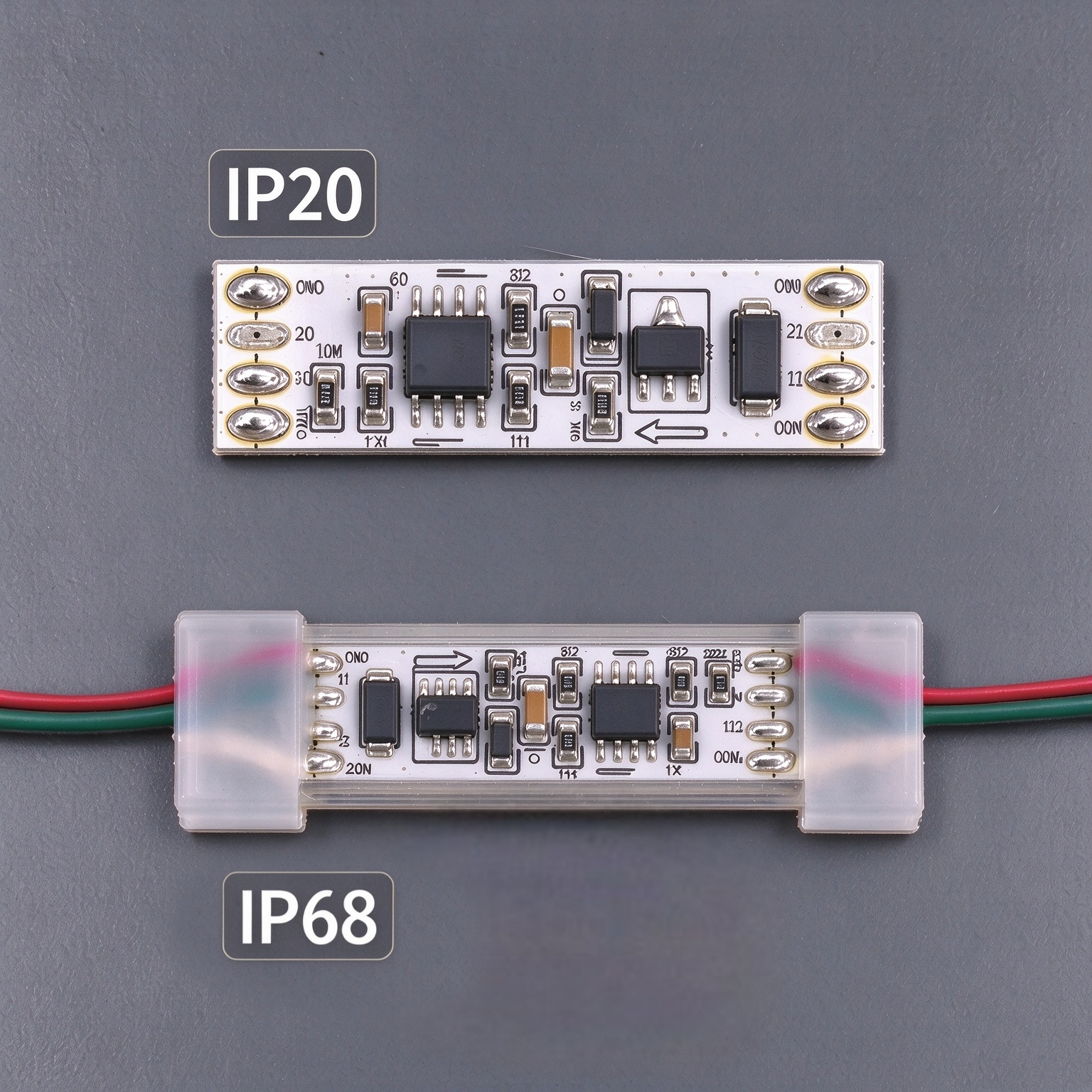
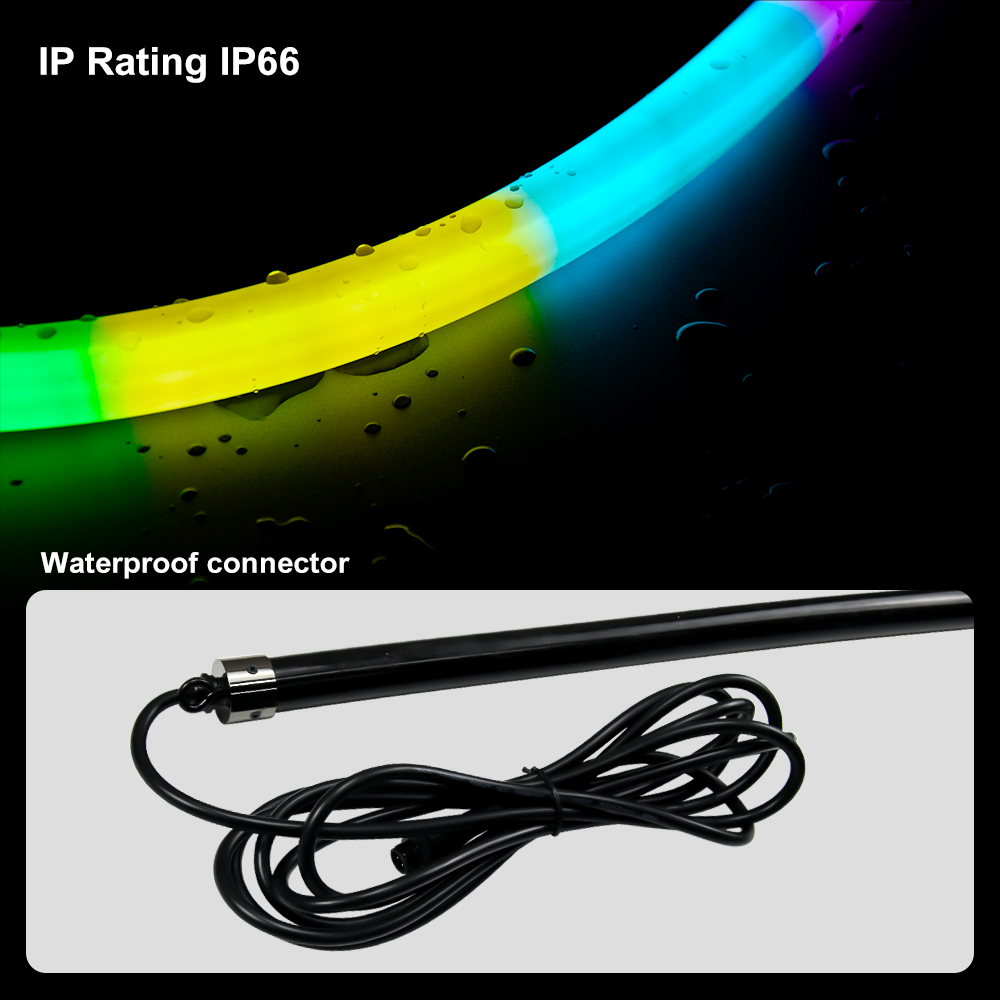
From indoor IP20 dry locations to heavy-duty exterior environments, we offer IP65 nano-coating, IP67 silicone hollow tube extrusion, and IP68 solid silicone integrated injection for sub-zero and saltwater applications.
As the global market for smart linear lighting accelerates, B2B procurement managers and lighting wholesalers must align their supply chain with emerging technical paradigms. Sourcing low-quality 5V RGB pixel strips is rapidly being phased out in favor of high-efficiency, long-distance architectures.
Traditional 5V and 12V pixel strips suffer severe voltage drop over extended distances, requiring complex power injection wiring every 5 meters. Future-ready procurement prioritizes 24V and 48V step-down IC topologies (such as 24V UCS2904 or 24V DMX512), allowing continuous single-ended power runs up to 15–20 meters without color shifting.
While traditional SMD5050 or SMD3838 diode layouts leave visible hot spots when installed in shallow aluminum profiles, COB (Chip-on-Board) RGBW pixel strips place over 560 micro-dies per meter under a continuous silicone phosphor matrix. This delivers completely seamless, uniform light lines ideal for direct-view architectural elements.
Eliminating intermediate SPI-to-DMX decoders reduces potential failure points in mega-scale facade projects. Strips embedded with UCS512 or TM512AC chips communicate directly with standard RS-485 lighting consoles, allowing bidirectional RDM (Remote Device Management) address writing and remote diagnostic telemetry.
Our engineering team routinely performs forensic audits on competitor products brought to us by clients seeking OEM replacement. Here is how our custom manufacturing remedies common industry vulnerabilities:
Detailed answers to technical, commercial, and logistical questions for wholesale buyers, importers, and project engineers.
SPI (Serial Peripheral Interface) pixel strips use single-ended TTL signals (Data, or Data + Clock). SPI is extremely cost-effective and ideal for short-to-medium runs (up to 5-10 meters from controller to strip) controlled by ArtNet-to-SPI drivers. DMX512 pixel strips utilize RS-485 differential signaling, making them highly immune to electromagnetic interference and capable of transmitting data up to 300 meters between nodes without signal boosters. DMX512 strips are preferred for commercial building facades, bridges, and professional theatrical rigs.
UCS2904 is specifically designed for 4-channel RGBW applications operating at 12V or 24V DC with high thermal tolerance. Unlike older 3-channel chips (like WS2811) that require external components to hack a 4th white channel, UCS2904 natively manages RGBW timing protocols, offers higher PWM frequency (1.2kHz+), and features superior voltage stability to reduce IC failure rates in high-density installations.
As a direct manufacturer, Shenzhen Fuvin Led Technology Co., Ltd. allows customization of: PCB width (e.g., ultra-narrow 5mm to heavy-duty 15mm), copper weight (1oz, 2oz, 3oz), LED emitter type (SMD5050, SMD3838, COB), LED density (30, 60, 72, 96, 144 LEDs/m), CCT of the White diode (2700K to 6500K), custom wiring harnesses/waterproof IP68 connectors, and custom logo/part number printing on the copper tape and reel packaging.
Power injection frequency depends on total wattage and PCB copper weight. For a standard 24V RGBW pixel strip consuming 18W per meter on a 2oz copper PCB: a single power feed at the start can typically power a 10-meter continuous length without perceptible color shift. For runs exceeding 10 meters, power injection wires should be spliced to the V+ and V- traces every 10 meters, while the digital Data signal continues unbroken up to the IC pixel limit.
Yes. Our facility in Shiyan, Shenzhen has been audited onsite by SGS Group. Our addressable LED strips and DMX products are supplied with full CE (EMC and LVD) reports, RoHS compliance documentation, and selected flagship models hold official UL/cUL listing for strict North American commercial building inspections.
Sample requests for standard models are shipped within 2–4 business days. Custom engineering prototypes (e.g., bespoke PCB layouts or specific silicone extrusions) take 7–10 days. Mass production lead times generally range between 12 to 18 working days depending on total meterage and specialized testing requirements.
 Shenzhen, Guangdong, China