Explore our SGS-verified pixel LED strips, 16-bit dimming tapes, DMX512 wall washers, 360° neon tubes, and signal boosters designed for OEM stage and architectural lighting.
A technical overview for lighting designers, system integrators, stage rental companies, and B2B procurement managers searching for high-reliability addressable LED manufacturing partners.
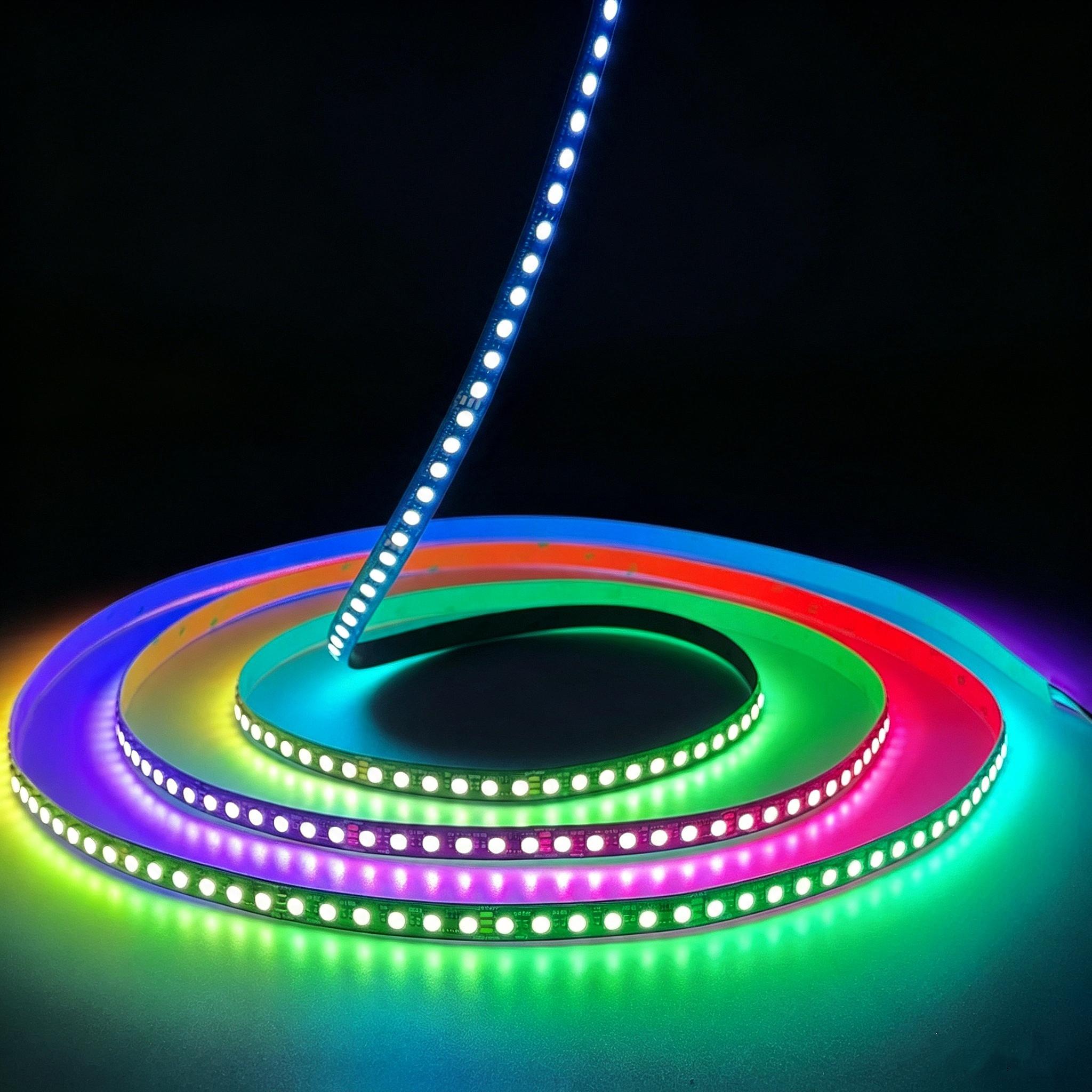
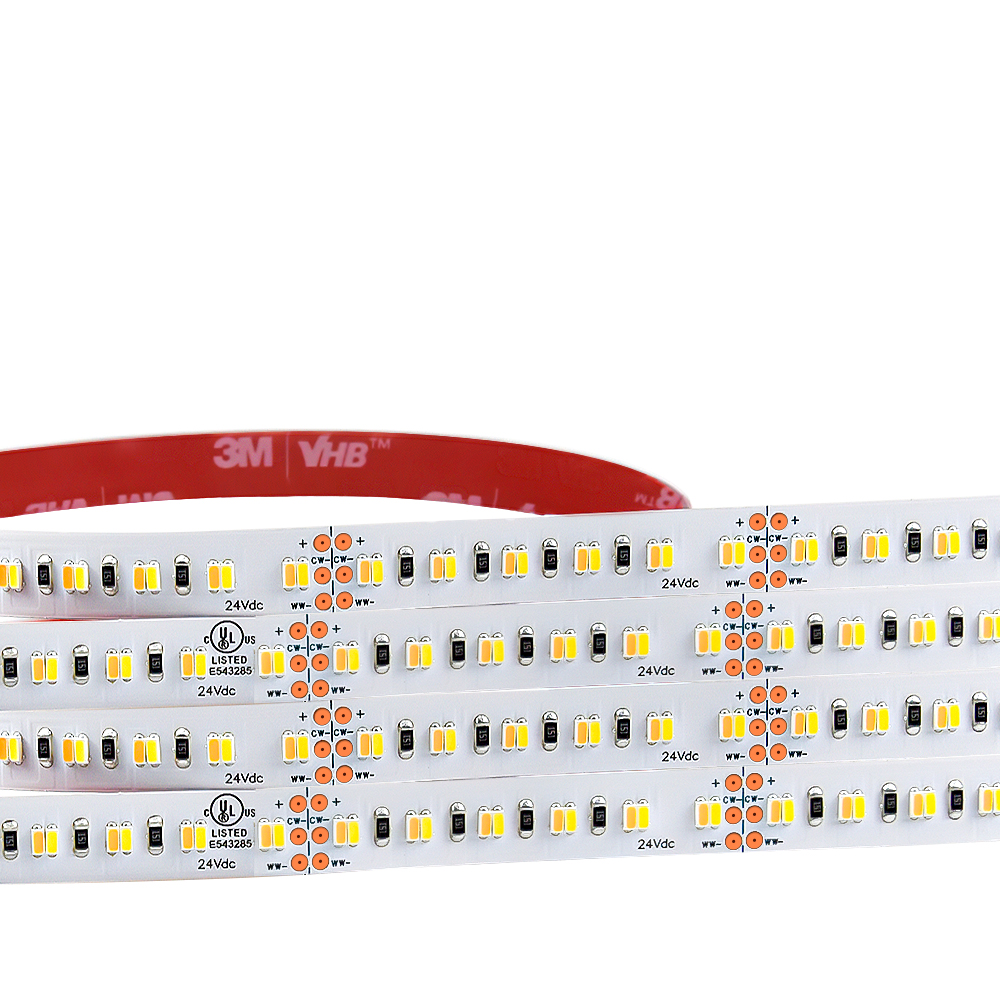
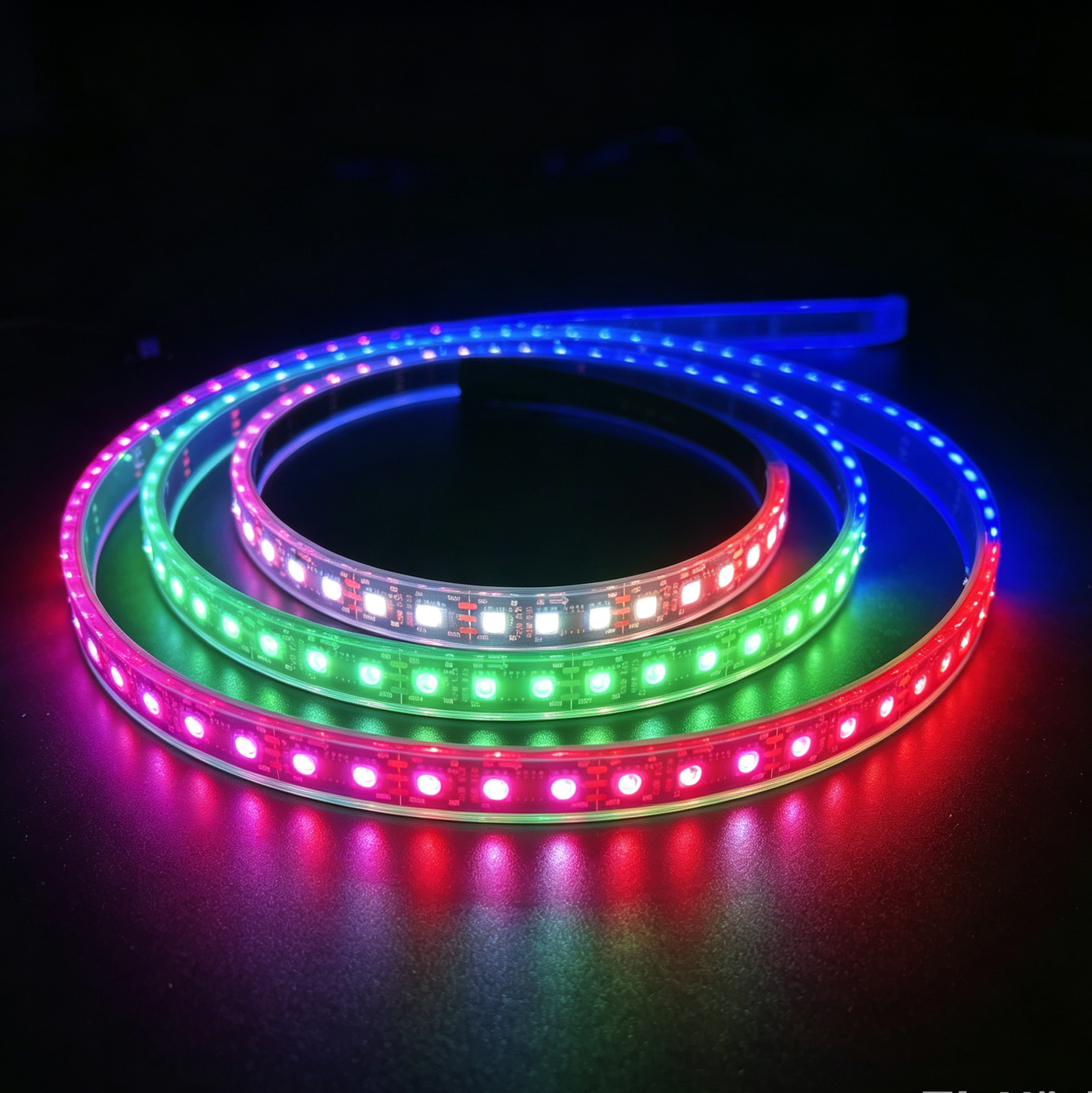
The global demand for addressable RGB and RGBW pixel LED strips has experienced unprecedented growth, driven by advances in architectural media facades, dynamic stage production, immersive entertainment venues, and high-end residential cove lighting. Unlike legacy analog PWM (Pulse Width Modulation) LED tapes where an entire strip changes color uniformly, individually addressable pixel strips incorporate integrated circuit (IC) microcontrollers that allow each LED node—or small groupings of nodes—to display distinct color channels, brightness levels, and dynamic video mapping effects.
However, selecting the right manufacturing partner in China's industrial lighting hubs (such as Shenzhen and Zhongshan) presents significant engineering and logistical challenges. B2B buyers must evaluate factories based on rigorous criteria beyond unit cost per meter: grayscale depth (8-bit vs. 16-bit dimming), flicker-free refresh rates for broadcast media, copper PCB thermal dissipation (3oz/4oz layers), voltage drop mitigation, and IP67/IP68 ingress protection longevity.
Top-tier manufacturers differentiate themselves through in-house surface mount technology (SMT) precision, automated optical inspection (AOI), custom IC protocol programming (e.g., UCS8904, UCS2904, DMX512 RS-485), and rigorous aging test standards under thermal stress. Lower-tier assembly workshops frequently use thin 1oz PCBs, recycled PVC extrusions, and unverified driver chips that suffer from color shift, voltage attenuation, and early pixel failure on critical projects.
Comprehensive technical profile of the leading suppliers operating in the addressable lighting and digital LED strip sector.
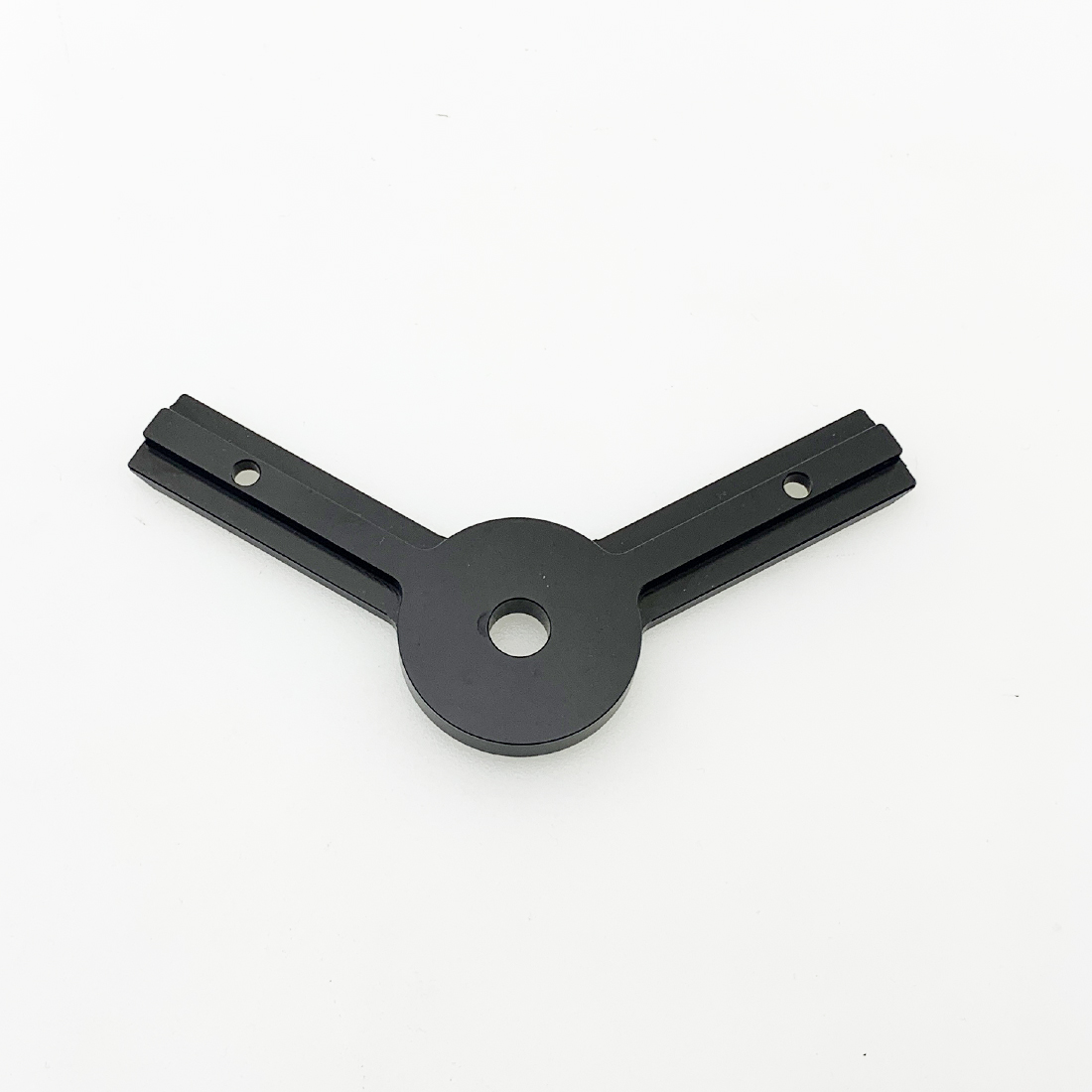
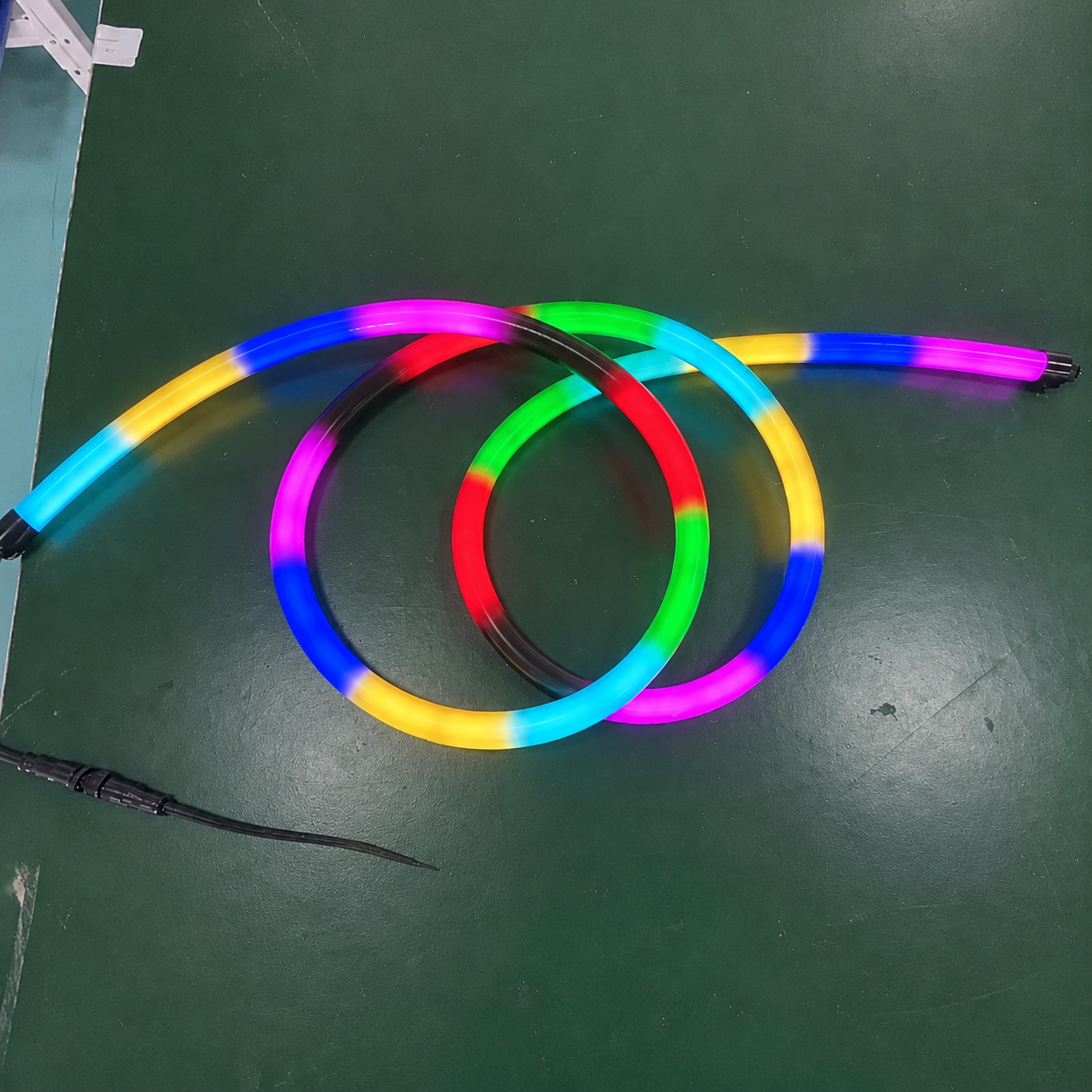
Core Specialization: High-density addressable 16-bit dimming RGBW pixel tapes, DMX512 architectural linear rigid bars, 360-degree D22 silicone neon flex, and custom OEM/ODM stage lighting accessories.
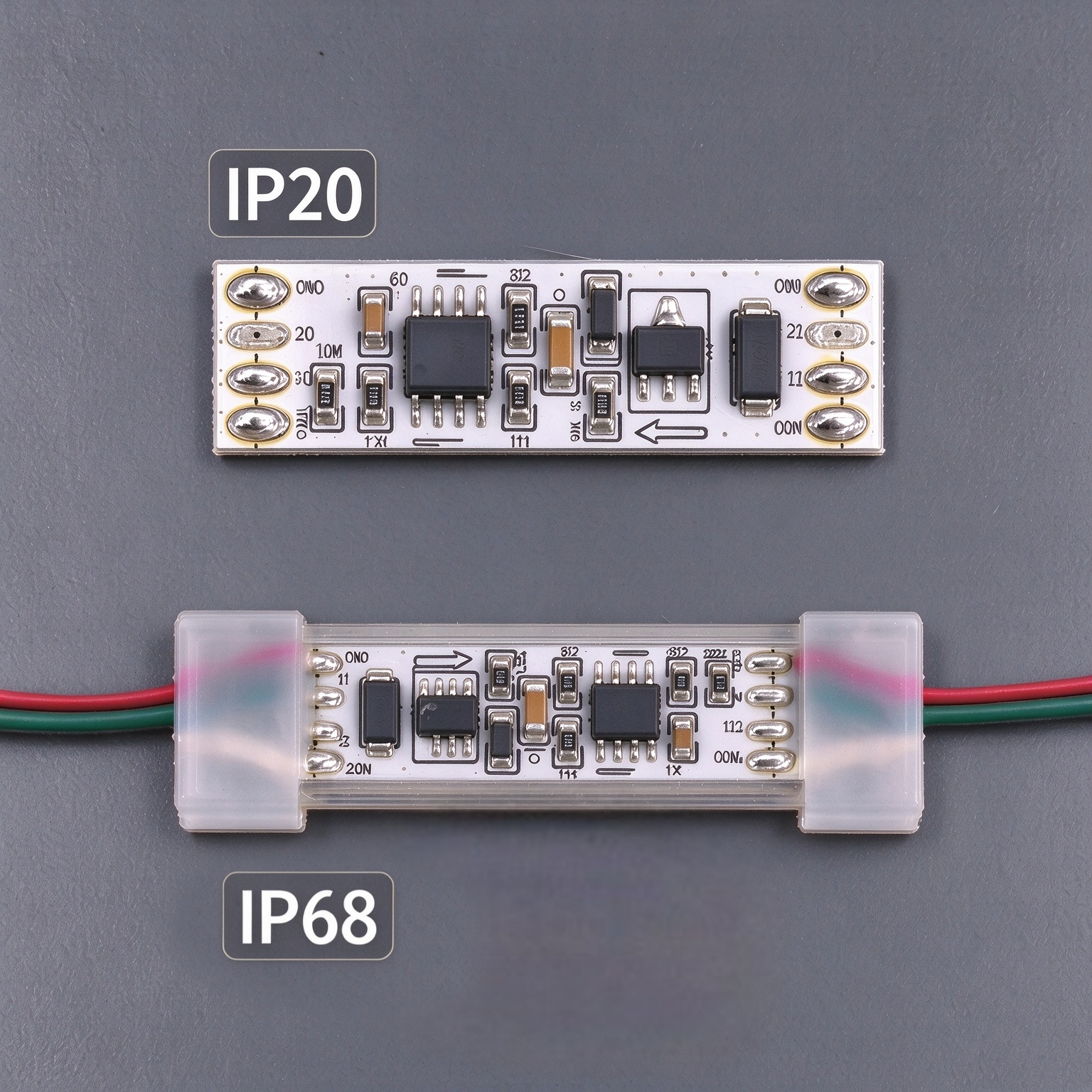
Engineering Advantage: Shenzhen Fuvin LED stands at the technical forefront of addressable pixel engineering. Verified onsite by SGS Group, Fuvin LED specializes in overcoming low-brightness dimming stepping through true 16-bit UCS8904B microcontrollers (65,536 grayscale steps). Their product line features heavy-duty 3oz/4oz rolled copper PCBs, custom SPI data boosters, and IP68 silicone co-extrusion technology designed for permanent exterior installations, media facades, and broadcast-grade stage rigs.
Core Specialization: Developer of the legendary WS2811, WS2812B, and WS2814 series IC driver chips integrated directly into SMD LEDs.
Factory Overview: Worldsemi is predominantly an IC designer and LED packaging manufacturer. While their standard 5V and 12V 3-channel single-data-line addressable strips are ubiquitous in hobbyist and decorative signage markets, commercial projects often require external processing and higher voltage engineering provided by specialized secondary strip fabricators.
Core Specialization: Standard SPI digital pixel strips, SK6812 RGBW flex tapes, and decorative architectural strips.
Factory Overview: Operating in Shenzhen, Greeled supplies export distributors with general digital strip products. Their strength lies in standardized 5V/12V production runs, though high-level custom stage bar joiners and 16-bit high-voltage solutions remain limited in their standard catalog.
Core Specialization: Retail-packaged addressable LED strips, mini Bluetooth/WiFi pixel controllers, and DIY matrix panels.
Factory Overview: BTF-Lighting has established a strong presence on global retail marketplaces. They cater largely to small-scale consumers and hobbyists. However, B2B engineering firms seeking direct OEM white-label packaging, factory-direct custom PCB layouts, and project-grade UL/cUL certifications typically work with industrial manufacturers.
Core Specialization: Commercial holiday lighting, RGB pixel string lights, and cabochon bulbs.
Factory Overview: Minleon focuses heavily on seasonal decorative and festive lighting installations. Their product lines center around pixel string nodes and heavy-gauge outdoor decorative strings rather than ultra-dense linear COB tapes or aluminum profile stage bars.
Core Specialization: High CRI analog strips, basic single-color flex, and basic digital SPI tapes.
Factory Overview: Superlighting provides broad indoor lighting components. Their addressable line covers fundamental 8-bit digital strips, but lacks specialized stage profile accessories, 360-degree round silicone neon flex systems, and specialized DMX address writers.
Core Specialization: Carnival rides, pixel cabochon bulbs, and outdoor IP67 point light modules.
Factory Overview: Aglare and associated digital outlets serve amusement park vendors with plastic-housed point lights. While durable for rides, their portfolio is less tailored toward high-density dotless architectural COB tapes and stage video mapping bars.
Core Specialization: High-end custom European architectural strips and specialized LED flex tape.
Factory Overview: Neonica offers localized European assembly for fast-turnaround projects. While quality standards are high, unit manufacturing costs are significantly higher than Shenzhen-based tier-1 factories, making large-scale commercial procurement cost-prohibitive.
Core Specialization: Rigid outdoor wall washers, exterior floodlights, and basic DMX point lighting.
Factory Overview: Located in Zhongshan's lighting cluster, LPD focuses on exterior building fixtures. Their flexibility regarding custom flexible PCB engineering and low-MOQ white-label production is limited compared to Shenzhen tech specialists.
Core Specialization: Standard 12V WS2811 strips, basic signal repeaters, and RGB controllers.
Factory Overview: SJ Lighting rounds out the top 10 as a supplier of foundational pixel products. They provide reliable baseline digital tapes, though high-density COB addressable strips (720 LEDs/m) and ArtNet 64-universe video control integration require higher-tier partners.
In-depth technical breakdown of addressable microcontrollers, color depth physics, and electrical parameters essential for system integrators.
Addressable pixel LED strips operate primarily on two control transmission protocols: Serial Peripheral Interface (SPI) TTL signal and DMX512 (RS-485 differential signal). Selecting the correct architecture directly impacts cable run distances, controller configuration, and system noise immunity.
| Parameter / Characteristic | SPI TTL Protocol (UCS2904 / SK6812 / WS2814) | DMX512 RS-485 Protocol (UCS512 / TM512AC) |
|---|---|---|
| Signal Type | Single Data Line (Data + GND) or Data + Clock | Differential Pair (A/B RS-485 Data+, Data-, GND) |
| Max Transmission Distance | 5 to 10 meters without signal booster | Up to 300 meters between nodes |
| Noise Immunity | Moderate; susceptible to EMI over long distances | High; differential signal cancels electromagnetic noise |
| Addressing Method | Sequential hardware cascade (Auto-addressing) | Software programmable via DMX Address Writer |
| Fault Tolerance | Single dead IC breaks downstream signal (unless backup data IC like WS2813/UCS2904) | Parallel bus wiring prevents downstream failure cascade |
| Cost & Complexity | Lower cost per meter; simple controller setup | Higher cost; requires professional DMX consoles / ArtNet |
For camera-critical broadcast environments, high-end theatrical stages, and architectural low-light dimming, standard 8-bit ICs (such as WS2811 or SK6812) exhibit noticeable "stepping" or "jumpiness" when fading between 0% and 10% brightness. This step-effect occurs because an 8-bit resolution provides only 256 discrete brightness levels per color channel ($2^8 = 256$). When rendering dark color tones, the LED jumps abruptly between step 1, 2, and 3.
By contrast, the advanced UCS8904B IC driver engineered into Fuvin LED's flagship strips processes a true 16-bit grayscale depth, yielding 65,536 incremental dimming levels per channel ($2^{16} = 65,536$). Combined with a ultra-high PWM refresh rate (exceeding 8kHz), UCS8904B pixel strips eliminate visible stepping and camera flicker entirely, enabling buttery-smooth theatrical fades and flawless ultra-slow sunrise/sunset dynamic scenes.
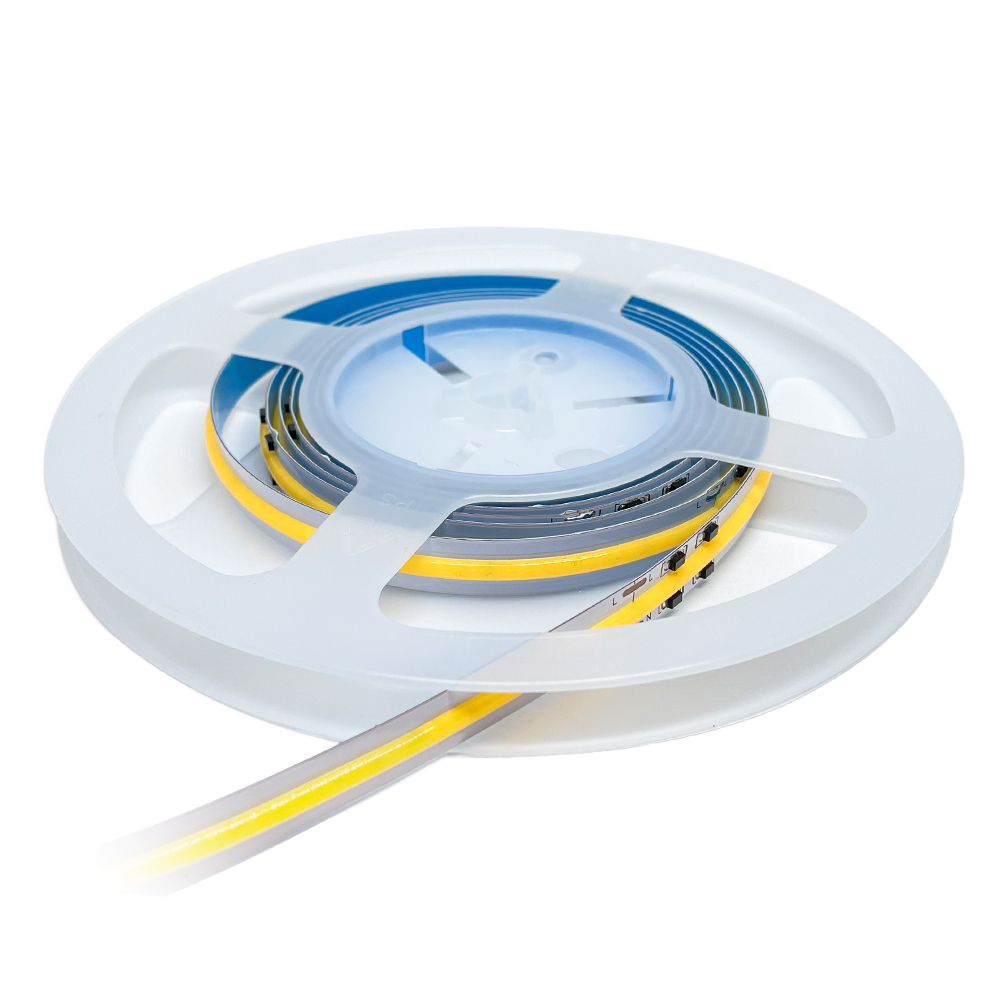
Traditional SMD5050 pixel strips utilize discrete surface-mounted packages spaced at intervals (e.g., 30, 60, or 96 LEDs/m), creating visible hot-spots even inside frosted aluminum diffusers. The introduction of WS2814 RGBW COB (Chip-on-Board) Addressable LED Strips revolutionizes linear pixel design. By flip-bonding 720 to 784 micro-LED chips per meter directly under a continuous phosphor silicone extrusion coat, COB technology produces a seamless, dot-free line of addressable light with a 180-degree beam angle.
Market forecasts and technical shifts shaping global LED pixel strip manufacturing and supply chain strategies.
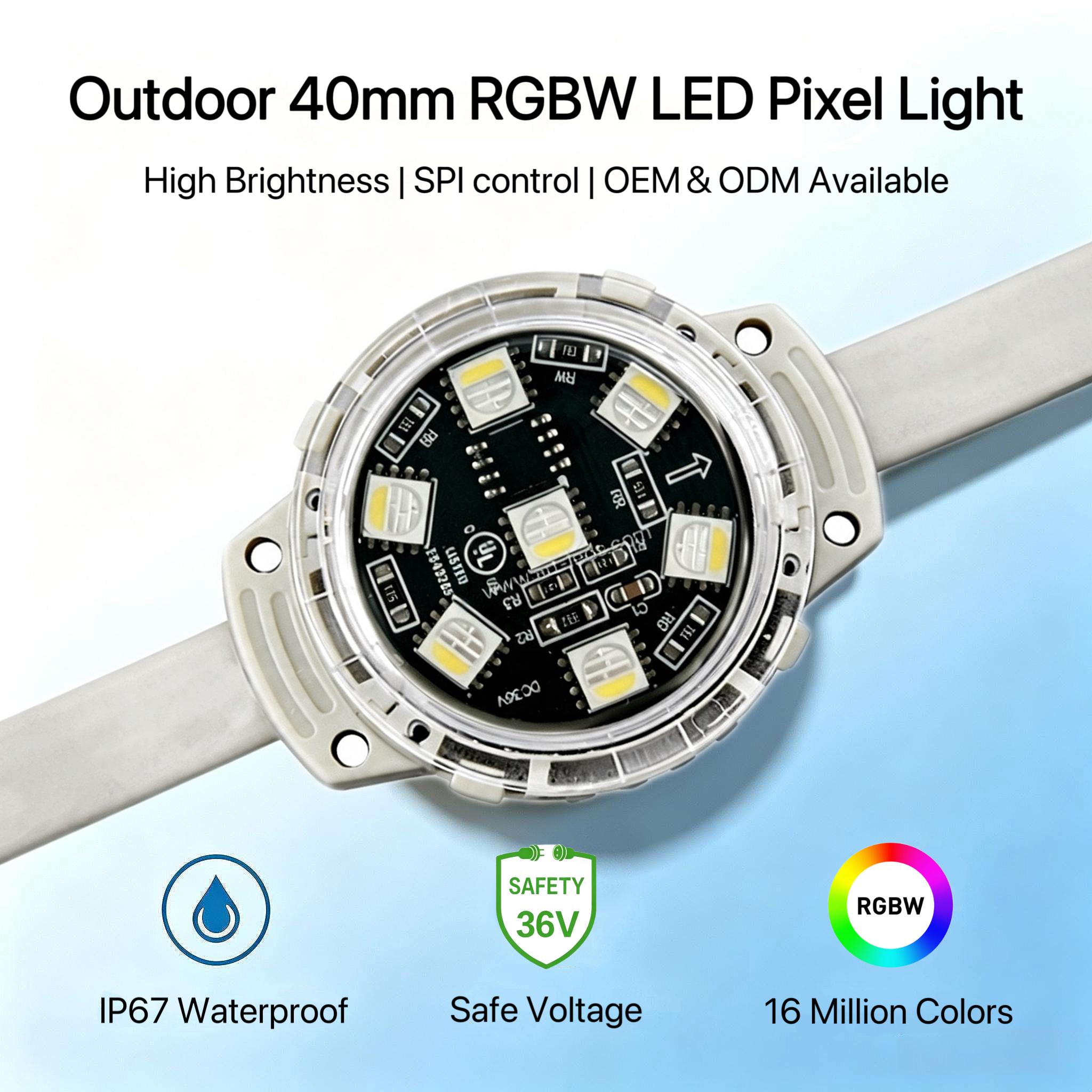
Legacy 5V pixel strips (WS2812B) require power injection every 2.5 to 3 meters due to extreme voltage drop ($V_{drop} = I \times R$). By transitioning to DC24V and DC36V pixel point lights and strips (e.g., UCS2904 36V 7-LED pixel nodes), engineers can execute continuous 15-to-30-meter single-ended runs without power injection, drastically reducing cabling, power supply quantities, and labor costs.
Procurement policies in North America and Western Europe are increasingly banning yellowing-prone, toxic PVC housings. Modern outdoor projects demand full UV-stabilized, salt-mist resistant silicone integrated co-extrusion (IP67/IP68). Silicone maintains flex temperature tolerance from -40°C to +80°C and guarantees optical clarity over 5+ years of exterior exposure.
Future pixel installations will rely heavily on Remote Device Management (RDM). Rather than manually tracking faulty pixel nodes on a physical facade, RDM-enabled DMX512 pixel drivers communicate health metrics, operating temperatures, and voltage status back to central consoles, enabling predictive maintenance for smart cities and theme parks.
Custom OEM/ODM manufacturing engineered in Shiyan, Shenzhen — audited onsite by SGS Group.
Shenzhen Fuvin Led Technology Co., Ltd. operates state-of-the-art production lines in Shiyan Street, Shenzhen. Fuvin LED delivers end-to-end custom lighting manufacturing solutions tailored specifically to international B2B clients across Western Europe, North America, Oceania, and the Middle East.
To ensure zero dead pixels and long-term waterproof integrity, every production batch follows Fuvin LED's standardized 12-step QC protocol:
Expert answers addressing technical specifications, customization options, sample lead times, and global shipping policies.
Contact Shenzhen Fuvin LED's technical engineering team today to request complete product datasheets, photometric IES files, factory price lists, or custom OEM prototype samples.
 Shenzhen, Guangdong, China