 Shenzhen, Guangdong, China
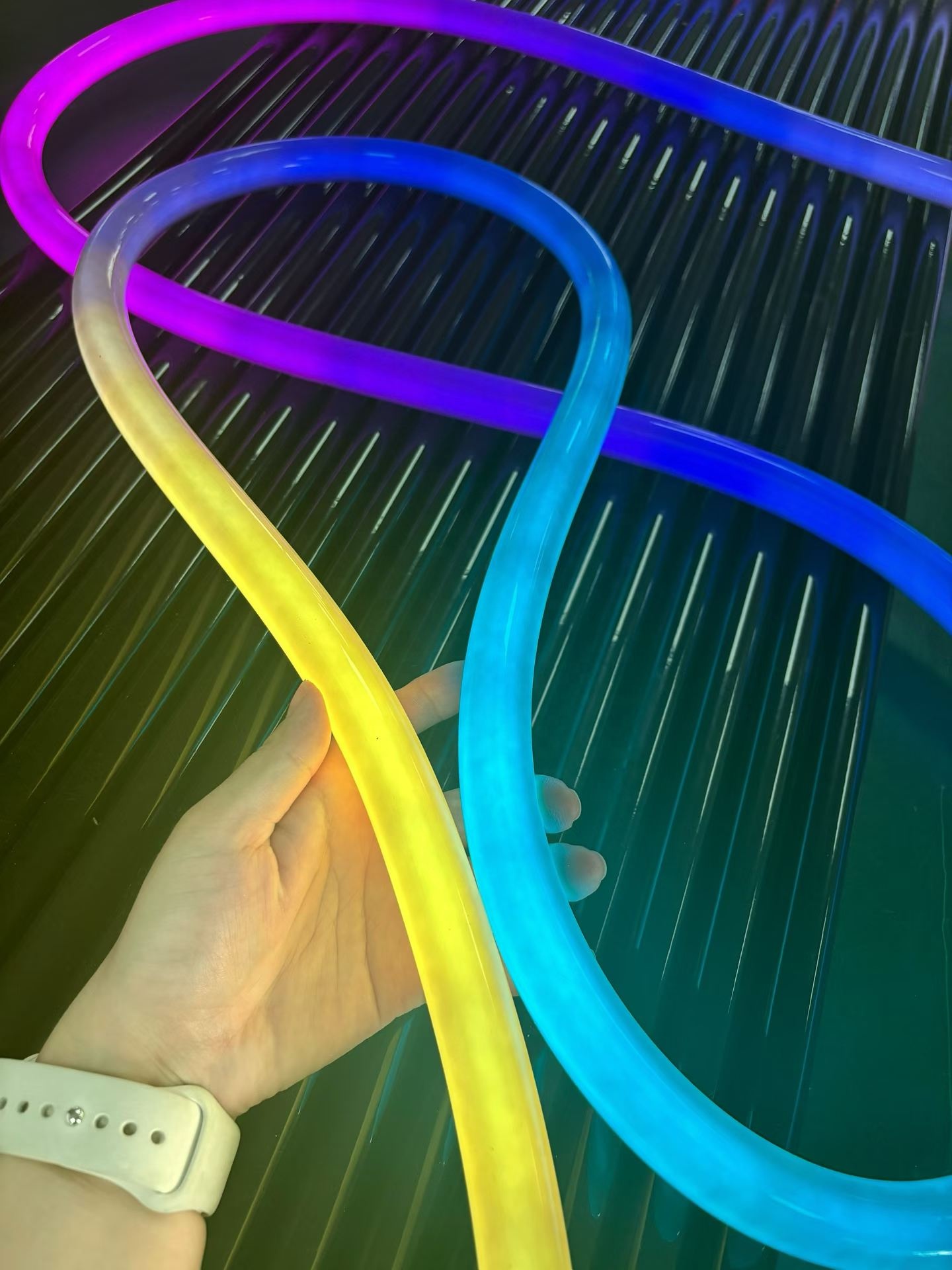
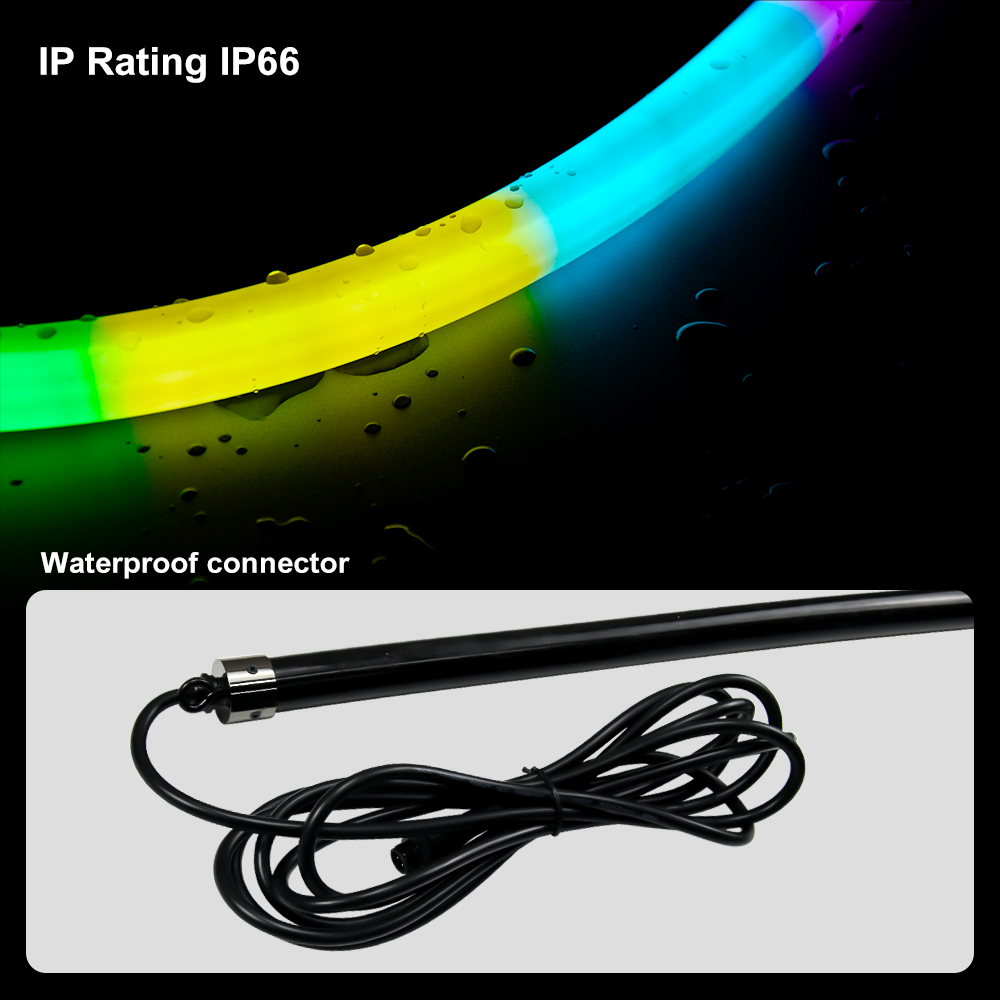
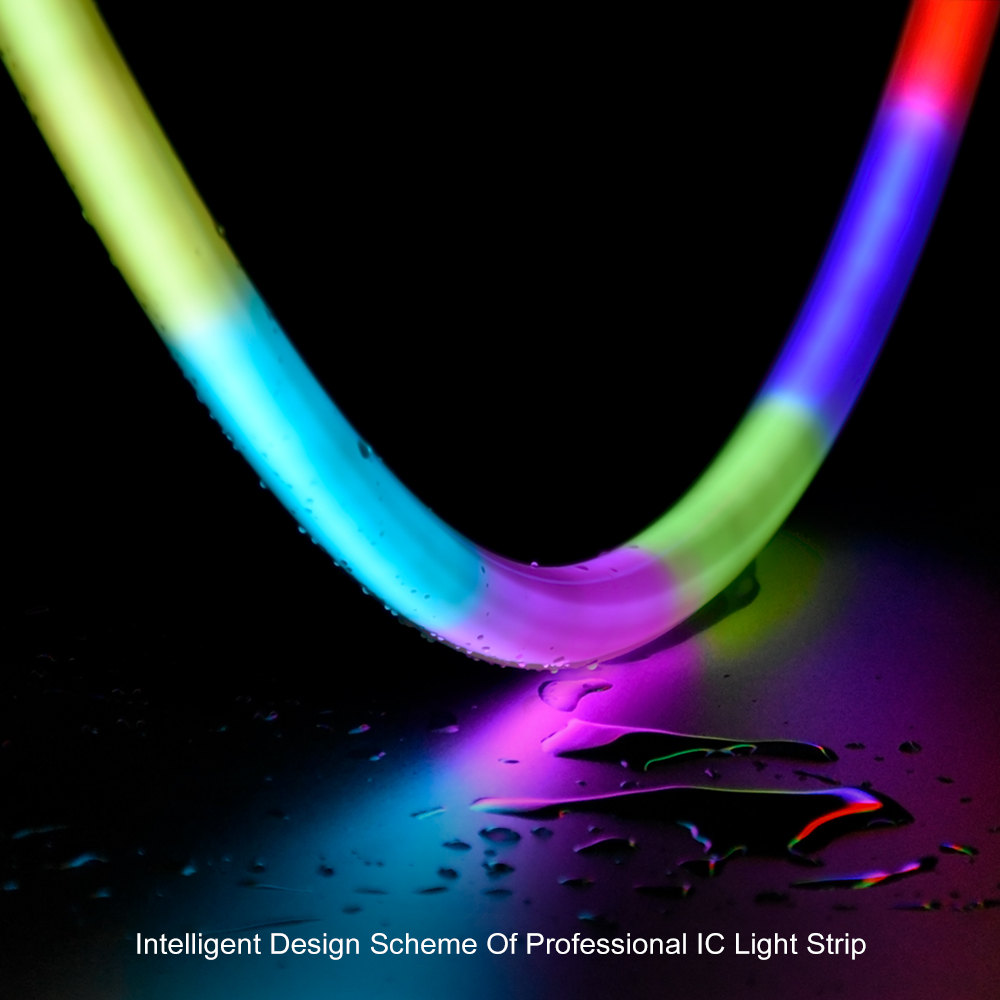
Flexible Silicone High Brightness DC24V 22mm 360° IP67 Waterproof LED Neon Strip
DC24V
360° Beam
IP67 Silicone
View Product Specs →
As a leading SGS-verified custom manufacturer in Shenzhen, Shenzhen Fuvin Led Technology Co., Ltd. delivers advanced SPI and DMX512 addressable LED strip architectures engineered for professional stage lighting, architectural dynamic facades, and high-end commercial projects worldwide.
Explore our primary series of digital RGBW strip lights, neon flex tubes, bendable backlights, and high-density controllers optimized for export markets.
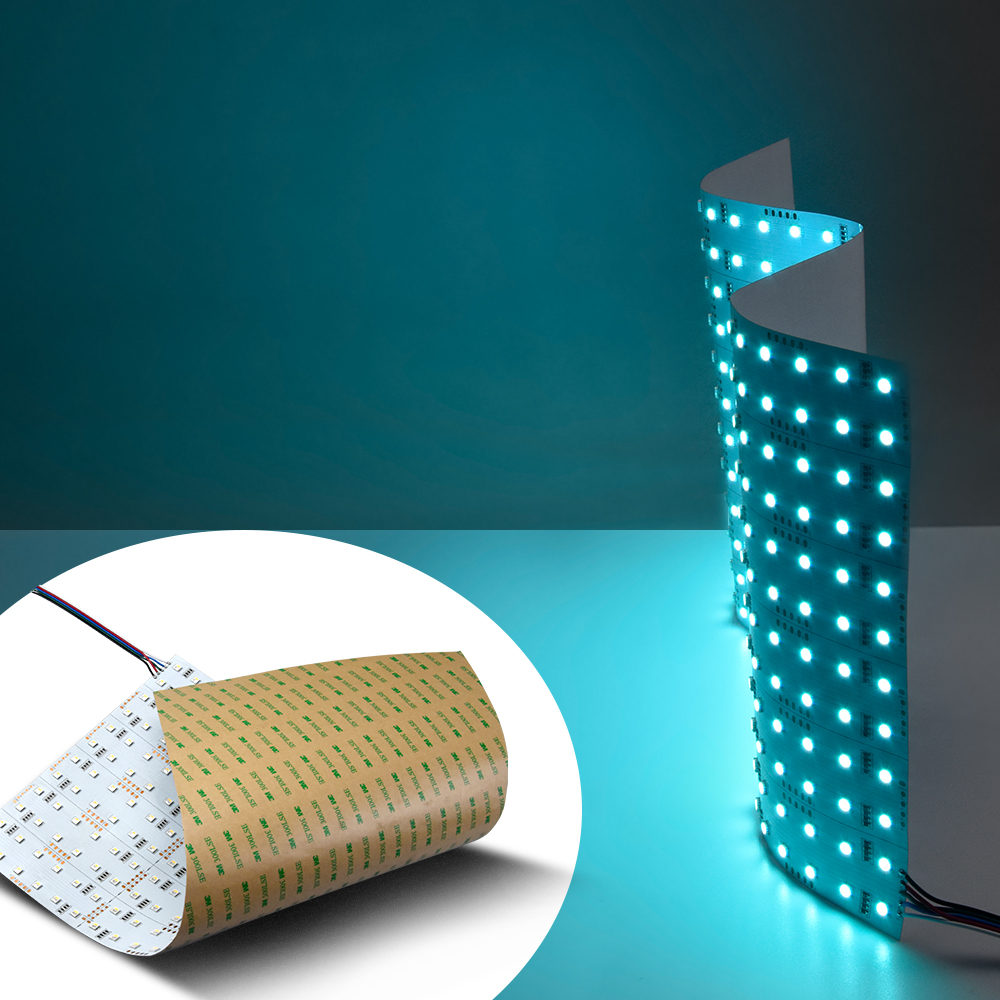

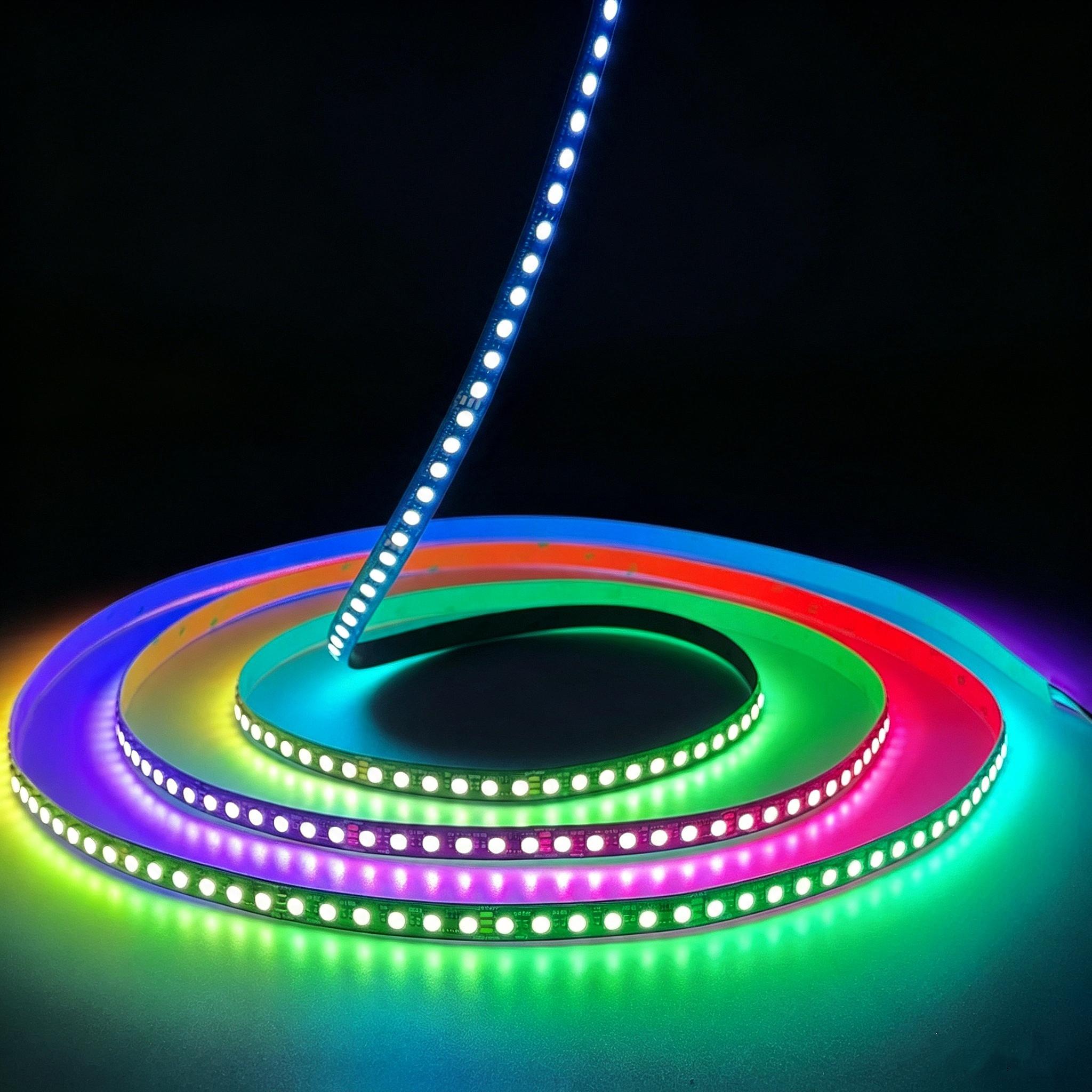
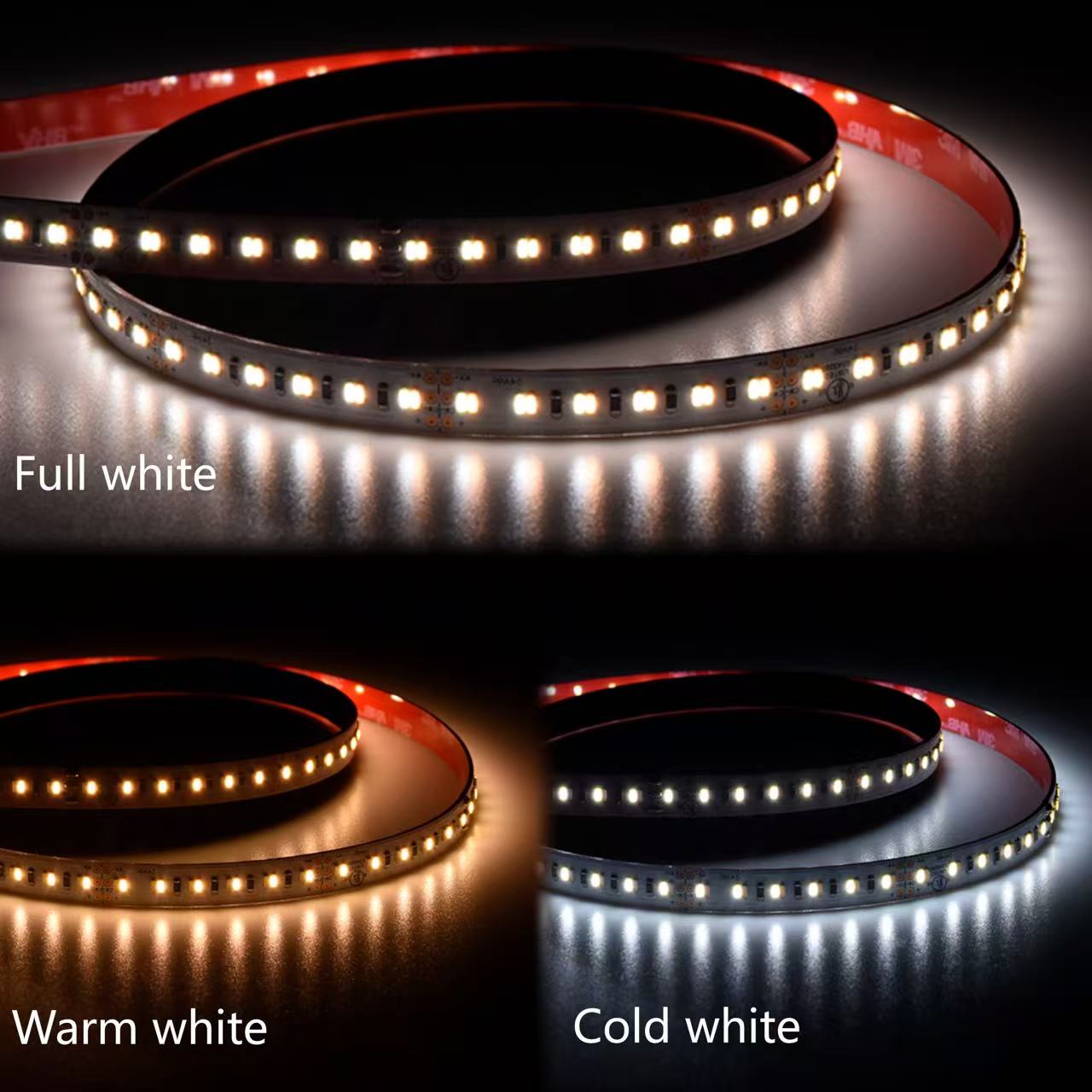
Understanding signal protocols, dimming depth, color spectrum engineering, and thermal management for high-density B2B installations.
Traditional addressable RGBW LED strips rely on 8-bit PWM controllers per channel. In an 8-bit architecture, each channel (Red, Green, Blue, White) is divided into 256 discrete brightness levels (2564 color combinations). While sufficient for general accent lighting, 8-bit systems present severe limitations in broadcast studios, high-end theatrical stages, and low-light architectural installations where extreme low-brightness dimming curves are critical.
When an 8-bit strip dims below 5% brightness, the jump between steps (e.g., step 1 to step 2) represents a noticeable 100% relative surge in light intensity. This results in visible "stepping" or banding during slow fade transitions.
| IC Model Protocol | Bit Depth | Grayscale Levels | PWM Frequency | Primary Application |
|---|---|---|---|---|
| UCS2904 / SK6812 | 8-Bit | 256 steps/ch | 800 Hz - 1.2 kHz | Commercial signage, retail displays, ambient coves |
| UCS8904B (SPI) | 16-Bit Real | 65,536 steps/ch | 2.0 kHz - 4.0 kHz | Professional stage, TV broadcast studios, luxury facades |
| UCS512 / TM512AC (DMX) | 8-Bit / 16-Bit | 256 - 65,536 steps | 1.5 kHz - 3.0 kHz | Building exteriors, long-distance perimeter lines |
| WS2814 (RGBW COB) | 8-Bit | 256 steps/ch | 1.0 kHz | Dot-free direct line-of-sight architectural lighting |
Choosing between SPI (Serial Peripheral Interface) and DMX512/RS-485 control topology directly impacts system stability, wiring complexity, and controller budget in large-scale installations.
SPI Protocol (Single Data Line or Data+Clock): Transmits single-ended TTL signals directly from IC to IC. While highly cost-effective and capable of high frame rates (30-60 FPS over thousands of pixels), TTL signals degrade over distances greater than 5–10 meters between the controller and first pixel, making them vulnerable to electromagnetic interference (EMI).
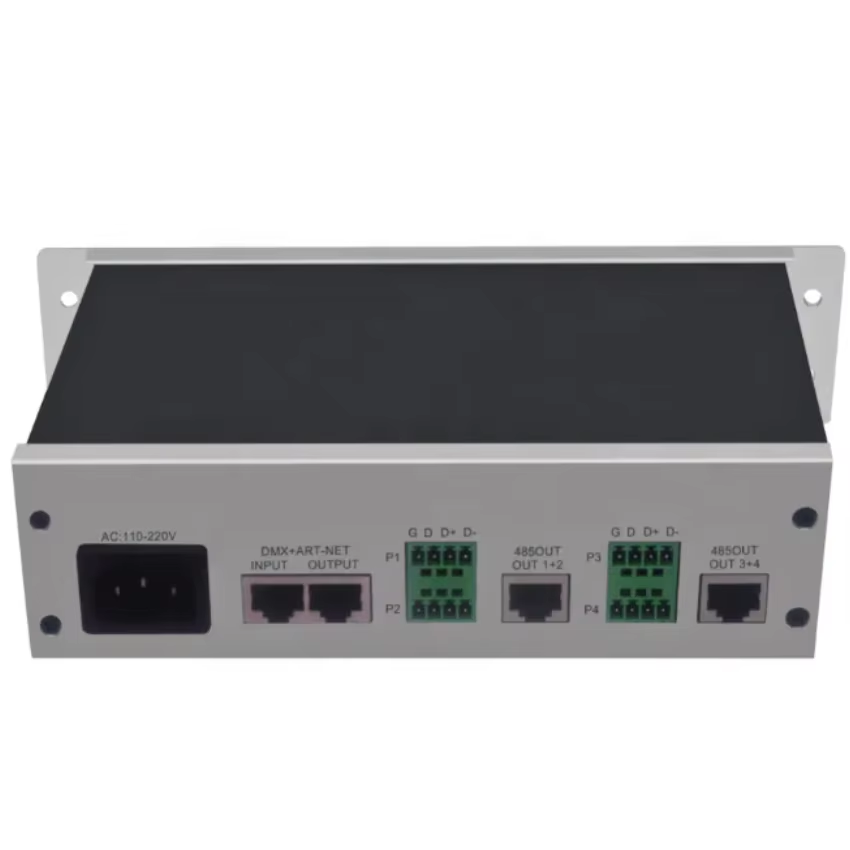
DMX512 / RS-485 Protocol: Utilizes differential voltage signaling across two balanced data lines (Data+ and Data-). Noise picked up along the cable is cancelled out at the receiver chip. Integrated DMX ICs (such as UCS512 and TM512AC) allow strips to be wired directly into standard lighting consoles (GrandMA, Avolites) without needing SPI-to-DMX translators. Furthermore, RDM (Remote Device Management) enables engineers to write and reassign DMX addresses in-situ using handheld writers.
Digital RGBW strips consume up to 24W/meter when all four channels (Red, Green, Blue, White) are driven at 100% intensity. High power consumption generates junction heat within the SMD5050 or COB package, accelerating phosphor degradation and causing color temperature shift.
To ensure a L70 lifetime exceeding 50,000 hours, enterprise-grade digital RGBW manufacturing requires three structural pillars:
Key technological transitions shaping global procurement specifications over the next five years.
Traditional discrete SMD5050 LEDs leave visible hot spots behind diffusers. Next-gen procurement prioritizes Flip-Chip COB digital RGBW flex tapes (e.g., WS2814), offering seamless dot-free linear illumination at zero minimal optical distance.
PVC flex neon tubes degrade, yellow, and crack under heavy UV exposure within 18 months. Future engineering standards dictate 100% platinum-cured liquid silicone extrusion (IP67/IP68), maintaining flexibility and light transmission from -40°C to +80°C.
As pixel counts grow exponentially into tens of thousands of channels per facade, direct Ethernet-to-SPI matrix controllers operating ArtNet/sACN protocols are replacing basic standalone SD-card players.
Combining rigorous SGS-verified factory auditing with deep custom OEM/ODM engineering capabilities.
Our plant located in Shiyan, Shenzhen undergoes strict annual onsite verification by SGS Group. Production lines, worker safety, testing equipment, and legal registration are independently certified.
We provide authentic testing documentation. Selected digital strip models carry UL and cUL listings for compliance with North American building codes, alongside CE EMC/LVD and RoHS declarations.
Tailor your lighting product: custom PCB width (slim 5mm to 50mm), FPC copper weight, specific IC selection (UCS, WS, SK, TM, GS), customized LED pinouts, waterproof ratings, and private labeling.
From incoming material spectroradiometer testing to SMT placement, ultrasonic end-cap sealing, vacuum packaging, and 100% 48-hour continuous power burn-in aging prior to dispatch.
Clear answers regarding technical specifications, ordering protocols, customization, and export logistics.
Partner with Shenzhen's premier custom digital RGBW LED strip factory. Get immediate access to product datasheets, IES files, UL certificates, and OEM quotation schedules.