Direct Factory Solutions for Architectural, Stage, Entertainment, and Commercial Installations
The commercial LED lighting sector has evolved far beyond traditional constant-voltage analog tapes. Modern architectural master plans, high-end entertainment venues, dynamic media facades, and broadcast studios now demand granular optical control. As a premier destination for global sourcing, identifying Top Trusted Programmable LED Strip Manufacturers & Wholesalers requires looking beyond raw lumen output. It demands an evaluation of integrated circuit (IC) protocols, thermal dispersion engineering, signal redundancy, and color rendition fidelity.
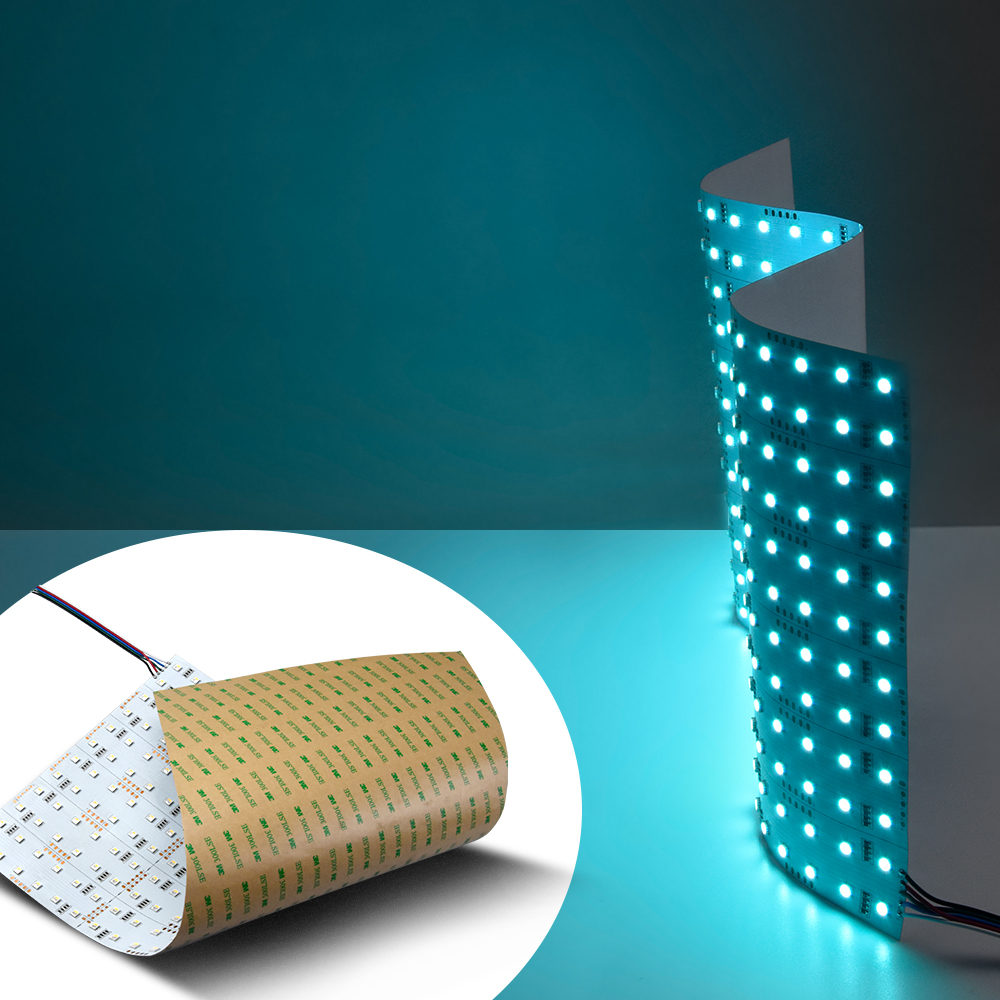
Programmable (or addressable) LED strips rely on microcontrollers to transmit data packets to individual LED driver ICs along a flex PCB track. This enables single-pixel manipulation for complex color chasing, video mapping, and spatial atmospheric lighting. For commercial buyers, systems integrators, and stage rental houses, selecting the optimal combination of IC drivers, PCB copper weights, and protective encapsulation determines the operational lifespan and maintenance overhead of the installation.
To assist procurement managers in specifying the exact integrated circuit architecture for their project parameters, the following data matrix outlines key protocols engineered by top-tier manufacturers:
| IC Chip Model | Signal Type | Grayscale Depth | Clock Rate / PWM | Redundancy (Break-Continue) | Primary B2B Application |
|---|---|---|---|---|---|
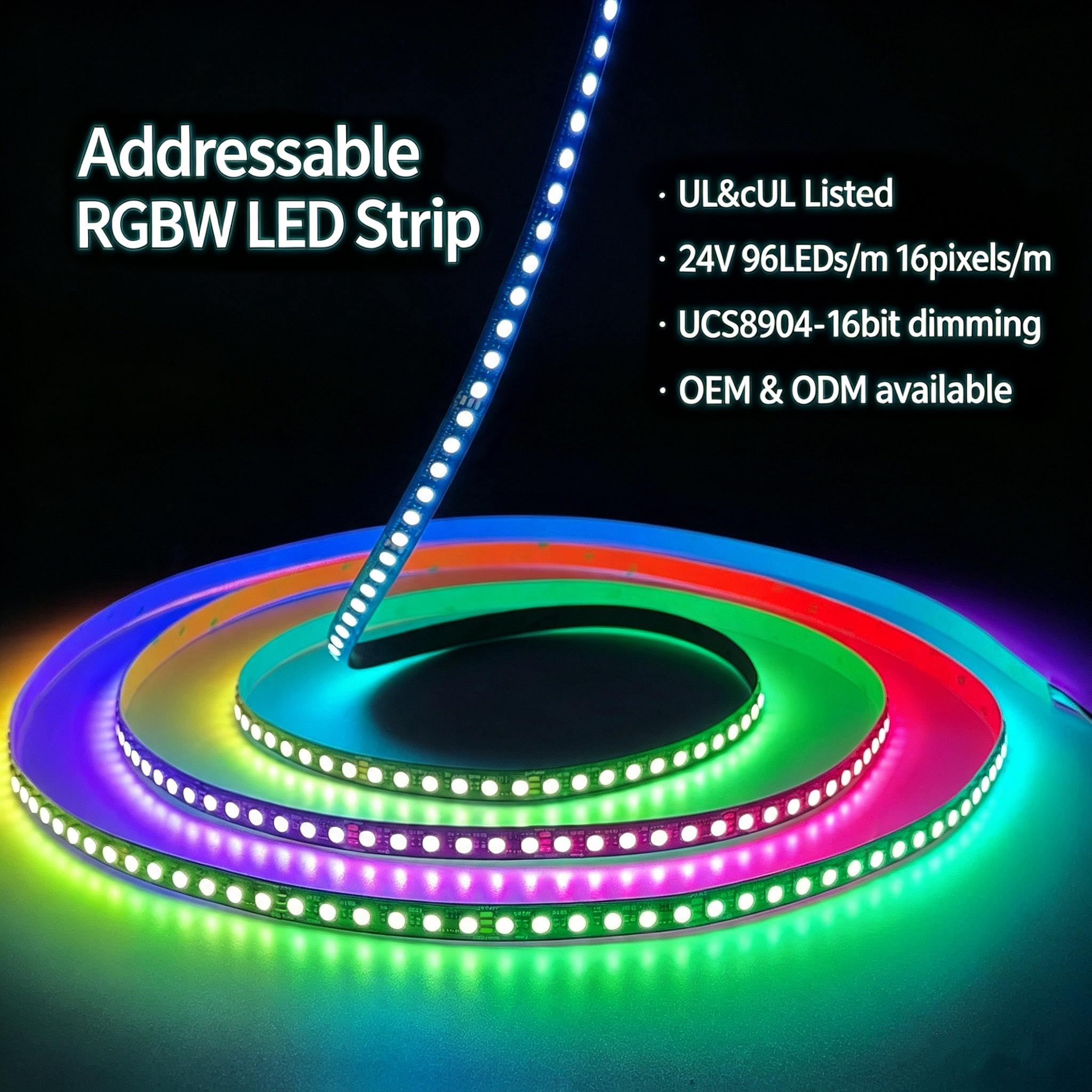
| UCS8904 | SPI (Data + Ref) | 16-Bit (65,536 Steps) | ~4.0 MHz / 16KHz PWM | Single Data Line / High Reliability | Broadcast Studios, Ultra-Smooth Low-End Dimming |
| UCS2904 | SPI Single Data | 8-Bit (256 Steps) | 800 KHz / 1.2KHz PWM | External / Standard SPI | Commercial Accent Lighting, RGBW Architectural Coves |
| DMX512 / TM512AC | RS-485 Differential | 8-Bit / 16-Bit Selectable | 250 Kbps (Standard DMX) | Parallel Bus Connection (No Point of Failure) | Building Exterior Facades, Bridges, Stage Lighting |
| WS2814 (COB) | SPI Single Data | 8-Bit (RGBW 4-Chan) | 800 KHz PWM | Continuous Phosphor Layer | Dot-Free Direct-View Linear Lighting, High CRI Coves |
| SK6812 | SPI Single Data | 8-Bit (Built-in IC) | 800 KHz / 1.2KHz PWM | Standard Single Wire | Custom OEM Fixtures, Direct-View Decorative Displays |
Strategic Technical Paradigm Shifts Influencing Global Lighting Supply Chains
Standard 8-bit digital strips display visible stepping and jitter when dimming below 5% brightness. Future procurement trends show a rapid transition toward 16-bit IC architectures (such as UCS8904 and UCS7604). Providing 65,536 discrete grayscale levels, these ICs permit ultra-smooth theatrical fades and feature high-frequency PWM rates exceeding 10 kHz to prevent camera flicker in live broadcast environments.
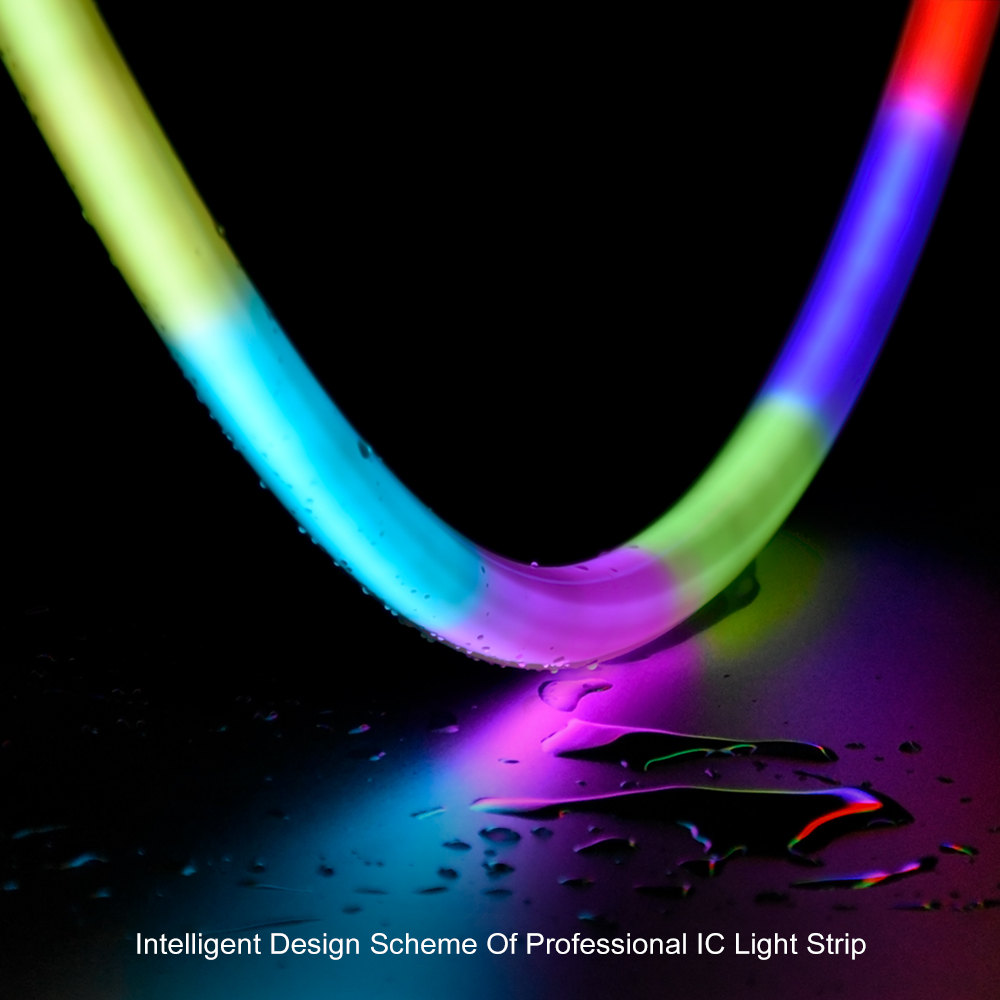
Traditional PVC potting sleeves yellow, crack, and fail when exposed to solar UV radiation and extreme ambient temperature fluctuations. B2B buyers are migrating exclusively to 100% optical-grade liquid silicone co-extrusion (IP67/IP68). This material maintains flexibility down to -40°C, resists salt-spray corrosion, and preserves chromatic integrity without yellowing over time.
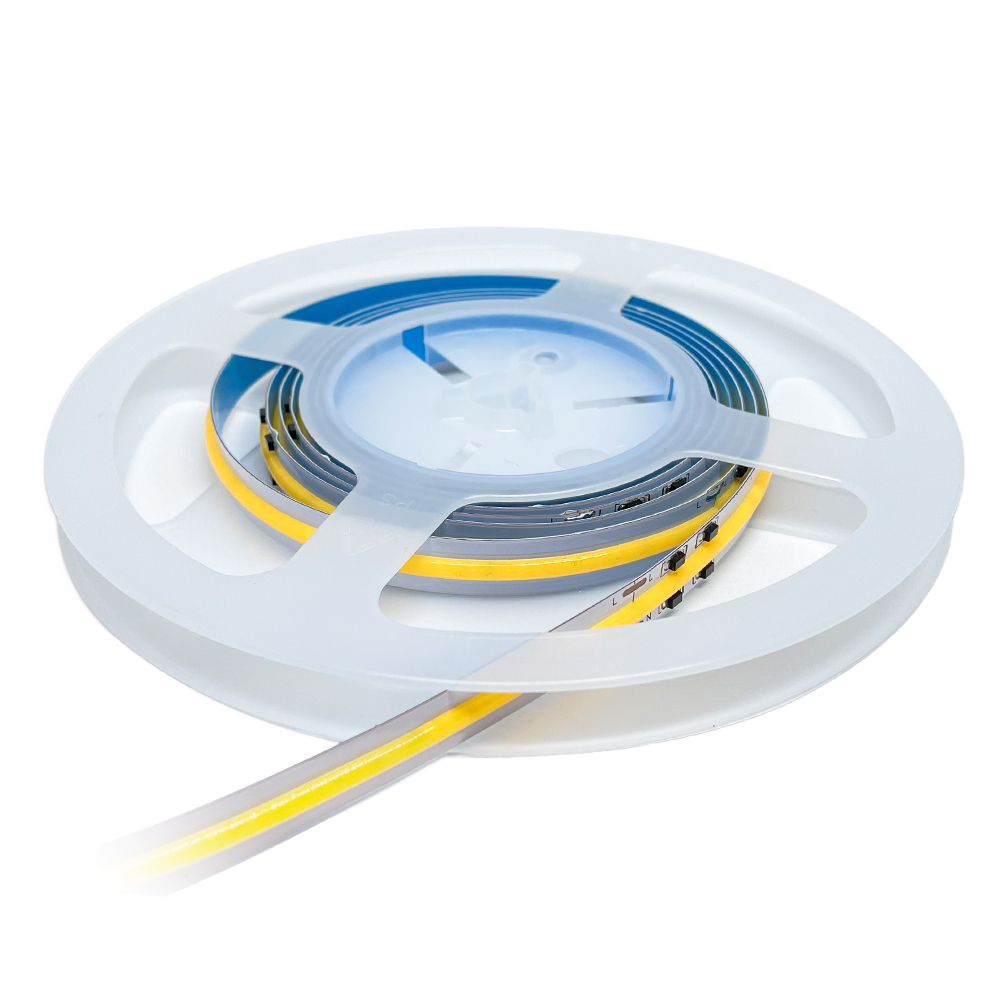
The visual limitation of SMD-based strips is the "hotspot" effect, requiring bulky aluminum channels with thick frosted diffusers. The introduction of WS2814 and similar addressable Chip-on-Board (COB) linear strips allows for continuous, dot-free illumination directly from the flexible tape—drastically reducing profile dimensions and mechanical assembly costs.
Located in the manufacturing hub of Shiyan, Shenzhen, Fuvin LED is an SGS-verified custom manufacturer specializing in state-of-the-art addressable pixel lighting products, DMX512 architectural fixtures, and ArtNet control ecosystem integration. Operating since 2016, our facility bridges the gap between raw optical component innovation and full-scale project execution.
We serve commercial lighting designers, stage rental suppliers, media facade engineers, and regional wholesalers across Western Europe, North America, Oceania, and the Middle East. Our engineering framework focuses on high-reliability PCB layouts, strict chromatic binning standards, and rigorous environmental stress testing.
Technical & Commercial Insights to Streamline Procurement Due Diligence
SPI (Serial Peripheral Interface) strips utilize data and clock lines running directly at micro-logic voltage levels (typically 5V TTL). They are cost-effective and simple to deploy over short distances (less than 5 meters from controller to strip). DMX512 strips convert control commands into RS-485 differential signals, rendering them immune to electromagnetic interference (EMI) and allowing signal runs up to 300 meters between nodes. Furthermore, DMX512 chips (like TM512AC) run in parallel—meaning if one pixel IC fails, down-stream data transmission continues uninterrupted.
8-bit control divides each color channel into 256 steps (256x256x256 = 16.7 million colors). While sufficient for general decorative effects, 8-bit resolution produces visible logarithmic dimming "steps" at low intensity levels. 16-bit grayscale splits each channel into 65,536 precise gradations (delivering over 281 trillion color combinations). This is crucial for broadcast video capture, theatrical key lighting, and subtle architectural fades where stepping artifacts are unacceptable.
Voltage drop occurs due to the inherent electrical resistance of thin flexible copper traces. We mitigate this by engineering our premium pixel strips with 3oz or 4oz double-sided pure copper PCBs, widening current-carrying tracks, and configuring high-voltage step-down circuits (such as 24V DC input with integrated step-down ICs feeding 5V logic to the LEDs). For long architectural runs, we provide precise wiring schematics indicating optimal power injection nodes every 5 to 10 meters.
Yes. As a direct manufacturer, we offer full design-based customization. This includes custom PCB layout design, tailored LED densities (e.g., 60, 72, 96, 120 LEDs/m), specialized IC integration, custom wire harness connector assemblies, customer logo printing directly onto the solder mask, and private-label anti-static vacuum reel packaging.
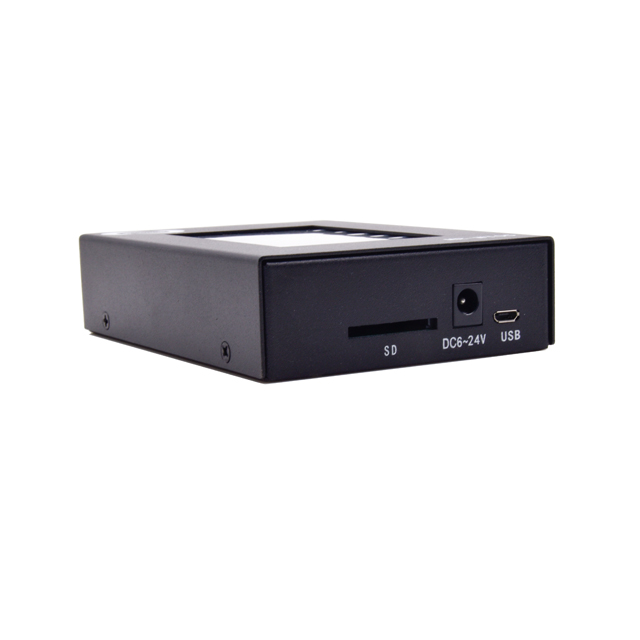
For field installation and maintenance, we supply industrial-grade programming hardware such as the MR-WT35 Handheld Touch Screen DMX/RDM Address Writer. This device allows installation technicians to auto-address chips, edit start channels, verify RDM telemetry metrics, test individual color channels, and load custom test patterns directly onto the strip without requiring a primary lighting console on site.
Standard sample orders ship within 3 to 5 working days, while bulk commercial production runs typically require 12 to 15 working days depending on encapsulation complexity (e.g., silicone extrusion). Every production batch is backed by our SGS-inspected QC procedure, including spectrophotometer color testing, thermal imaging, salt-fog testing for outdoor models, and CE/RoHS certified documentation.
Consult with our senior optical engineers today to review your project drawings, select driver IC protocols, and request custom OEM sample reels.
 Shenzhen, Guangdong, China