High-reliability SPI & DMX512 pixel solutions engineered for island contractors, resorts, and commercial lighting integrators in Palau.

A Comprehensive Technical Analysis for Lighting Designers, Resort Integrators, and Electrical Contractors Operating in the Republic of Palau.
The Republic of Palau—encompassing Koror, Airai, and the pristine Rock Islands Southern Lagoon—presents one of the most demanding environmental operating profiles in the global lighting sector. Characterized by high ambient temperatures (average 28°C–32°C year-round), perpetual relative humidity consistently hovering between 82% and 95%, intense ultraviolet (UV) solar radiation index levels, and airborne sodium chloride (saline mist) from ocean winds, outdoor electronics suffer accelerated degradation if not engineered specifically for tropical maritime survival.
Conventional 3D LED pixel strings manufactured for mild temperate climates frequently succumb to severe field failure modes within 6 to 12 months in Micronesia. Common failures include micro-cracking of outer casing shells due to UV embrittlement, moisture ingress leading to internal PCB corrosion, voltage drops over long coastal cabling distances, and solder joint thermal stress fatigue. As an SGS-verified manufacturer, Shenzhen Fuvin Led Technology Co., Ltd. custom engineers specialized 3D LED pixel ball systems designed specifically to surpass the strict operational demands of Palauan resorts, public infrastructure, and marine entertainment installations.
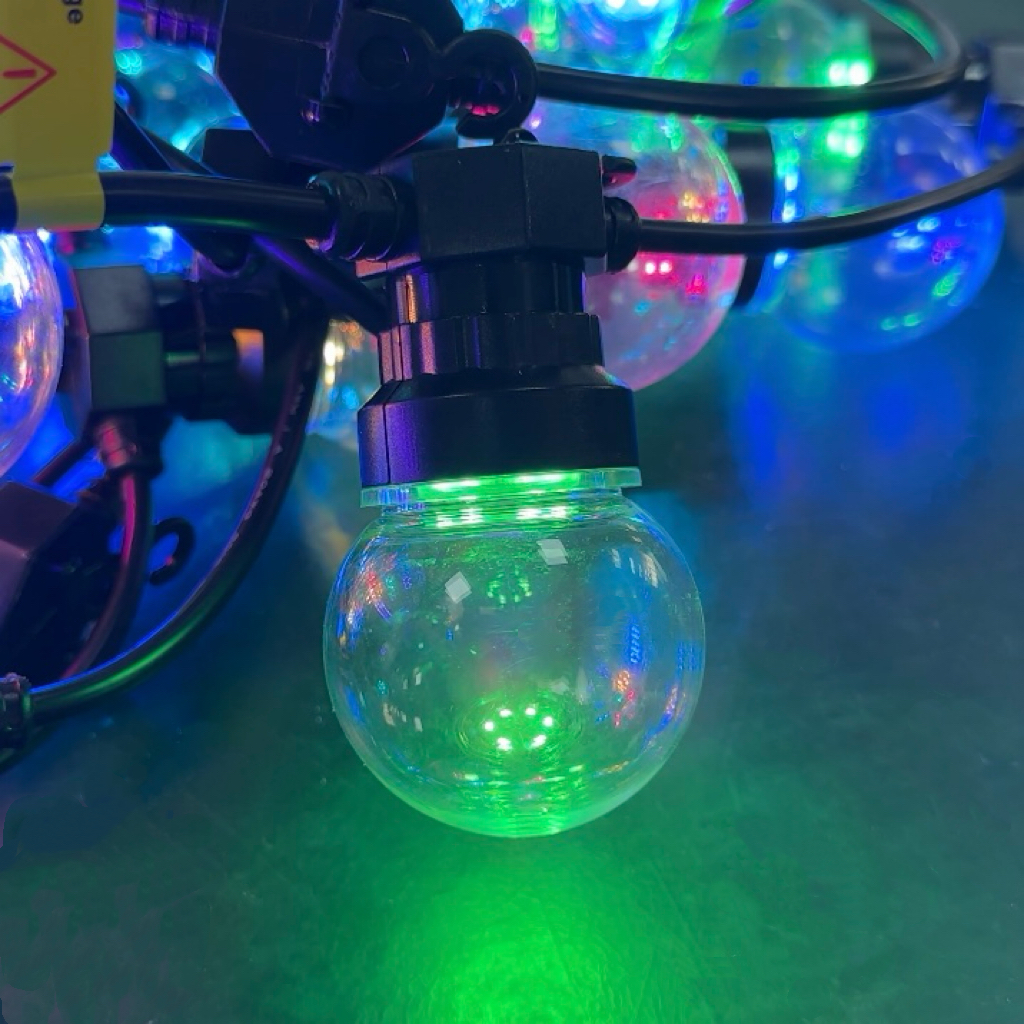
Achieving flawless volumetric dynamic visuals in 3D spatial hanging matrixes requires rigorous optical design. Unlike flat 1D LED strips or 2D LED modules that project light directionally (typically 120° beam angle), true 3D Pixel Spheres must achieve uniform 360-degree beam dispersion without visible dark spots, internal shadowing, or color-shift distortions.
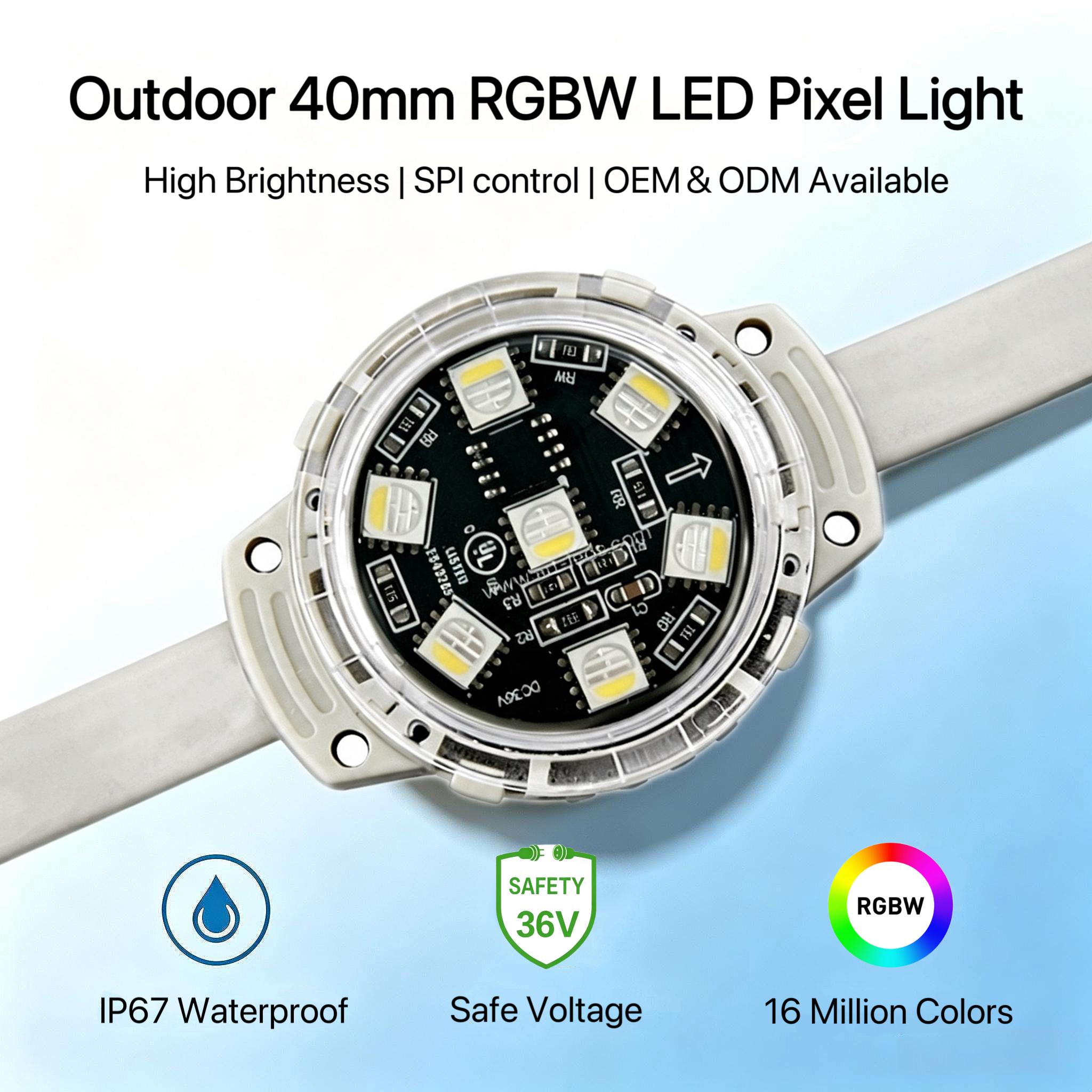
Our manufacturing process utilizes dual-sided surface-mount technology (SMT) populated with 6 to 12 high-lumen SMD5050 or SMD3535 LEDs mounted on a 3D circular PCB core. The housing incorporates an optical-grade, UV-stabilized Milky Polycarbonate (PC) shell engineered with micro-prism diffusion additives. This guarantees continuous 360° chromatic dispersion while suppressing glare when viewed directly by resort guests or venue spectators.
| Sphere Diameter | Recommended IC / Protocol | Standard Voltage | Beam Angle | Protection Rating | Primary Application in Palau |
|---|---|---|---|---|---|
| 35mm / 40mm Mini Ball | UCS2904 / WS2811 (SPI) | DC12V / DC24V | 360° Volumetric | IP67 PU Full Potting | Tree wrappings, curtain displays, indoor atrium matrixes |
| 50mm Standard Sphere | UCS2904 (RGBW 8-bit) / UCS8904 (16-bit) | DC24V / DC36V | 360° Spherical | IP68 Silicone / PC Shell | Resort lagoon hangs, kinetic ceiling arrays, bar canopies |
| 80mm / 100mm Big Ball | DMX512 (UCS512 / TM512AC) | DC24V / DC36V | 360° Spherical | IP68 Marine Grade | Coastal promenade installations, stage backdrops, landmarks |
| 150mm / 200mm Giant Sphere | DMX512 with RDM Protocol | DC24V / AC110-240V internal | 360° Spherical | IP68 Structural Sealed | Floating water installations, public plaza feature lights |
Selecting the correct signal transfer protocol is paramount for project longevity and control stability. Electrical contractors in Koror and Airai often debate between SPI (Serial Peripheral Interface) and DMX512 differential protocols. Understanding the trade-offs yields significant procurement efficiency:
SPI Protocols (UCS2904, UCS8904, SK6812): Single-data or dual-data line SPI pixel balls offer high refresh rates (≥1200Hz to 3000Hz) and cost-effective driver chips. UCS2904 provides 4-channel RGBW output with 8-bit grayscale (256 levels/color), enabling dedicated warm white (2700K–3000K) or natural white (4000K) integration alongside vibrant colors. For broadcast-grade applications such as hotel stage shows or video filming, UCS8904 provides 16-bit grayscale depth (65,536 dimming levels), eliminating low-brightness flicker on camera. SPI signal transmission is typically limited to 10–15 meters between the controller and first pixel sphere without signal amplifiers.
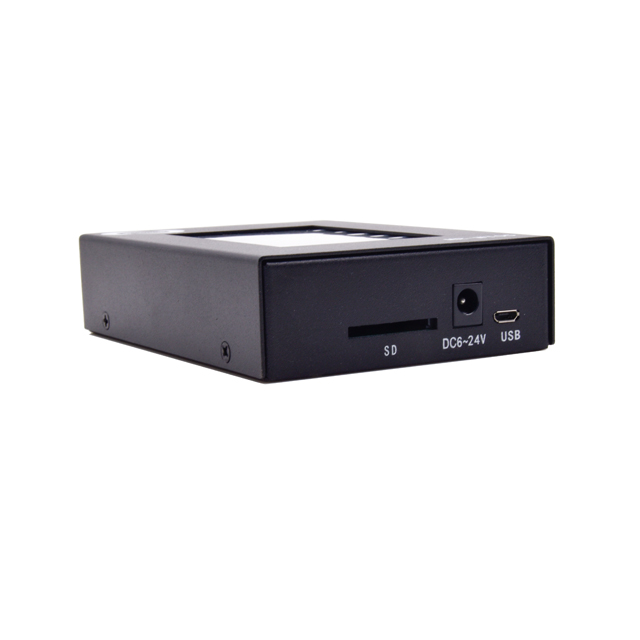
DMX512 RS-485 Protocols (UCS512, TM512AC): For large-scale architectural spans across coastal structures or overwater walkways where control gear is housed in centralized server rooms 50 to 100+ meters away, standard differential DMX512 is mandatory. DMX512 utilizes dual-wire RS-485 balanced transmission lines, exhibiting extreme immunity to electromagnetic interference (EMI) and power cable cross-talk. Furthermore, using our handheld Touch-Screen DMX Address Writer (MR-WT35), installation technicians can rapidly burn DMX addresses directly onto installed pixel strings in the field without disassembling fixtures.
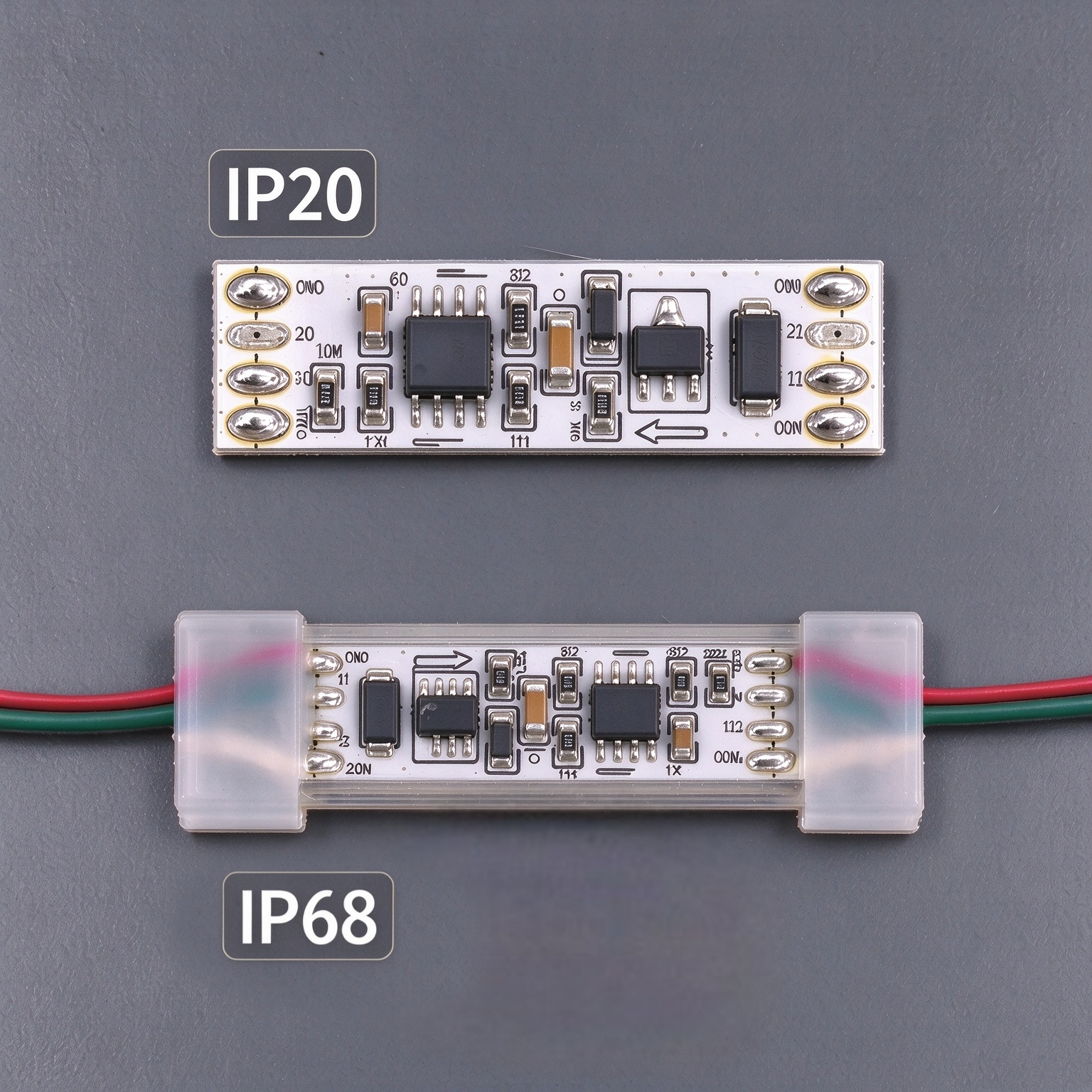
Water ingress in tropical islands is rarely caused by rain alone; condensation cycles driven by diurnal temperature swings draw moist saline air into poorly sealed light fixtures. Fuvin LED combats this through a specialized multi-layer defense matrix:
From luxury island resorts in Koror to public waterfront developments in Airai, discover how our 3D pixel lighting hardware transforms island venues.
Install 50mm DC24V UCS2904 RGBW 3D pixel ball matrixes beneath villa eaves or suspended over lagoon decks in Koror. Dedicated warm white channels (2700K) create intimate, high-CRI ambient lighting during evening dining, while addressable pixel effects provide subtle dynamic water-ripple simulations for eco-tourists.
Public parks and ferry terminals along the Malakal Harbor require rugged, typhoon-resilient installations. Our DMX512 80mm pixel spheres feature internal steel suspension aircraft cables inside heavy-gauge rubber cords, withstanding extreme tropical gale-force winds while delivering synchronized civic light shows.
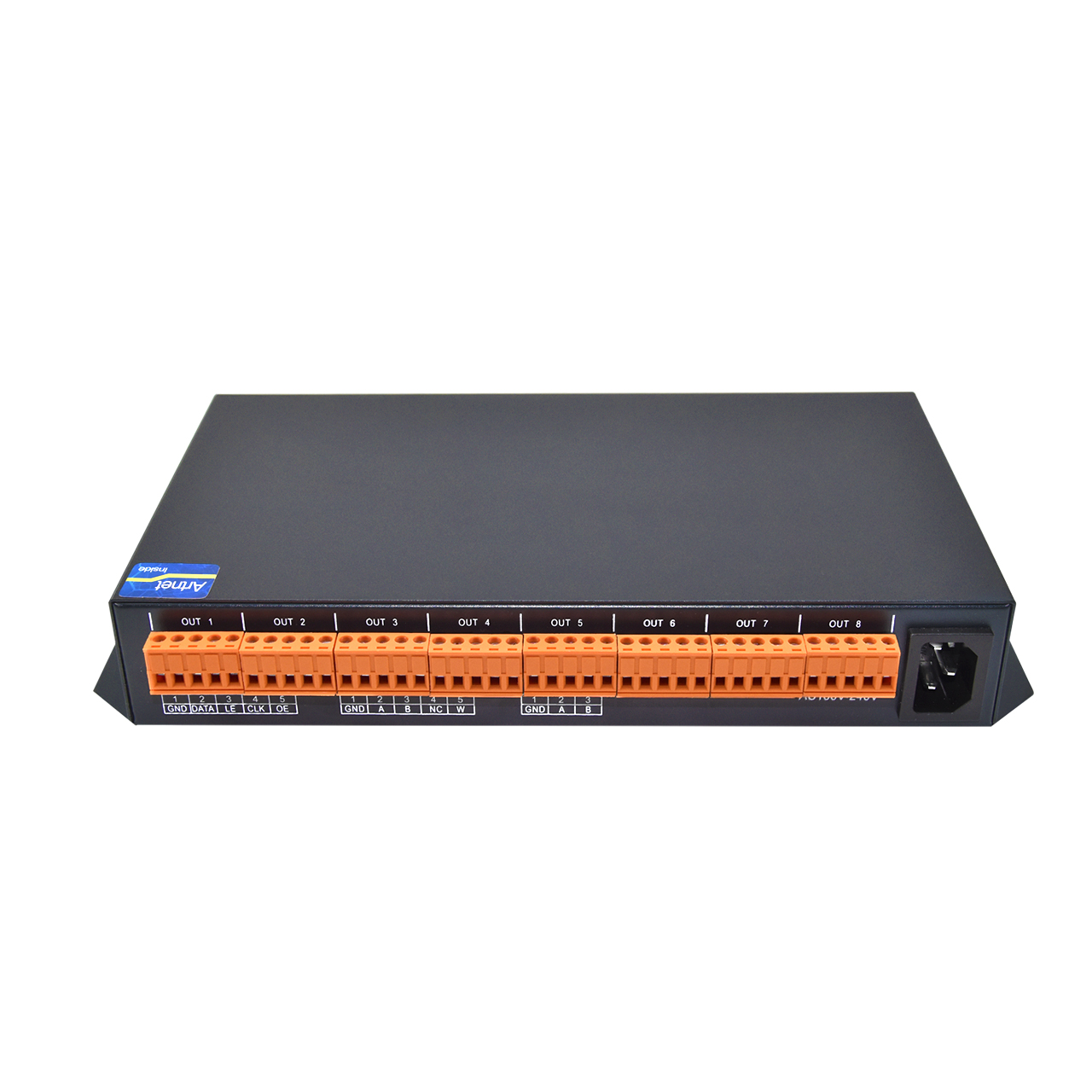
For major cultural celebrations, outdoor concerts, and hotel event spaces, 3D hanging pixel ball strings controlled via our ArtNet 64 Universe Controller (A28A) enable complex 3D video mapping. Transform open-air venues into immersive 3D volumetric light sculptures mapped directly from Madrix or Resolume.
Strategic guidance for buyers, wholesalers, and project specifiers aiming to capitalize on emerging regional demands in Micronesia.
With electricity on island grids carrying premium utility rates, luxury resorts in Palau are rapidly transitioning to off-grid solar microgrids paired with lithium battery storage. Our DC24V and DC36V pixel ball systems consume 30% less copper wire volume while operating seamlessly off stabilized solar DC bus lines, lowering overall installation capital expenditure.
Traditional floodlights and 2D neon profiles are giving way to volumetric 3D lighting arrays. High-end hospitality developers are demanding custom spatial hanging pixel ball displays inside lobby voids, outdoor gardens, and pool landscapes to create shareable social media attractions that boost tourist engagement.
Palau enforces world-leading environmental preservation policies (such as the Palau Pledge). Lighting installations must prevent light pollution and avoid toxic material runoff. Our RoHS-compliant, zero-mercury LED pixel balls feature optical shields and dark-sky compliant software programming to protect sea turtle nesting areas and marine life.
Direct answers addressing freight logistics, technical compatibility, and environmental durability in Micronesia.
Our pixel balls engineered for island export feature complete internal solid encapsulation (hydrophobic Polyurethane potting) sealing all circuit boards, solder joints, and IC pins. The external sphere is injection-molded from Bayer anti-UV optical Polycarbonate that does not cloud or yellow under tropical sun exposure. Connectors utilize IP68 gold-plated brass pins enclosed within salt-mist resistant silicone gaskets.
Operating at DC24V or DC36V dramatically decreases electrical current draw compared to DC5V/12V systems. This allows you to run up to 20–30 meters of continuous 3D pixel ball strings from a single power injection point without experiencing voltage drop (which causes color fading or dimming at the far end). This minimizes required cabling weight, power supplies, and labor costs across large resort properties.
We provide comprehensive export packaging, including vacuum-sealed moisture-proof anti-static reeled bags packed into reinforced export cartons. Standard sea freight to Malakal Harbor (Koror Port) takes approximately 18–25 days via regional Oceania shipping lines. Urgent project orders can be dispatched via express air freight (DHL/FedEx/UPS) arriving in Palau within 5–8 business days.
Yes. We supply both standard SPI protocol pixel balls (compatible with cheap SD card controllers, T-100K, K-1000C, or ArtNet-to-SPI gateways like our A28A controller) and native DMX512/RDM pixel balls (UCS512/TM512AC chips) that wire directly into standard lighting control consoles (MA Lighting, Avolites, Pharos, Madrix, Resolume).
As a direct custom factory in Shenzhen, we offer complete OEM customization. You can specify sphere diameters (35mm, 50mm, 80mm, 100mm, 200mm), center-to-center pixel pitch spacing (from 10cm up to 100cm+), cable jacket color (black, white, transparent, or green), wire gauge thickness, and IC chip type. Buyer private labeling and custom box packaging are also provided.
Shenzhen Fuvin Led Technology Co., Ltd. is an SGS-verified custom manufacturer delivering certified reliability for commercial projects worldwide.
Our factory in Shiyan Street, Shenzhen, undergoes rigorous onsite verification by SGS Group. We operate standardized, dust-free production workshops and automated SMT lines.
All products are backed by CE, RoHS compliance, Declaration of Conformity (DoC), and selected models are UL/cUL listed, ensuring hassle-free customs clearance in Palau.
We test LED strips, pixel spheres, power supplies, and ArtNet controllers as complete integrated systems before shipment, ensuring 100% plug-and-play field success.
Send us your project layout, total pixel sphere quantity, or custom specification requirements. Our senior engineering team provides detailed recommendations, wiring schematics, and factory-direct wholesale pricing within 24 hours.
 Shenzhen, Guangdong, China